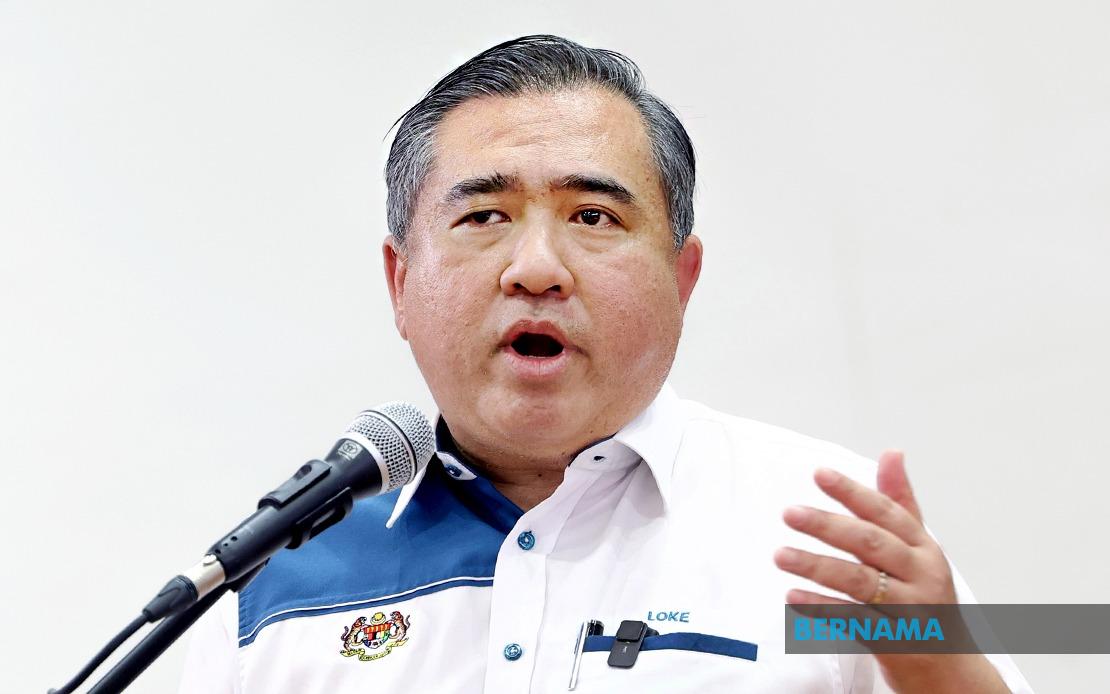
Transport Minister Anthony Loke has clarified that the Southern Shuttle service's reliance on diesel-powered trains represents only a temporary arrangement pending the arrival of modern Electric Multiple Unit (EMU) trains, a statement intended to address growing public criticism about the ageing rolling stock operating the new regional rail corridor in Johor. In remarks published on his social media platform, Loke framed the decision as a pragmatic choice between immediate accessibility and prolonged waiting periods, reflecting the government's desire to deliver tangible benefits to residents without subjecting them to extended service delays.
The fundamental dilemma facing the Ministry of Transport boils down to a straightforward trade-off between immediacy and modernity. Officials could have chosen to defer the Southern Shuttle's inauguration entirely, allowing time for the procurement and assembly of ten fresh EMU train sets—a process spanning two to three years. Instead, the ministry opted to deploy existing diesel-powered equipment to commence operations, reasoning that residents would benefit from having access to the service now rather than waiting several additional years for state-of-the-art electric trains to materialize. This calculation reflects a political commitment to demonstrating progress on transport infrastructure within a more compressed timeframe.
To support expanded usage of rail-based public transport across the region, the Ministry of Transport has earmarked annual subsidies ranging from RM11 million to RM15 million. These financial commitments underscore the government's intention to make commuter rail services economically accessible to a broader cross-section of the population, offsetting operational costs that might otherwise translate into prohibitively high fares. The subsidy framework represents a deliberate policy intervention designed to shift travel patterns away from private vehicles toward collective transit solutions.
The Southern Shuttle corridor itself represents a significant addition to Johor's transport infrastructure, linking three important nodes: Kulai, JB Sentral, and Pasir Gudang. Journey times on the Kulai-JB Sentral segment average approximately 40 minutes, while the Kempas Baru-Pasir Gudang route requires between 40 and 45 minutes. These travel durations position the rail service as a competitive alternative to road transport for commuters navigating these urban and peri-urban routes. The service offers amenities and comfort levels that distinguish it from conventional bus services, though critics have seized on the absence of modern electric propulsion as a shortcoming.
A particularly notable element of the Southern Shuttle's development involves the repurposing of the Kempas Baru-Pasir Gudang line, which traditionally functioned exclusively as a freight corridor. The decision to open this route to passenger services represents an efficient utilization of existing rail infrastructure, maximizing the return on prior capital investment while addressing genuine transport demand in a densely settled region. This dual-use approach reflects broader infrastructure strategy aimed at extracting maximum utility from available assets.
Pubic commentary regarding the Southern Shuttle has centered on fare levels and the deployment of diesel equipment. Critics have pointed out that fares charged on the Johor service substantially exceed those prevailing on comparable rail routes operating in the Klang Valley and the Seremban area, with some observers claiming the differential reaches a factor of three. This pricing disparity has attracted scrutiny regarding equity and consistency in transport policy across different regions of the country. The reliance on older diesel trains has further amplified perceptions that Johor is receiving inferior transport infrastructure compared to more established urban corridors.
Looking ahead, the Ministry of Transport has indicated that the diesel-powered phase will conclude once the Gemas-Johor Bahru electrified double-tracking project achieves completion. Upon that milestone, the Southern Shuttle will transition to modern Electric Train Service (ETS) operations, eliminating dependence on fossil fuel propulsion. This long-term vision aligns with broader sustainability objectives and reflects the government's stated commitment to transitioning toward cleaner transport modalities. The electrification initiative will fundamentally transform the service's operational profile and environmental footprint.
The situation surrounding the Southern Shuttle illuminates a broader challenge facing Southeast Asian transport planners: reconciling immediate service delivery demands with longer-term infrastructure modernization goals. Many developing regions throughout the area confront comparable constraints, where aging assets must continue operating while replacement equipment undergoes sourcing and manufacturing cycles extending across multiple years. Malaysia's pragmatic approach—deploying functional but outdated technology in the interim—offers one possible model for other regional authorities grappling with similar pressures.
For Malaysian rail stakeholders and commuters, the Southern Shuttle's trajectory carries several implications. The service demonstrates that transport authorities are willing to activate new corridors even when those corridors initially operate with interim-generation equipment, suggesting that long-delayed Johor transport improvements may finally materialize after years of planning discussions. Simultaneously, the fare structure and equipment composition invite ongoing scrutiny regarding whether regional equity in transport provision receives adequate policy attention. The eventual transition to modern EMU equipment will represent a vindication of the interim approach, provided that the new trains arrive within the anticipated timeframe and delivery schedules prove realistic.
Minister Loke's public communications strategy appears designed to manage expectations and frame the diesel-train phase as a calculated interim step rather than a permanent shortfall. This framing acknowledges public dissatisfaction with the equipment quality while anchoring that dissatisfaction within a broader narrative of imminent modernization. The credibility of this narrative ultimately rests on whether the promised EMU train sets materialize within the specified two-to-three-year window. Delays in procurement or assembly could substantially undermine public confidence in transport ministry commitments and revive criticism regarding the appropriateness of launching a major service with aging equipment.

