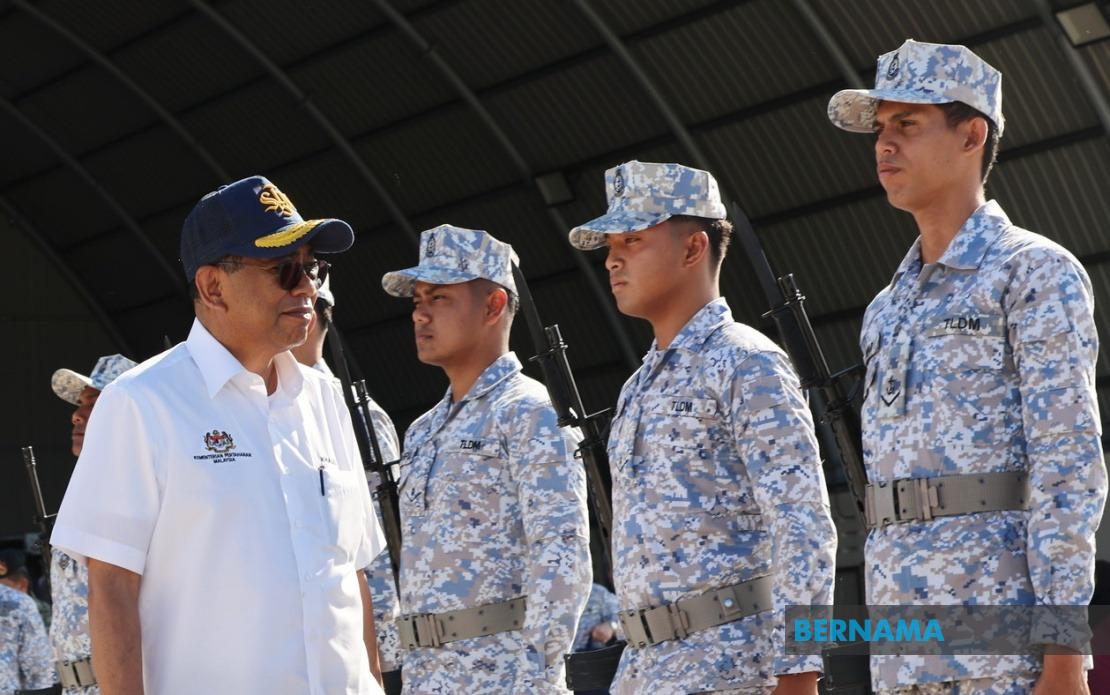
Malaysia is embarking on a comprehensive modernisation programme at Layang-Layang Island, its crucial forward operating base in the South China Sea, with Defence Minister Datuk Seri Mohamed Khaled Nordin announcing plans to significantly upgrade military infrastructure and surveillance systems at the strategically vital outpost. The initiative reflects growing regional tensions over overlapping territorial claims and underscores the government's determination to maintain an assertive yet measured presence in waters contested by China, Vietnam and the Philippines.
Located approximately 270 kilometres from Labuan and 280 kilometres from Sabah, Layang-Layang Island hosts the Royal Malaysian Navy's LIMA Station, a 35-hectare national forward operating base established on 17 April 1984. The facility has long served as Malaysia's primary sentinel in the South China Sea, playing an indispensable role in surveillance, defence operations and intelligence gathering across Gugusan Semarang Peninjau. The island's strategic importance cannot be overstated—it represents Malaysia's physical manifestation of sovereignty in contested waters and provides crucial logistical support to naval vessels, air force operations and civilian maritime enforcement agencies throughout the region.
Central to the upgrade programme is the planned installation of an air defence radar system, intended to complement the existing maritime radar that monitors vessel movements across Malaysian waters. Mohamed Khaled indicated that preparatory works for the radar installation would commence immediately, with the system expected to reach full operational capability by 2029. This addition will represent a significant leap in Malaysia's maritime domain awareness, enabling detection of not only surface vessels but also aerial movements that could pose security challenges. The dual-radar capability transforms Layang-Layang from primarily a surface surveillance station into a comprehensive air and maritime monitoring hub.
Beyond radar enhancements, the modernisation encompasses a broader spectrum of operational requirements essential for sustained military effectiveness. The Defence Ministry plans to expand and improve communications infrastructure, operational facilities and logistical support systems to ensure personnel can function optimally in this remote, challenging environment. Such improvements are critical given the island's isolation and harsh climatic conditions, which have historically constrained operational capacity and personnel morale. Enhanced communications will facilitate real-time coordination with fleet command and other regional military assets, while upgraded logistical capabilities will reduce supply chain vulnerabilities.
Personnel welfare emerges as another significant focus area within the enhancement strategy. Mohamed Khaled specifically highlighted improvements to basic facilities including water and electricity supply, food provisions and accommodation standards. These upgrades address a persistent challenge of maintaining an adequate force presence at distant outposts—ensuring personnel can endure extended deployments without significant degradation in living conditions. Better facilities improve retention, operational morale and the overall quality of decision-making among stationed personnel, ultimately strengthening Malaysia's ability to mount sustained operations in the South China Sea.
The modernisation programme reflects Malaysia's sophisticated approach to the South China Sea disputes, balancing sovereignty assertion with restraint. Mohamed Khaled explicitly stated that development would proceed without provocation or escalation of tensions, characterising Layang-Layang as a continuous, peaceful presence rather than an aggressive military posture. This framing is diplomatically important as Malaysia navigates between several major powers with competing interests in the region. By emphasising infrastructure development and surveillance capabilities rather than weapons systems, Malaysia signals resolve while avoiding actions that might trigger international condemnation or destabilising regional escalation.
The deployment of unmanned systems and advanced technologies features prominently in Malaysia's future plans for the island. These platforms offer significant advantages for sustained monitoring across vast maritime expanses, reducing risks to personnel while extending surveillance reach far beyond what traditional platforms permit. Unmanned aerial systems can conduct extended patrols, while underwater drones can monitor subsurface activities and gather environmental intelligence. Such technological integration positions Malaysia to operate effectively with smaller permanent garrisons while maintaining continuous awareness of regional developments.
Beyond military considerations, Mohamed Khaled articulated an important dimension often overlooked in strategic infrastructure discussions—Layang-Layang's significance for environmental research and maritime economy development. The island possesses substantial research potential regarding marine ecosystems, biodiversity and coral reef sustainability in the South China Sea. Integrating research activities with defence operations creates multiple benefits: it legitimises Malaysia's presence through scientific inquiry, generates valuable environmental data about regional ecosystems, and positions Malaysia as a steward of regional conservation efforts. This approach allows the government to advance sovereignty objectives while simultaneously pursuing legitimate scientific and economic interests.
The announcement involved high-level military and defence establishment representation, with attendance from Defence Ministry secretary-general Datuk Lokman Hakim Ali, Royal Malaysian Navy chief Admiral Tan Sri Dr Zulhelmy Ithnain, Royal Malaysian Air Force chief Gen Tan Sri Muhamad Norazlan Aris and Joint Forces commander Lt Gen Datuk Tengku Muhammad Fauzi Tengku Ibrahim. This gathering underscores the whole-of-government importance attached to Layang-Layang's continued development and the coordinated nature of planning across defence services.
For Malaysia and Southeast Asia more broadly, the Layang-Layang modernisation programme carries significant implications. It demonstrates Malaysia's commitment to maintaining physical presence and operational capability in disputed waters despite geopolitical pressures from larger powers. The timeline extending to 2029 suggests a measured, sustainable approach rather than rushed militarisation. For regional stability, such measured infrastructure development differs fundamentally from more aggressive expansion strategies, potentially setting an example for other claimant states regarding competitive coexistence in contested areas.
The strategic investment at Layang-Layang also reflects Malaysia's recognition that controlling territory in the South China Sea increasingly depends upon demonstrating effective governance, maintenance capabilities and legitimate economic activity rather than military confrontation alone. By developing infrastructure, conducting research and maintaining personnel welfare standards, Malaysia strengthens its claims through sustained, productive occupation. This strategy proves particularly important given that occupation accompanied by demonstrable state control—rather than merely military presence—carries greater weight in international law regarding territorial claims.
Looking forward, the completion of air defence radar installation and broader infrastructure improvements will fundamentally alter Malaysia's operational posture in the South China Sea. Enhanced surveillance capabilities combined with improved logistics will enable extended operations, better crisis response, and more effective monitoring of regional developments. The integration of environmental research alongside military functions creates a comprehensive framework for Malaysia's presence that extends beyond security into legitimate scientific and economic domains, strengthening the nation's overall position in the region.