Authorities in Vietnam's Phu Tho province have secured charges against four suspects linked to a transnational scheme to establish an online fraud operation on Vietnamese soil, forestalling what could have become a significant criminal enterprise. The case underscores the region's emerging challenges with cross-border cybercrime networks and the migration of illicit activities as enforcement pressures mount in neighbouring countries.
The investigation centred on a network with documented connections to existing scam operations in Cambodia. Intelligence suggested the group intended to exploit regulatory gaps and shift their criminal infrastructure into Vietnam as Cambodian authorities intensified their own crackdowns on online fraud rings. Rather than remaining in Cambodia where enforcement was tightening, the networks opted for geographical relocation—a common adaptation strategy among transnational criminal organisations seeking to evade jurisdiction and maintain operational continuity.
The scheme's architect was identified as Zhao Wei Zhong, a 37-year-old Chinese national whose role exemplified the international composition of modern fraud syndicates. Police established that Zhao entered Vietnam at the direction of overseas associates, arriving with a specific operational mandate: to establish the foundational infrastructure required to receive and house a cohort of workers who would staff the relocated scam call centre. This advance reconnaissance approach—where specialists scout locations and prepare logistics before mass personnel deployment—represents a sophisticated operational structure.
Zhao's previous experience proved pivotal to his recruitment for this role. Having worked within Chinese-operated scam enterprises in Cambodia, he possessed both technical knowledge of fraudulent call centre operations and established personal connections within these networks. While stationed in Cambodia, he had cultivated relationships with two Vietnamese nationals, Tran Thi Thu Huong, aged 24, and Dình Nam, aged 27, both from Bac Ninh province in the north. These connections would form the human foundation for his Vietnamese operation.
Once positioned in Vietnam, Zhao systematically converted his Cambodian acquaintances into operational support personnel. He enlisted Huong and Nam to facilitate critical logistical functions that would enable the transition: translation services to communicate with incoming foreign workers, vehicular transportation for moving personnel and equipment, and location scouting to identify suitable residential and operational facilities. For a criminal enterprise dependent on maintaining operational security and moving illicit workers across borders, these services were indispensable.
The network expanded further with the involvement of Nguyen Thanh Long, a 43-year-old based in Hanoi, who contributed to the broader logistics architecture supporting the relocation scheme. Long's role represented the urban operational layer, coordinating arrangements from the capital that would facilitate the deployment of fraudsters once they crossed into Vietnamese territory. The geographical distribution of suspects—from Phu Tho to Bac Ninh to Hanoi—reflected the complexity of executing such a multi-stage criminal plan across provincial boundaries.
Vietnamese police moved to intercept the operation before it reached operational maturity. Through investigative work, authorities detected the relocation plot and moved decisively to dismantle the infrastructure before the anticipated influx of Cambodian-based scam workers could materialise. This preventive intervention proved decisive, stopping the criminal venture at the preparation phase rather than allowing it to become an active, operational fraud centre within Vietnam.
On June 17, following completion of evidence collection, police filed formal charges against three of the suspects. Zhao, Huong, and Long were each charged with organising the illegal residence of foreign nationals within Vietnam, a criminal violation distinct from the underlying fraud activities. All three were remanded into pretrial detention, a measure reflecting prosecutorial assessment of flight risk or continued danger to the community.
Dình Nam, the fourth suspect, faced the same substantive charge of facilitating illegal foreign residence but received differential treatment in terms of custodial status. Rather than detention, Nam was placed under a movement restriction order—a supervisory measure that confines him to his registered residence pending trial proceedings. This graduated approach to bail conditions reflected either differing culpability assessments or reduced flight risk considerations.
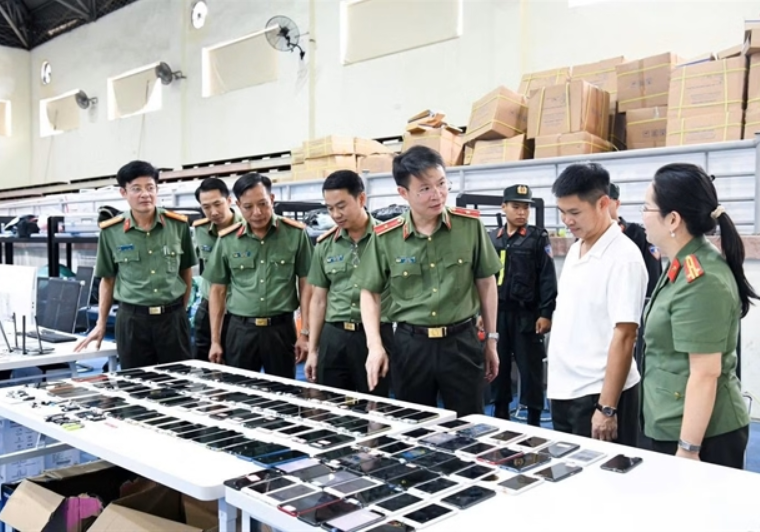
Physical evidence seized during searches of properties linked to the suspects revealed the operational scope of the contemplated scam centre. Police recovered 73 computers, 134 mobile phones, 34 USB drives, and 20 Wi-Fi routers—equipment specifically intended to establish the infrastructure for fraudulent call centre operations. This technological arsenal would have enabled simultaneous management of numerous scam schemes targeting victims across multiple jurisdictions, leveraging the anonymity and scale advantages that online fraud platforms provide.
The case reflects broader patterns of criminal adaptability within Southeast Asia's organised crime landscape. As individual countries strengthen enforcement against specific crimes or in specific locations, criminal networks respond by repositioning operations rather than abandoning them. Vietnam's increased vigilance against online fraud had apparently triggered this relocation decision, with Cambodia appearing to offer temporary refuge before pressures there became prohibitive. For Malaysian observers and policymakers, the case underscores the necessity of regional coordination in combating transnational crime, as enforcement gaps in one jurisdiction create opportunities for criminal enterprises to establish footholds in others.
The investigation also illustrates how modern scam operations depend critically on local recruitment and logistical support. The participation of Vietnamese nationals proved essential for Zhao's ability to navigate local conditions, identify suitable facilities, and manage relationships with incoming workers who might otherwise face detection. This reliance on local facilitators presents both investigation opportunities and governance challenges for authorities working to disrupt these networks within their own territories.

