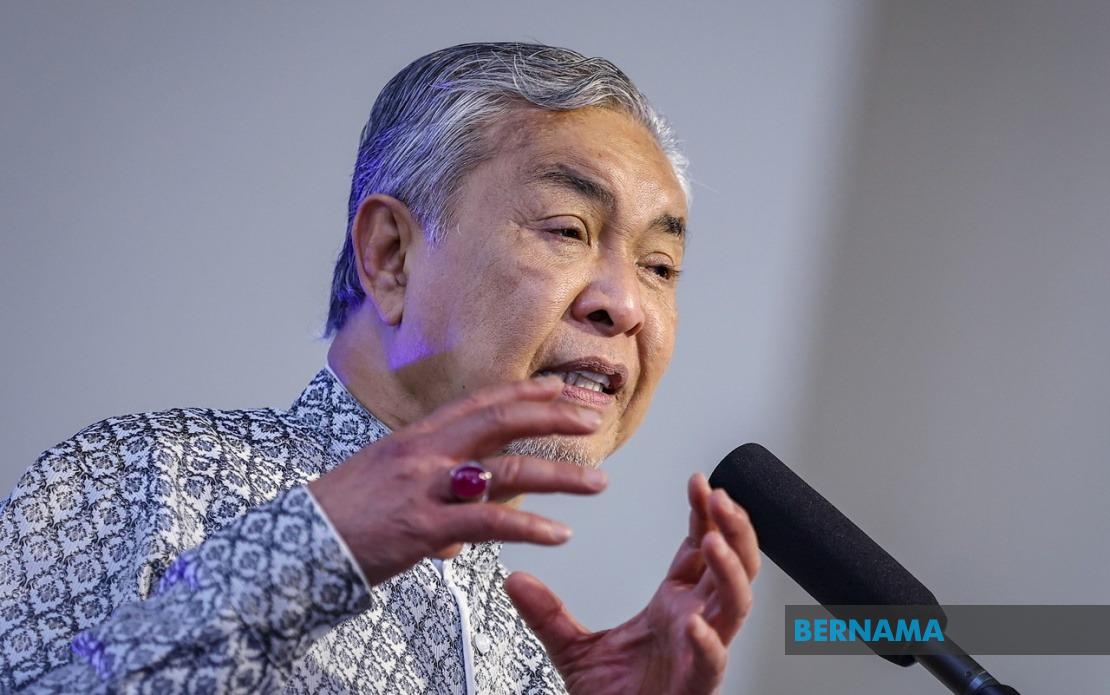
With the Johor state election entering its final stretch, Barisan Nasional chairman Datuk Seri Dr Ahmad Zahid Hamidi is making a deliberate pitch for what he terms a 'mature and respectful' political contest. Speaking in Kempas constituency on July 3, the Deputy Prime Minister expressed concern that some opposing parties are weaponising historical grievances to score political points, behaviour he views as counterproductive to meaningful democratic discourse. His remarks suggest an underlying worry within the BN apparatus that such tactics could prove damaging to coalition partners who simultaneously operate alongside BN at the federal level, creating an awkward dynamic that the coalition leadership would prefer to avoid.
Ahmad Zahid's call for restraint reflects a particular anxiety: several parties contesting the state election are, paradoxically, members of the federal ruling coalition. This dual arrangement creates an unusual tension wherein political rivals at state level must maintain working relationships at the Cabinet table. The BN chairman framed his appeal around this contradiction, noting that he sees no logic in resurrecting old controversies when these same individuals must sit together in weekly Cabinet meetings. Such positioning reveals the uncomfortable realities of Malaysian coalition politics, where temporary competitive interests at regional contests clash with longer-term federal governance priorities.
Rather than dwelling on past disagreements, Ahmad Zahid steered the conversation toward substantive campaign ground: candidate quality and policy merit. He emphasised that voters should evaluate contesting parties based on the calibre of their representatives and the concrete benefits they pledge to deliver to communities. This reframing attempts to reset the terms of engagement in a campaign that, by his own assessment, carries considerable uncertainty for BN. The party's leadership has consciously positioned itself as the underdog, a strategic narrative choice that contrasts sharply with the confidence often projected during election cycles.
The shift in Johor's political terrain has forced BN to reassess its standing. The coalition captured 40 seats in the previous state election, a respectable but hardly commanding performance in a 56-seat legislature. Rather than expecting automatic success, Ahmad Zahid signalled that the party recognises it must work considerably harder to improve upon that benchmark. This recalibration acknowledges demographic headwinds: more than half of Johor's voters are now young people, a cohort that has proven less predictable and more demanding of tangible benefits than their older counterparts.
Young voters have emerged as BN's central strategic focus, a recognition that their concerns and aspirations will likely determine the election outcome. The Menteri Besar's manifesto, according to Ahmad Zahid, deliberately places youth needs at the forefront, with particular emphasis on employment generation and skills development pathways. This targeting reflects broader anxieties about the employability of Malaysia's younger workforce and the mismatch between education outputs and labour market demands. By highlighting Technical and Vocational Education and Training initiatives, BN is attempting to position itself as the party most seriously addressing a genuine pain point for young Malaysians.
The employment context provides important backdrop to BN's youth-oriented messaging. National unemployment has fallen to 2.9 per cent, a figure Ahmad Zahid cited as evidence of economic stability. Yet this headline statistic masks a more nuanced reality: headline unemployment figures often obscure underemployment, skills mismatches, and wage stagnation that frustrate young workers seeking meaningful, remunerative careers. Ahmad Zahid's acknowledgment that young people require access to 'premium-wage jobs' suggests the coalition understands that simple job availability no longer satisfies voter expectations. The emphasis has shifted toward quality of employment, a distinction that older, more entrenched political messaging sometimes fails to capture.
The technical and vocational education pathway represents BN's proposed solution to this employment quality challenge. Rather than pursuing traditional academic routes that may not align with labour market opportunities, skills training offers more direct pathways to stable, reasonably remunerated work. This approach has particular resonance in Johor, which maintains significant manufacturing, petrochemical, and logistics sectors requiring skilled technical workers. BN's manifesto positioning thereby connects abstract campaign promises to concrete, locally relevant economic opportunities that young voters can envision and understand.
Ahmad Zahid's appeal to young voters carries an implicit recognition that the 2023 election landscape differs substantially from previous contests. The politicisation of age cohorts has intensified, with younger demographics proving more sensitive to campaign substance and less receptive to legacy grievances or personality-driven politics. By explicitly linking BN's policy offerings to youth aspirations, the coalition chairman is attempting to establish a direct transactional relationship: vote for BN because we directly address your career and economic concerns. This represents a departure from older, more generic appeals to stability or tradition.
The strategic decision to contest all 56 seats demonstrates BN's commitment to maximising its seat haul, though it also exposes the coalition to comprehensive defeat across all constituencies should voter sentiment decisively shift. This all-in approach carries inherent risk but also reflects confidence that the party maintains competitive ground throughout Johor. Polling will occur on July 11, with early voting scheduled for July 7, providing the coalition and its rivals a final week to consolidate messaging and mobilise supporters.
For Malaysian observers and regional political analysts, the Johor election serves as a bellwether for broader trends in Southeast Asian democratic competition. The contest demonstrates how coalition partners must navigate simultaneous cooperation and competition, a delicate balance increasingly common in the region's complex, multi-party systems. Ahmad Zahid's intervention suggests that BN leadership recognises the reputational stakes extend beyond Johor's borders, with performance here potentially influencing perceptions of the federal coalition's governance legitimacy across Malaysia. The outcome will reveal whether BN's youth-focused, policy-intensive approach resonates with changing voter expectations, or whether structural political forces prove more determinative than campaign messaging and manifesto promises.

