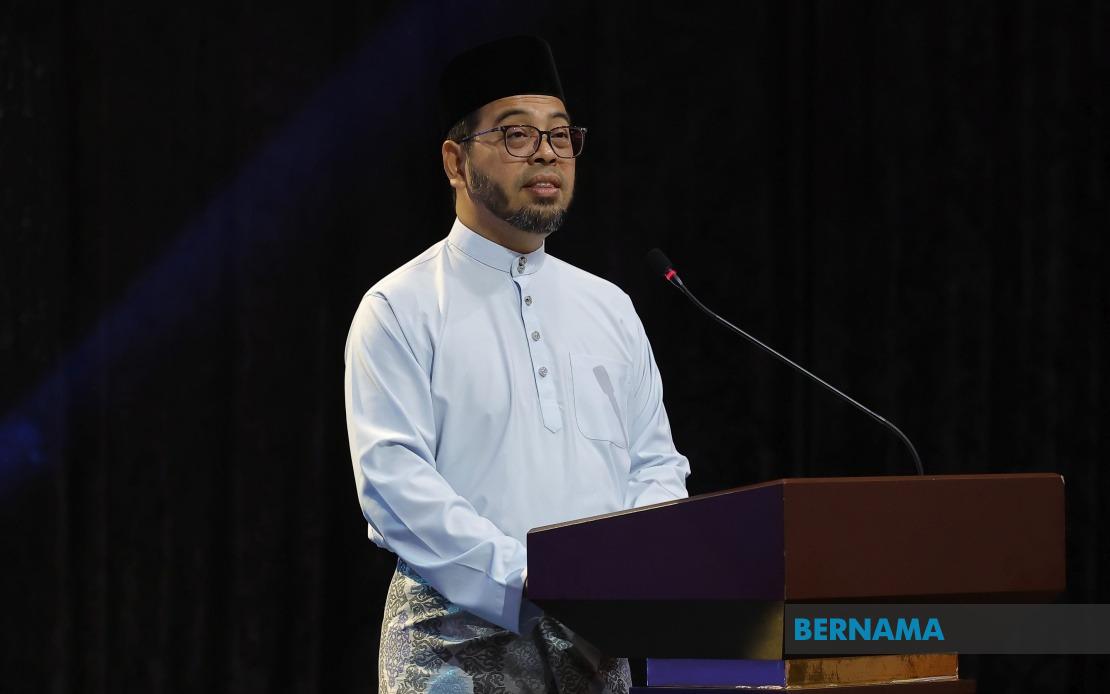
Divisions within Malaysia's Muslim community must be resolved if the nation is to navigate an increasingly uncertain global landscape, according to Minister in the Prime Minister's Department (Religious Affairs) Dr Zulkifli Hasan. Speaking at the national-level Maal Hijrah 1448H/2026M celebration at Putra Mosque in Putrajaya, he emphasised that lingering hostility between Muslims undermines collective resilience at a time when external pressures threaten economic stability and social cohesion across the region.
Zulkifli framed the challenge in terms of personal transformation, arguing that meaningful societal change must begin with individuals undergoing intellectual, spiritual and moral development. This perspective positions communal unity not as a political mandate but as a natural consequence of inner reflection and growth among believers. By linking individual consciousness to collective strength, he articulated a vision of Islamic revival that transcends traditional sectarian divisions and organisational boundaries.
The gathering, themed "MADANI Dihayati, Ummah Diberkati", drew prominent figures including Sultan Nazrin Shah of Perak and Deputy Prime Minister Datuk Seri Fadillah Yusof, underscoring the official significance attached to the message. The presence of the Sultan demonstrated the monarchy's continued commitment to Islamic affairs and national unity, reflecting how religious leadership intersects with constitutional monarchy in Malaysia's political framework.
Zulkifli's remarks come against a backdrop of genuine economic anxiety across Southeast Asia. Supply chain disruptions and inflationary pressures have rippled through regional economies, affecting employment, purchasing power and social stability. Malaysia, as a major trading hub with significant exposure to global commerce, faces particular vulnerability to these shocks. By framing unity as an antidote to external economic forces, the minister connected abstract religious concepts to concrete material concerns affecting ordinary families.
The minister reinterpreted the concept of hijrah—traditionally understood as the Prophet Muhammad's migration from Mecca to Medina—as an ongoing spiritual journey rather than a historical event. This reframing suggests that contemporary hijrah involves abandoning destructive behaviours, whether personal vices or communal practices that fragment society, and embracing values that bind communities together. Such an interpretation resonates particularly with younger Muslims navigating rapid social change and globalisation while seeking spiritual moorings.
Zulkifli stressed that stronger communal bonds would enable more effective implementation of initiatives designed to preserve and promote Islamic values within Malaysian society. This implies that government programmes aimed at supporting Muslim welfare, education and religious observance cannot succeed if communities remain fractionalised. The argument essentially positions unity as a precondition for achieving policy objectives rather than a byproduct of them, placing responsibility on citizens to enable their own collective advancement.
While acknowledging theological and cultural differences among Malaysia's diverse Muslim population, Zulkifli extended his appeal to encompass all citizens regardless of faith. He underscored a shared national interest in maintaining peace, stability and prosperity—a reminder that Malaysia's constitutional framework guarantees religious freedom whilst positioning Islam as the federation's official religion. This balancing act reflects the delicate equilibrium required to govern a multi-religious nation where approximately 70 per cent of the population follows Islam.
The National Tokoh Maal Hijrah award presented to IIUM Rector Prof Emeritus Datuk Dr Osman Bakar recognised his contributions to Islamic scholarship and education. Bakar's work bridging Islamic and Western intellectual traditions makes him a fitting recipient, signalling that the government views Islamic renewal as compatible with scientific inquiry and global engagement. The simultaneous award of the International Tokoh Maal Hijrah honour to Moroccan scholar Dr Ahmad Al-Raysuni extended recognition beyond Malaysia's borders, positioning the nation as a participant in broader Islamic intellectual discourse.
For Malaysian readers, particularly those concerned about rising living costs and economic uncertainty, Zulkifli's message offers both spiritual reassurance and practical framing. The implication is that communal solidarity can cushion individuals and families against economic shocks that governments alone cannot prevent. In a regional context where social cohesion remains essential to political stability, reinforcing Muslim unity also serves Malaysia's broader national interests.
The timing of these remarks at a major national religious observance suggests they reflect broader government thinking about social priorities. As Malaysia seeks to position itself as a moderate Islamic nation capable of balancing religious values with economic modernisation, calls for communal unity echo across multiple policy domains from education to social welfare. The challenge lies in translating rhetorical appeals into institutional reforms that genuinely reduce sectarian friction and build the cross-community cooperation necessary for addressing shared challenges.
For Southeast Asia more broadly, Malaysia's experience navigating religious diversity whilst promoting Islamic values offers lessons relevant to other Muslim-majority nations facing similar tensions. The government's emphasis on intellectual and spiritual development as foundations for unity suggests confidence that contemporary Islam can address modern challenges without requiring either religious retrenchment or abandonment of traditional values—a position increasingly debated across the region as societies grapple with globalisation, technological disruption and generational change.

