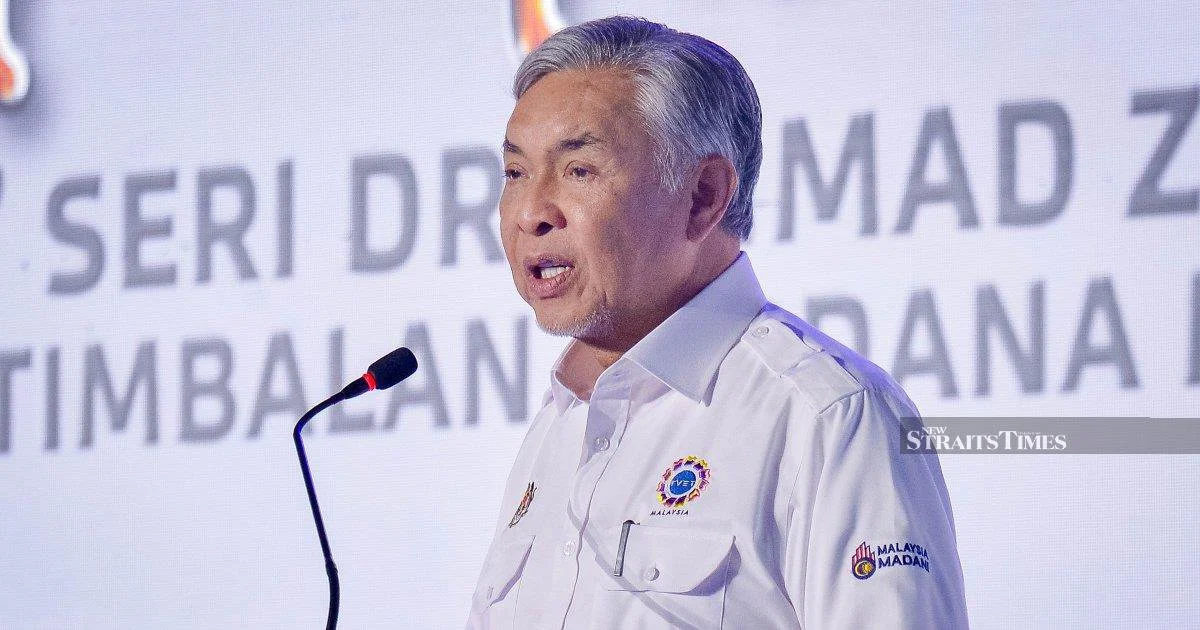
Malaysia's Deputy Prime Minister Datuk Seri Dr Ahmad Zahid Hamidi is poised to lead a high-level Cabinet committee focused on resolving the mounting complications surrounding the nation's foreign workforce, with discussions slated to commence within the coming week. The initiative reflects growing recognition within government circles that foreign labour challenges have become sufficiently pressing to warrant senior-level intervention and coordinated policy responses across multiple ministries.
The establishment of this committee signals acknowledgement that foreign workers constitute a critical component of Malaysia's economic machinery, particularly in sectors vulnerable to labour shortages. The decision to fast-track meetings demonstrates the government's commitment to moving beyond preliminary discussions toward concrete solutions that can stabilize workforce availability and operational continuity across affected industries.
The food and beverage sector has emerged as a focal point for this committee's initial deliberations, illustrating how labour supply constraints are affecting one of Malaysia's largest employment sectors by headcount. Restaurants, hotels, catering operations, and food manufacturing facilities have faced escalating difficulties in securing adequate staffing, creating bottlenecks that ripple through supply chains and constrain business expansion. The F&B industry's prominence in the committee's agenda underscores the sector's significance both as a major employer and as a driver of consumer-facing economic activity that directly influences public perception of the nation's service quality.
Foreign workers have long formed the backbone of Malaysia's hospitality and food service operations, particularly in roles spanning kitchen staff, dishwashing, food preparation, and service delivery positions. The current staffing challenges partly stem from shifting migration patterns, as traditional source countries redirect workers toward competing regional destinations offering marginally better terms or fewer administrative hurdles. Additionally, pandemic-related disruptions to recruitment pathways and immigration protocols have created lingering bottlenecks that continue to constrain the inflow of replacement workers into Malaysia's labour market.
The committee's formation also reflects evolving economic pressures on Malaysia's tourism and hospitality ecosystem. As the nation seeks to rebuild visitor numbers and tourism revenues following pandemic recovery, ensuring adequate staffing levels becomes essential to maintaining service standards and operational efficiency. Foreign workers filling mid-range and lower-tier service positions free Malaysian nationals to pursue supervisory, technical, and management roles, creating an employment structure that benefits both demographic cohorts while maximizing productivity across the sector.
Datuk Seri Dr Ahmad Zahid Hamidi's chairmanship carries particular weight given his current portfolio and position within the Cabinet hierarchy. His stewardship suggests the government treats this matter as requiring sustained high-level attention rather than relegating it to junior ministerial committees. The Deputy Prime Minister's involvement signals that solutions being developed will likely carry the institutional backing necessary for effective implementation across government agencies tasked with enforcing migration regulations, processing work permits, and coordinating bilateral labour agreements.
The committee's scope extends beyond immediate crisis management into longer-term structural questions about how Malaysia sources, integrates, and manages its foreign labour population. Discussions will likely encompass administrative reforms aimed at streamlining work permit issuance, reviewing bilateral labour agreements with source countries, examining wage competitiveness relative to regional alternatives, and establishing clearer career pathways that incentivize workers to remain in Malaysia rather than migrate onward. These conversations will necessarily involve trade-offs between employer preferences for minimal regulatory burdens and government objectives around worker protection and wage standards.
For Malaysian business owners and entrepreneurs, particularly those operating within competitive F&B markets, the committee's initiatives could prove transformative in determining whether staffing constraints ease or intensify over coming months. Early mobilization by the government suggests recognition that market forces alone will not resolve current imbalances, and that policy interventions addressing visa procedures, recruitment mechanisms, and bilateral negotiations require coordinated action. Businesses have increasingly signaled frustration with recruitment delays and inconsistent policy implementation, making this committee an opportunity to standardize practices and reduce operational uncertainty.
Regional competitiveness considerations also inform the committee's urgency. Singapore, Thailand, and Indonesia have implemented labour reforms aimed at positioning themselves as more attractive destinations for migrant workers within particular skill categories. Malaysia risks falling behind in attracting quality workers if administrative processes remain cumbersome or if wage growth stagnates relative to neighbouring economies. The committee's deliberations will likely include comparative analysis of regional approaches to labour recruitment and retention, informing recommendations for policy adjustments that enhance Malaysia's competitiveness without compromising worker protection standards.
The involvement of multiple stakeholders—business representatives, ministry officials, industry associations, and worker advocacy groups—appears essential for developing balanced solutions. F&B industry associations have repeatedly highlighted that labour scarcity threatens business viability, particularly for smaller operators lacking resources to navigate complex recruitment procedures. Simultaneously, government agencies responsible for immigration and labour enforcement must balance employer convenience against legitimate national interests in managing workforce composition, remittance flows, and social cohesion.
Looking forward, the committee's recommendations will likely shape Malaysia's approach to foreign labour policy for the next several years. Early momentum and demonstrated problem-solving capability could establish a template for addressing workforce challenges in other sectors experiencing similar constraints, including manufacturing, construction, and healthcare. The success or shortcomings of this initiative will reverberate through business confidence metrics and investment decisions as employers assess whether the government can reliably deliver on commitments to facilitate labour supply.
The coming weeks will prove critical for demonstrating whether this committee becomes a substantive policy-making body delivering tangible improvements or remains another bureaucratic exercise in consultative posturing. Datuk Seri Dr Ahmad Zahid Hamidi's leadership provides grounds for cautious optimism that the committee will move beyond abstract discussions toward implementable measures addressing both immediate staffing emergencies and longer-term structural vulnerabilities in Malaysia's foreign labour framework.

