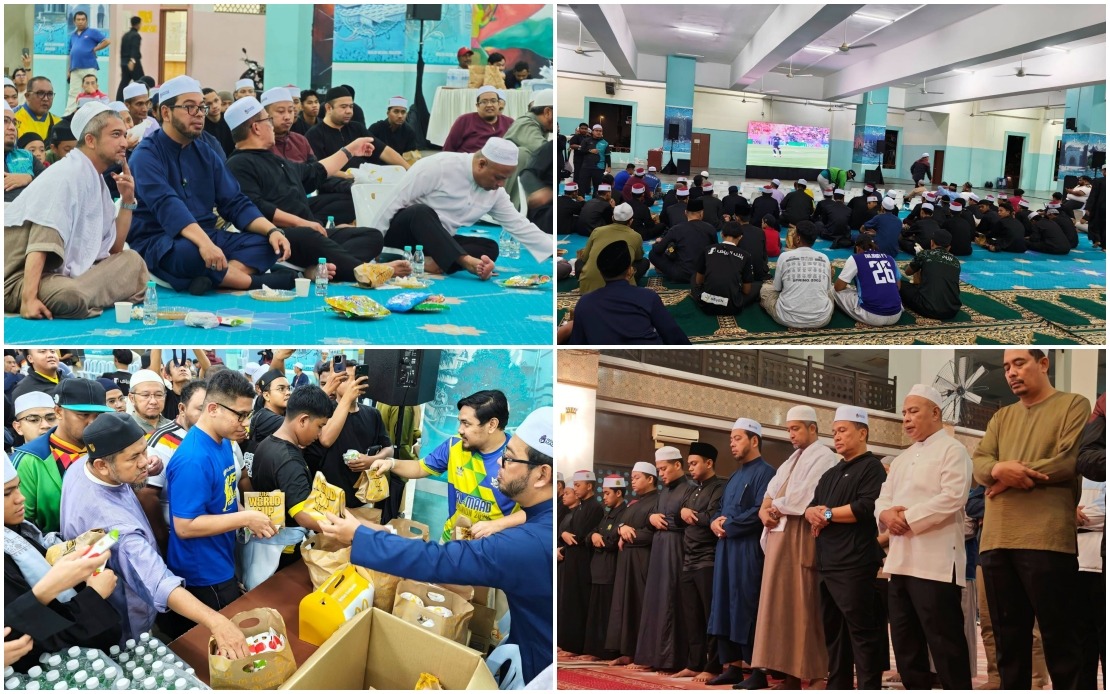
A Kuala Lumpur mosque demonstrated an innovative approach to youth engagement on June 21 when over 300 predominantly young worshippers arrived before dawn for Qiyamullail—the voluntary night prayers observed during Ramadan and other significant periods—before settling in to watch a World Cup qualifier match together. The gathering at Masjid Usamah bin Zaid in Wangsa Maju represented a deliberate effort to harness the widespread passion for football as a vehicle for fostering spiritual connection among Malaysian youth, an audience that religious authorities have long sought to reach through unconventional means.
Dr Zulkifli Hassan, the Minister in the Prime Minister's Department handling Religious Affairs, used the occasion to highlight how contemporary interests could complement rather than compete with religious practice. His presence at the event underscored official recognition that younger generations often respond better to integrated experiences that validate their everyday enthusiasms while introducing them to faith-based activities. The minister's remarks touched on a persistent challenge facing mosque administrators and Islamic organisations across Malaysia: how to make spiritual engagement feel relevant and engaging rather than restrictive or disconnected from modern life.
The evening's centrepiece was the 2026 World Cup Group E encounter between Germany and Ivory Coast, which concluded with a convincing 2-1 victory for the Germans. Rather than treating the match as a distraction from the religious component of the gathering, organisers had structured the day so that the football screening became a natural continuation of the spiritual activities that had begun in the pre-dawn hours. This sequencing conveyed an implicit message about balance and integration—that enjoying entertainment and sports need not conflict with religious commitment.
The halftime break featured commentary and analysis from football personalities with connections to Malaysian sport, including Shahril Arsat, a nationally recognised figure in football circles, and Khushairi Aizad, who had previously played for Selangor FA. Their technical discussion of team strategies and playing styles added an educational dimension to the viewing experience, transforming what might otherwise have been passive consumption into an opportunity for followers to deepen their understanding of the sport. This layering of activities—spiritual practice, entertainment, and expert analysis—created a multifaceted experience that catered to different interests within the audience.
Several senior figures from Malaysia's Islamic administrative structure participated actively in the event's logistics, working alongside the minister to prepare traditional breakfast fare for attendees. Datuk Nizam Yahya, the chief executive of the Federal Territories Islamic Religious Council, and Datuk Ajib Ismail, deputy director-general of the Malaysian Islamic Development Department, joined in preparing roti canai alongside the Federal Territories Mufti. This hands-on involvement by high-ranking officials sent a powerful symbolic message about the importance these institutions placed on direct engagement with young Muslims and their needs.
The breadth of organisations involved in coordinating the programme reflected the significance that Malaysian Islamic authorities ascribed to the initiative. Beyond the main government religious bodies, participation extended to community organisations including Angkatan Belia Islam Malaysia, a youth-focused Islamic movement, and the Malaysian Islamic Economic Development Foundation. This collaborative approach leveraged the combined resources and credibility of multiple institutions while distributing responsibility for engaging with youth across the ecosystem of Islamic organisations operating in Malaysia.
The provision of food and refreshments by multiple sponsors demonstrated how the event integrated practical support systems that would encourage sustained participation. The provision of meals and drinks, particularly following pre-dawn prayers and continuing through the morning and afternoon, ensured that worshippers remained comfortable throughout an extended gathering. For younger participants who might be attending such an event for the first time, these creature comforts could prove instrumental in whether they viewed the experience positively and considered returning to future religious programmes.
This initiative reflects broader trends across Southeast Asia and the Islamic world regarding how religious institutions are adapting to capture youth attention in an era dominated by digital entertainment and global sporting culture. Malaysian mosque authorities have increasingly experimented with incorporating contemporary interests—from e-sports to film screenings to martial arts—within religious spaces and activities. The Wangsa Maju gathering represents a relatively mainstream version of this adaptation, avoiding controversial elements while remaining authentic in its approach.
The success of the Qiyamullail and World Cup event at Masjid Usamah bin Zaid offers potential lessons for other religious institutions seeking to maintain relevance with younger demographics. The model suggests that rather than positioning religious obligation and modern entertainment as opposing forces requiring compromise, organisers can create experiences where both elements strengthen one another. Young people who arrive for the football might encounter meaningful spiritual practice; those attending for the prayers gain exposure to a community-oriented social experience that extends beyond the conventional mosque setting.
Looking forward, the apparent success of this June 21 gathering may encourage other mosques throughout Malaysia and the region to develop similar programming, particularly during periods like Ramadan when special night prayers become routine. Such events could also be adapted around other major sporting occasions, from the AFC Asian Cup to domestic football seasons, creating recurring touchpoints where religious communities engage with youth through their genuine interests. The collaboration between government religious departments, community organisations, and individual mosques suggests that resources and expertise exist to scale such initiatives more broadly.

