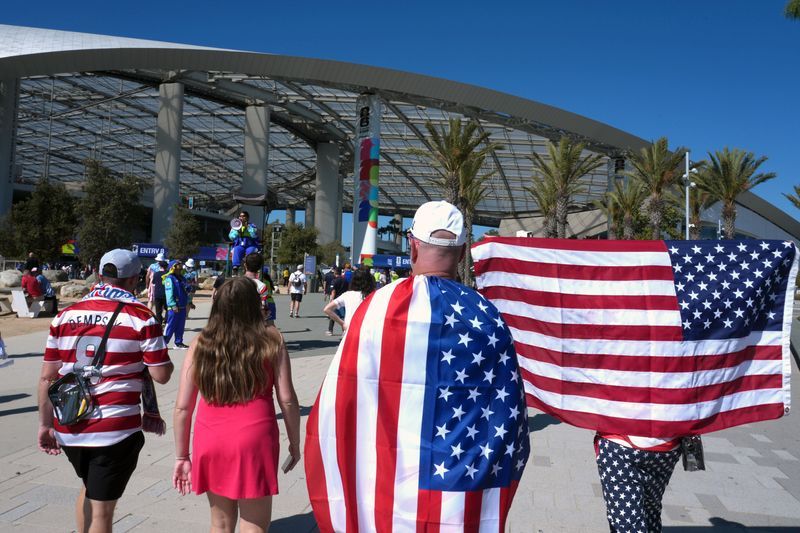
Across North America, World Cup enthusiasts who thought they had secured their seats for the tournament discovered a cruel reality: their tickets simply vanished hours before kickoff. Jeremy Wright, who had meticulously planned to gift his wife Sarah a pair of tickets to watch the Netherlands face Japan on June 14, found himself driving back to Austin in rain and disappointment after StubHub informed him just five hours before the match that delivery was impossible. What made the situation more galling was StubHub's FanProtect Guarantee, which pledged replacement tickets at no cost—a promise that evaporated when the platform offered only a refund. The Wrights' frustration reflects a broader crisis engulfing the resale platform as dozens of angry ticket buyers flooded social media with tales of similar abandonment.
The World Cup ticketing debacle underscores deeper structural problems within secondary ticket marketplaces and raises uncomfortable questions about FIFA's tournament infrastructure. StubHub, operating as a resale-only platform without official FIFA partnership status, pointed fingers at FIFA's ticketing systems for creating bottlenecks that prevented sellers from delivering tickets across all third-party resale channels. The platform maintained that it lacks direct control over ticket inventory and pricing, functioning instead as a middleman connecting buyers with independent sellers. FIFA, conversely, rejected claims that its infrastructure bore responsibility, insisting that its official resale platform operated reliably throughout the tournament. This blame-shifting between platforms left consumers caught in the middle, stripped of event experiences they had eagerly anticipated and paid substantial sums to access.
What distinguishes the World Cup ticketing crisis from typical secondary market friction is the phenomenon of "speculative ticketing," a practice that Scott Friedman, a ticketing expert who previously worked with the Cleveland Cavaliers, describes as roughly equivalent to short-selling in financial markets. Sellers list tickets months in advance, betting that prices will rise above their asking price, allowing them to purchase genuine tickets at a lower cost and pocket the difference. Yet World Cup demand defied traditional secondary market patterns—instead of declining as the tournament approached, prices climbed steadily, trapping speculators who could not obtain actual tickets without absorbing losses. This created a system rife with what Friedman termed "ghost tickets," placeholder inventory that existed only on StubHub's platform without corresponding actual seating allocations.
The mechanics enabling ghost ticketing reveal a critical weakness in StubHub's verification procedures. When Wright purchased his Netherlands-Japan tickets on September 6, 2025, merely four days before FIFA's inaugural official sales draw, he received confirmation of a "Category 3" seating designation without any specific seat numbers—a red flag suggesting speculative listing rather than genuine inventory. StubHub's stated policy prohibits speculative ticketing and requires sellers to upload tickets or furnish proof of purchase upon listing, yet the platform's architecture permits vague inventory descriptions that circumvent meaningful verification. The company maintains that sellers face financial penalties and account suspension for inventory misrepresentation, but enforcement mechanisms appear insufficient to prevent widespread gaming of the system.
Dacy Gillespie's experience parallels the Wrights' ordeal with a painful twist. The St. Louis writer and stylist purchased four tickets as a Christmas surprise for her sons to Argentina's June 16 clash against Algeria, driving approximately 250 miles to Kansas City only to receive a matchday notification that the seller could not produce the tickets. Unlike the Wrights, Gillespie did not initially receive compensation—her only recourse was a refund. Both couples ultimately resorted to social media campaigns, with viral posts eventually compelling StubHub to provide remedies: the Wrights received complimentary semi-final game seats, while Gillespie obtained $3,000 to offset replacement ticket purchases she had made independently. Yet this pattern of escalation-through-publicity reveals a troubling reality: fans without significant social media audiences or personal networks to amplify complaints remained uncompensated.
FIFA's approach to ticketing has itself generated criticism that contextualizes the StubHub failures. The governing body introduced dynamic pricing for the first time at a World Cup, a commercially aggressive strategy that invited backlash from price-sensitive supporters. Additionally, FIFA charges 30 percent commission on resale through its official platform, making tickets there substantially more expensive than through secondary sites. While FIFA argues this fee aligns with North American industry standards, many fans found the official platform confusing and unapproachable, driving them toward alternative resale venues like StubHub. FIFA's insistence that only its platform guarantees proper ticket delivery, coupled with the high commissions and perceived complexity, created perverse incentives pushing buyers toward unregulated third-party marketplaces where actual ticket availability remained opaque.
StubHub's response to the crisis included establishing a dedicated World Cup support team and expanding capacity to source replacement tickets. The company spokesperson stated that "getting fans to their matches remains our top priority for the rest of this tournament," a belated acknowledgment that its systems had failed consumers during a signature sporting event. Yet this reactive posture fails to address fundamental design flaws: the platform permits listing without immediate inventory verification, lacks transparent seller accountability mechanisms, and offers no meaningful differentiation between confirmed and speculative listings. For Malaysian and Southeast Asian observers, the incident illustrates why established platforms with robust verification protocols command premium trust in ticketing ecosystems.
The reputational damage to StubHub extends beyond World Cup grievances. The UK's markets watchdog this week ordered the platform's British operations to refund over 50,000 customers and pay £900,000 in fines for failing to display total ticket prices transparently upfront. This regulatory intervention suggests broader governance concerns about the secondary ticketing industry, particularly regarding consumer protection and disclosure standards. For a platform already struggling with credibility following the World Cup cancellation wave, international regulatory actions threaten to erode market position across multiple jurisdictions.
Marsha-Gaye Knight, clinical assistant professor at NYU Tisch Institute for Global Sport, has suggested that the World Cup ticketing chaos could inflict lasting brand damage on StubHub, particularly among consumers who experienced firsthand the platform's inability to deliver on fundamental promises. The combination of ghost tickets, speculative market manipulation, inadequate seller verification, and unfulfilled guarantee claims creates a narrative of systemic dysfunction rather than isolated technical glitches. For the wider secondary ticketing industry, the World Cup episode demonstrates that platforms enabling transparent, verifiable inventory from vetted sellers will increasingly command consumer preference over those permitting ambiguous listings and speculative practices.
Looking toward future major sporting events in the region—including potential FIFA tournaments, AFC championships, and Olympic Games—the lessons from StubHub's World Cup failure warrant careful consideration by both event organizers and platform providers. Malaysia and Southeast Asian nations hosting international sporting events would be prudent to mandate robust ticket verification standards, require seller accountability, and prohibit speculative ticketing practices that treat sporting experiences as pure financial instruments divorced from actual event attendance. The World Cup cancellation crisis reveals that ticket buyers deserve clarity about whether they have purchased genuine inventory or merely speculative claims, and that platforms profiting from ticketing transactions bear responsibility for ensuring inventory authenticity.

