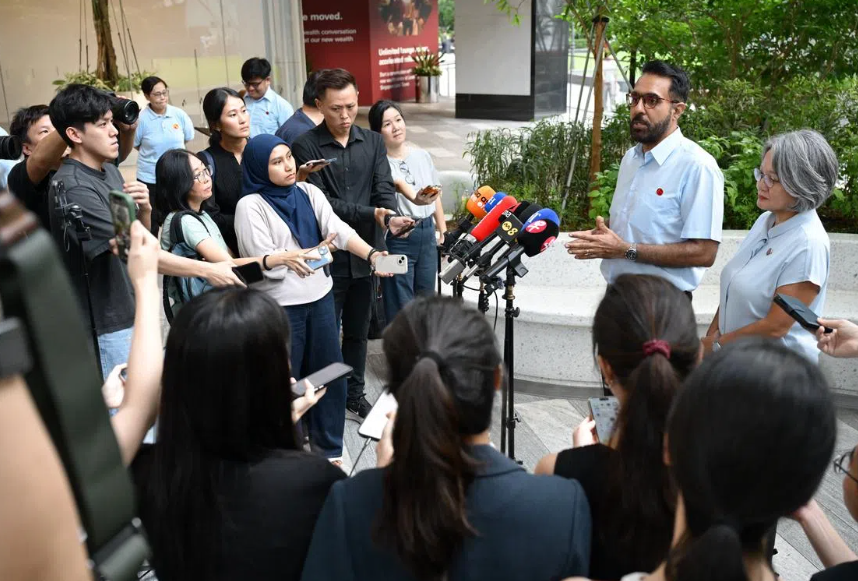
The internal crisis consuming Singapore's Workers Party appears to have reached resolution, yet the political implications for the opposition movement remain decidedly complex. After six hours of deliberations across two separate meetings on June 28, party chief Pritam Singh emerged victorious in a confidence vote that tested the unity of the organisation he has led since 2018. With 82 of 106 cadres voting to retain him as leader, Singh demonstrated sufficient backing to weather what was potentially the most serious challenge to his authority since assuming the top position. The decisive margin suggested that despite months of brewing discontent among a faction of party members, the broader cadre base has chosen solidarity over principle.
The origins of Sunday's confidence vote trace back to a scandal that has shadowed the Workers Party for nearly four years. In 2021, then-Sengkang GRC MP Raeesah Khan admitted to fabricating an account of police mistreatment involving a sexual assault victim in a parliamentary statement. The subsequent investigation revealed that Singh, then Leader of the Opposition, had played a role in encouraging Khan to continue the falsehood before finally withdrawing it. This discovery triggered a parliamentary Committee of Privileges inquiry, followed by criminal charges against Singh for lying to Parliament. After conviction in the lower court, Singh pursued an appeal which was rejected by the High Court in December 2025, cementing his guilty verdict and setting off a chain reaction of political consequences.
The aftermath proved humbling for the opposition leader. Following the High Court's decision, Prime Minister Lawrence Wong removed Singh from his position as Leader of the Opposition through a parliamentary motion that declared him unsuitable for the role. Rather than nominating a replacement, the Workers Party absorbed the loss, choosing not to put forward another MP for the ceremonial position. This decision—to stand by Singh rather than distance themselves—signalled the party's determination to present a united front to the electorate. It also demonstrated confidence that voters would ultimately judge the party on its current performance rather than its past missteps. That calculation appears to have proven correct, at least in the electoral sense.
The internal disciplinary process surrounding Singh's conduct offered further insight into how the party leadership intended to manage the crisis. A disciplinary panel investigating his actions determined that he had violated the party constitution, a serious finding that normally presages harsh sanctions. Instead of expulsion or suspension, the party's top leadership issued Singh merely a formal letter of reprimand—a measure that political observers widely characterised as remarkably lenient. This apparent reluctance to impose meaningful punishment on the party secretary-general sparked criticism from those who believed that accountability and consequences should have been prioritised.
Sunday's cadre vote, however, suggests that rank-and-file party members were largely willing to move past the conviction issue. Though a group of cadres had organised the confidence vote specifically to hold Singh accountable for his dishonesty to Parliament, the anticipated showdown did not materialise as many expected. While Singh faced questioning during the proceedings, some cadres who spoke publicly actually voiced support for his continued leadership. More significantly, those seeking to field a challenger to Singh proved unable to convince anyone with sufficient standing to mount a credible alternative candidacy, despite efforts extending right up until the week of the conference. The absence of a rival candidate effectively foreclosed any genuine electoral contest.
The backing of Low Thia Khiang, the legendary figure who built the Workers Party into a modern opposition force, carried particular symbolic weight. When asked by reporters about the leadership vote, the veteran politician affirmed his continued support for Singh without hesitation. For many party members and observers, Low's endorsement provided crucial legitimacy to Singh's continued stewardship. The architect's blessing suggested that party elders judged Singh's retention as necessary for organisational stability and long-term institutional health, regardless of reputational damage from the conviction.
With the internal threat neutralised, the Workers Party can now redirect organisational energy toward rebuilding and renewal. Party chair Sylvia Lim acknowledged this imperative during remarks following the election, noting that after 23 years in her own position, leadership renewal represented a critical priority for the organisation. Her hint that other faces would appear in future media conferences suggested a deliberate succession strategy in the making, indicating that the party recognises the need to develop a deeper bench of capable leaders capable of eventually assuming top positions. Singh's re-election thus represents not an indefinite mandate but rather a period during which the next generation of party leadership can be groomed and tested.
The May 2025 general election provided the Workers Party with what many members regard as vindication of their decision to stand behind Singh. Held when Singh's lower court conviction was already in force, the election proved unexpectedly successful for the opposition. The party not only maintained control of its existing constituencies but expanded significantly, winning two Non-Constituency MP seats that enhanced its parliamentary presence. For Workers Party supporters and cadres evaluating whether their leader's conviction would prove fatal to political viability, these results offered reassurance that voters had factored the conviction into their electoral calculus and still preferred the opposition alternative.
Yet for sceptics and swing voters, the vigour with which the Workers Party has defended Singh raises uncomfortable questions about the party's commitment to principles. The contradiction between the party's insistence on accountability and transparency in governance and its relatively gentle handling of Singh's dishonesty could resonate among middle-ground voters who view the opposition as a potential alternative government. These voters, who typically decide close elections and determine which party reaches parliamentary majorities, may struggle to reconcile the Workers Party's criticism of People's Action Party governance with what appears to be institutional self-protection masked as organisational unity.
Singapore's political dynamics further complicate the Workers Party's path forward. The opposition continues to operate in the shadow of the long-dominant People's Action Party, which benefits from significantly greater media coverage, institutional resources, and voter familiarity. Against this backdrop, the Workers Party's underdog status actually provides some protective buffer—swing voters may judge the opposition with less scrutiny than they apply to the incumbent. However, this advantage could evaporate if the party becomes perceived as prioritising self-preservation over democratic principles. Voters increasingly attuned to questions of institutional integrity and leadership accountability may ultimately decide that the Workers Party's handling of the Singh matter revealed character flaws that outweigh any policy advantages.
The immediate challenge facing the Workers Party therefore extends well beyond surviving Sunday's confidence vote. The party must now demonstrate to middle-ground voters that its loyalty to Singh represents a considered judgment about governance and party stability rather than a troubling instance of closing ranks to protect a leader from accountability. Whether Sunday's vote of confidence will ultimately enhance or diminish the Workers Party's appeal to crucial swing voters remains genuinely uncertain, despite the unified appearance the party now projects to the outside world.

