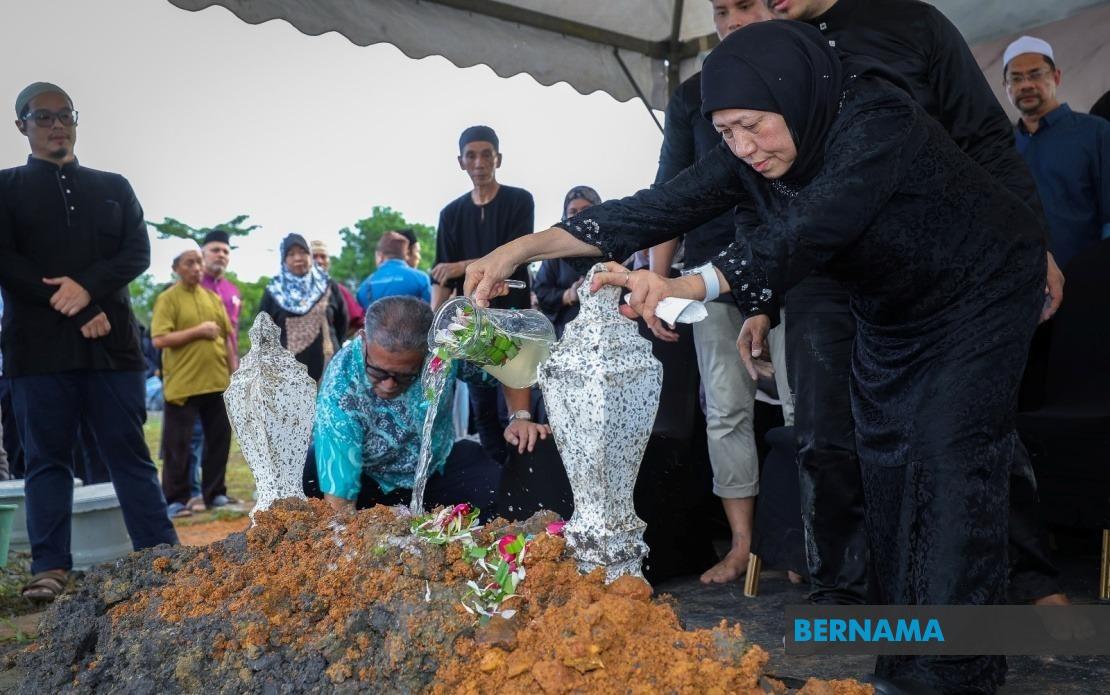
The funeral rites for Datuk Kamil Misuari, husband of Women, Family and Community Development Minister Datuk Seri Nancy Shukri, concluded with his interment at the Samariang Muslim Cemetery in Kuching at 5.15 pm on Wednesday. The departure of the 65-year-old marks a significant personal loss for one of Malaysia's senior cabinet members, with approximately 100 family members and close associates gathering throughout the day to offer condolences and pay their final respects to the deceased.
Kamil's remains arrived at Kuching International Airport at 12.50 pm following their transport from Kuala Lumpur, where he had passed away at a hospital earlier in the week. The body was then conveyed to the family residence, where traditional Islamic funeral prayers were performed prior to the afternoon burial ceremony. The logistics of returning him to his native Sarawak for burial underscored the family's deep connections to the state, even as the minister continues her responsibilities in the federal capital.
The couple, who were married in 1985, spent nearly four decades together and built a family comprising three children. Nancy Shukri's role as Women, Family and Community Development Minister places her among Malaysia's most prominent female political figures, a position requiring considerable time commitments and public visibility. The loss occurs against the backdrop of her ongoing ministerial duties, adding an additional dimension to her personal circumstances during this period of mourning.
Kamil's passing at 65 represents the conclusion of a life lived largely away from the public spotlight, though his connection to Nancy Shukri has occasionally brought the family into the framework of national discourse. The funeral gathering in Kuching, drawing extended family and intimate associates, reflected the significance of maintaining personal and cultural ties despite the demands of high office in Kuala Lumpur. Such ceremonies in Sarawak, Malaysia's largest state by land area, often retain particular importance for families with roots in the region.
The timing and manner of the funeral reflect adherence to Islamic burial practices, which traditionally call for swift arrangements following death. The ceremony's relatively modest scale—limited to family and close friends rather than extensive state ceremonies—suggests the family's preference for privacy during their bereavement period. This approach contrasts with some instances when deaths of senior government figures attract broader political and official participation.
For Nancy Shukri, the period ahead will likely involve balancing her ministerial responsibilities with the demands of grief and family adjustment. The Women, Family and Community Development portfolio itself carries symbolic significance in Malaysian governance, overseeing policies related to family welfare, women's empowerment, and community development initiatives. Her ministry's work touches millions of Malaysians, making her continued engagement important even during personal difficulties.
The loss also underscores the personal dimensions often obscured by political life and public service. Ministers and senior officials, despite their public profiles and constitutional responsibilities, remain individuals subject to the universal human experiences of bereavement and loss. Such moments, when private grief intersects with public roles, occasionally remind observers of the human element underlying governance and administration.
Sarawak, as one of Malaysia's two federal territories with distinct constitutional status alongside Sabah, maintains particular cultural and administrative characteristics. Kuching, as the state capital, remains an important centre where numerous prominent Malaysians, including those now serving in federal government, maintain family connections and ancestral ties. The choice to conduct funeral rites in the state reflects these enduring regional bonds.
Looking forward, the question of how Nancy Shukri's ministry might be temporarily managed, should any adjustment in her availability prove necessary, remains within the ambit of the Prime Minister's office and broader cabinet arrangements. Malaysian ministerial structures have mechanisms to address such contingencies, ensuring continuity of government functions during periods when senior officials face personal demands or grief-related considerations.

