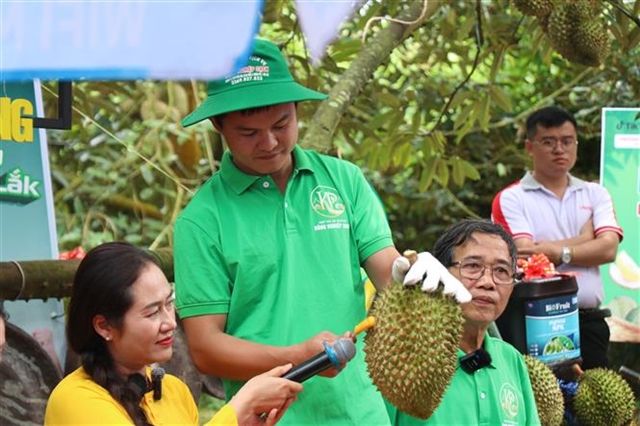
Vietnam's multi-billion-dollar durian export machine has encountered a significant roadblock: systemic corruption embedded within the certification framework that underpins the entire supply chain. The Ministry of Public Security has broadened its investigation into bribery and misconduct linked to the issuance of growing area codes, facility registrations and laboratory approvals for durian shipments destined for China. Allegations centre on government officials, including a high-ranking officer from the Ministry of Agriculture and Environment, who allegedly exploited their authority to establish unauthorised "sub-licences" that benefited connected interests while generating substantial illegal income. This investigation strikes at the heart of Vietnam's most valuable agricultural export sector at a particularly vulnerable moment.
The timing of this scandal could not be more consequential for Southeast Asian trade dynamics. Vietnam's fruit and vegetable export sector has been recovering strongly, with turnover reaching approximately US$4.7 billion during the first seven months of 2026, representing robust 23 per cent annual growth. July alone marked a significant milestone as the first month to surpass US$1 billion in export value. Within this broader agricultural boom, durian occupies a uniquely dominant position, generating more than half of all fruit and vegetable export revenues. The crop's outsized importance means that any disruption to its certification systems carries implications well beyond individual producers, affecting employment across rural producing regions and government trade relations, particularly with China, Southeast Asia's largest agricultural market.
For Vietnamese durian to access the Chinese market, three interlocking certifications are mandatory: a growing area code, packing facility registration and laboratory clearances confirming safety standards. This framework exists specifically because China has progressively tightened import controls, reflecting global food safety anxieties. When certifications are compromised or revoked, the consequences cascade immediately through supply chains. Producers face suspended export privileges, heightened inspections at ports, and potentially months of delayed shipments during critical harvest windows. For buyers, fraudulent codes undermine traceability—the ability to track produce from field to table—creating reputational risks that international retailers cannot tolerate. The system's integrity therefore functions as a collective asset that individual bad actors can destroy through fraudulent practices.
Industry associations have sounded alarms about certification abuses for considerable time before this investigation commenced. The Vietnam Fruit and Vegetables Association (Vinafruit) has documented instances where operators forged authorisation paperwork and company seals to illicitly claim rights to growing area and packing facility codes legitimately registered to competing businesses. Such counterfeiting does more than unfairly advantage rule-breakers; it fundamentally compromises traceability by creating parallel, phantom supply chains that regulators cannot monitor. Compliant producers, meanwhile, face commercial damage from market suspicions about product authenticity and potential guilt-by-association when consumers encounter fraudulent Vietnamese durian in international markets.
Laboratory testing capacity has emerged as another critical vulnerability within the certification apparatus. Authorised facilities conducting residue testing for cadmium and Auramine O—contaminants of particular concern to Chinese authorities—have experienced temporary suspensions due to misconduct or capacity issues. These disruptions have repeatedly triggered export bottlenecks, with hundreds of shipping containers warehoused awaiting inspection clearance during peak harvest periods when market windows rapidly close. Recognising this systematic weakness, the Ministry of Agriculture and Environment instructed testing facilities earlier this year to maximise staffing levels, extend operational hours and enhance procedural transparency. These measures, while necessary, signal that the testing system was previously inadequately resourced and insufficiently monitored.
Government responses have escalated beyond the initial corruption investigation into more comprehensive administrative action. The Government Inspectorate launched a 60-day review specifically examining how growing area codes and packing facility certifications were issued and managed across Dong Thap, Lam Dong and Dak Lak provinces—Vietnam's triumvirate of major durian production regions. This inspection will scrutinise certification procedures covering the March 2023 to June 2026 period, attempting to map how administrative failures enabled fraud to proliferate undetected. Simultaneously, provincial authorities have begun auditing existing certifications, with Lam Dong province revoking seven growing area codes and five packing facility registrations held by two Dak Lak-based companies that had ceased purchasing operations and requested code cancellations to mitigate legal exposure.
The remedial pathway forward increasingly emphasises that governance strength must match production ambitions. Nguyen Van Muoi, deputy secretary-general of Vinafruit, articulates this emerging consensus: product quality improvements must develop in parallel with building transparent, verifiable growing area code systems. Le Anh Trung, chairman of the Dak Lak Durian Association, has advocated urgently for digitalising growing area management and traceability linkages, pointing out that the number of certified growing areas remains constrained despite surging export demand—a bottleneck that creates perverse incentives to circumvent official channels. Technical experts propose that digitalised growing area registries, integration with traceability databases and strengthened independent oversight of testing would simultaneously eliminate fraud opportunities and protect legitimate operators from unfair competition.
The broader significance of Vietnam's certification struggles extends beyond national interests. As international markets—particularly in developed economies—continuously strengthen food safety protocols and traceability mandates, the credibility of source-country certification systems becomes determinative for long-term market access and pricing power. For Malaysian food producers and exporters, Vietnam's difficulties offer cautionary lessons about allowing governance standards to lag behind production scale. The durian investigation demonstrates how corruption in agricultural certification can rapidly undermine market confidence, trigger international suspicion of entire national export programs, and create cascading supply chain disruptions. For Southeast Asian food security and regional agricultural competitiveness, Vietnam's commitment to remedying these systemic weaknesses will merit close monitoring in coming months.

