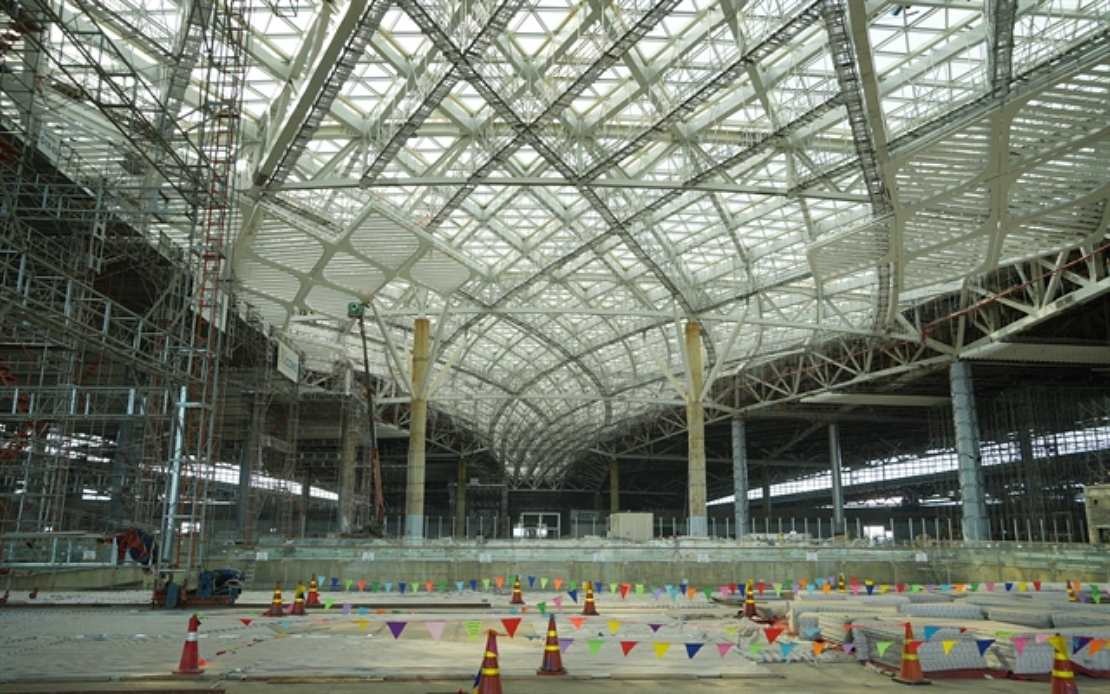
Vietnam is undertaking a transformative overhaul of its aviation infrastructure, marking the most significant expansion programme in the nation's modern history. The Government's Ministry of Construction is finalizing revisions to the national airport development blueprint extending through 2050, a comprehensive planning exercise designed to position the country's air transport sector as a critical economic driver for the coming decades.
The scope of the transformation is substantial. Vietnam currently operates 22 airports across the country, yet the updated strategic plan targets 32 operational airports by 2030 and 35 by 2050. This expansion represents not merely an increase in quantity but a deliberate geographic and functional diversification of aviation assets. The initiative arrives at a pivotal moment, following significant administrative restructuring that has created new opportunities for integrated transport policy development and coordinated regional connectivity strategies.
The urgency underlying this expansion initiative stems from persistent capacity constraints at the nation's existing major gateways. Tan Son Nhat, Da Nang and Cam Ranh airports have operated substantially above their original design capacities for an extended period, creating bottlenecks that restrict growth in both passenger and cargo movements. These infrastructure deficits have become increasingly problematic as Vietnam's economy has accelerated, with aviation demand emerging as a reliable bellwether of broader economic momentum and business confidence.
Current passenger volumes underscore the scale of demand pressures. Vietnamese airports collectively processed more than 100 million passengers in recent years, a testament to rising middle-class mobility and growing international business travel. However, Ministry projections suggest this figure will appear modest within just seven years. Annual passenger traffic is forecast to surge beyond 191 million by 2030, implying an average annual growth rate of approximately 9.7 percent through the decade. This trajectory positions Vietnam among the fastest-growing aviation markets globally, comparable to other high-growth emerging economies in Southeast Asia experiencing similar demographic and economic expansions.
Cargo demand presents an even more dramatic growth story. Air freight throughput is projected to reach roughly 3.75 million tonnes annually by 2030, reflecting average yearly expansion exceeding 19 percent. This exceptional growth rate reflects Vietnam's increasingly prominent role in global manufacturing supply chains, particularly in semiconductors, electronics and textiles. As regional logistics hubs consolidate and nearshoring trends from China accelerate, Vietnam's geographic position makes rapid air cargo capacity essential for competing effectively with established regional alternatives like Singapore and Thailand.
The expansion strategy aligns directly with Vietnam's economic ambitions. The Government has committed to achieving double-digit growth targets in the coming five years, a challenging goal that depends partly on deepening economic integration with regional and global markets. Aviation infrastructure serves as an enabling foundation for this strategy, reducing travel times for business professionals, facilitating investment site visits and strengthening Vietnam's attractiveness as a manufacturing and logistics destination. Without adequate airport capacity, bottlenecks quickly emerge that undermine competitiveness and deter foreign direct investment.
Beyond pure capacity expansion, the planned infrastructure development incorporates explicit emphasis on operational efficiency and environmental sustainability. The Ministry's planning documentation reflects global best practices in airport design, focusing on streamlined passenger flows, optimized ground handling procedures and integration with ground transport networks. This represents a departure from earlier generations of airport development that often prioritized expansion without equal attention to operational quality.
The sustainability dimension addresses growing international expectations regarding aviation's environmental footprint. Vietnam's updated airport strategy incorporates energy efficiency measures, renewable energy integration and ground emissions reduction protocols. These commitments align with Vietnam's international climate commitments and recognize that modern airport development must balance capacity expansion with environmental responsibility. For Malaysian readers familiar with similar infrastructure debates in the region, these design principles echo evolving standards across Southeast Asia's major aviation hubs.
Regional implications of Vietnam's expansion merit serious consideration. As Vietnam strengthens its aviation network, the country becomes a more attractive alternative to existing regional hubs for international carriers and logistics operators. Singapore's aviation dominance may face new competition from a more developed Vietnamese network, while Thai and Malaysian airports might encounter altered competitive dynamics as Vietnamese airports capture an increasing share of regional passenger and cargo movements. For Malaysian stakeholders in aviation, logistics and tourism, Vietnam's infrastructure investments represent both competitive challenges and potential partnership opportunities through regional aviation alliances and code-sharing arrangements.
Implementation challenges remain substantial. Constructing 10 new airports by 2030 demands enormous capital investment, skilled workforce availability and political commitment sustained across multiple electoral cycles. Land acquisition, environmental clearances and coordination across provincial and national authorities present complex administrative hurdles. Finance represents perhaps the most critical constraint, requiring mobilization of domestic resources, strategic partnerships with regional development banks and potentially private sector participation through public-private arrangements.
The strategic sequencing of airport development will prove crucial. Priority investments likely target secondary cities with strong economic growth trajectories and underserved populations, rather than concentrating solely on existing major metropolitan areas. This geographic distribution strategy seeks to unlock economic potential in provincial regions while reducing congestion at saturated urban gateways. The approach resembles broader development models increasingly adopted across Southeast Asia, distributing growth catalysts more equitably across national territories.
Vietnam's expansion programme ultimately reflects confidence in sustained regional economic dynamism and Vietnam's capacity to capture an expanding share of Southeast Asian aviation traffic. For the broader region, the initiative signals intensifying competition among ASEAN nations for aviation dominance and strategic positioning within evolving global supply chains. Malaysia and other regional economies must reassess their own aviation infrastructure investments and service quality commitments to maintain competitive advantages in this increasingly dynamic marketplace.

