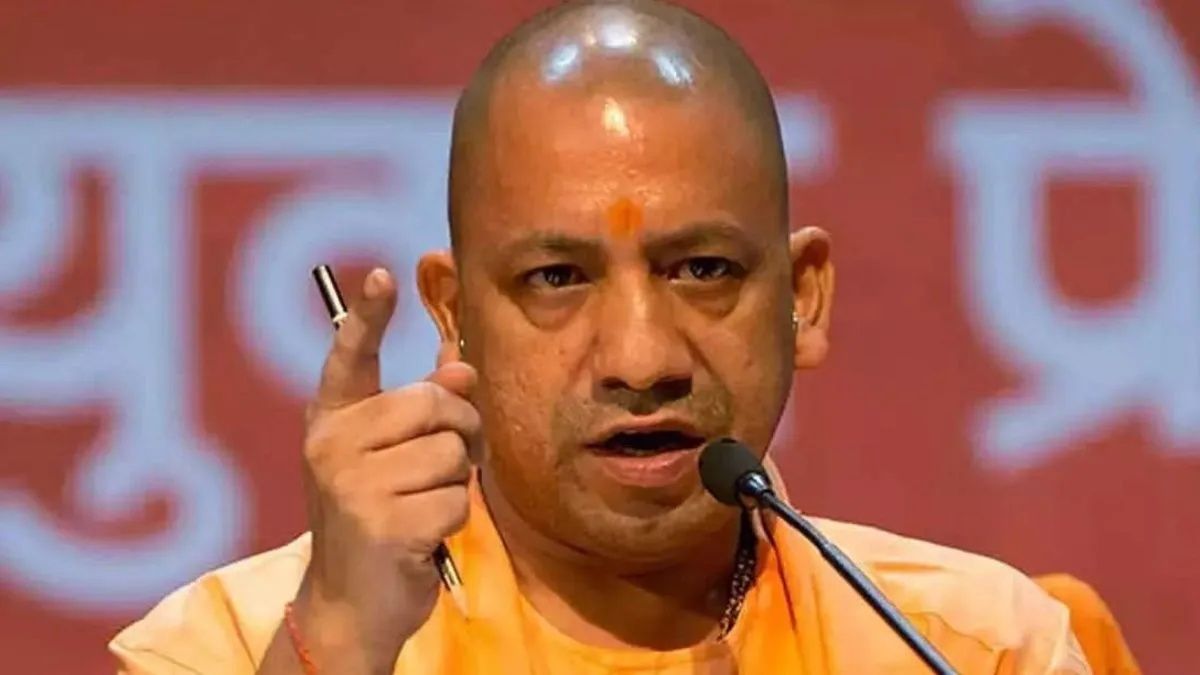
Uttar Pradesh Chief Minister Yogi Adityanath has responded firmly to the first formal complaint lodged in connection with alleged irregularities at the Shri Ram Janmabhoomi Teerth Kshetra in Ayodhya, declaring that any attempt to interfere with religious sentiments will face serious consequences. Speaking at a public event in Deoria on Friday, the Chief Minister underscored the government's commitment to investigating the matter thoroughly while simultaneously launching a pointed critique of opposition political movements.
The Chief Minister's remarks come after the Special Investigation Team (SIT) submitted its findings on the donation case at the temple complex. Yogi stated that the state government has already initiated action based on the SIT's report and promised a rigorous process of distinguishing fact from fiction. His language suggested both determination to pursue any wrongdoing and a firmness in addressing what he characterised as attempts to weaponise the inquiry for political purposes. The Chief Minister asserted that no individual or entity would be permitted to exploit public trust for personal or political gain.
During his address, Yogi emphasised the cultural and spiritual significance of Ayodhya, describing it as a representation of India's faith and ancient Hindu traditions. He recalled his earlier visit to the temple city on June 19, when he had already cautioned against raising questions about the site's integrity and importance to millions of devotees. This framing positions the investigation within a broader narrative of protecting sacred institutions from scrutiny that the government views as motivated by malice rather than legitimate accountability concerns.
The Chief Minister's rhetoric took a sharper political edge when he began contrasting the current government's approach with the historical positions of opposition parties, particularly the Indian National Congress and the Samajwadi Party. He contended that these organisations had previously denied the historical existence of Lord Rama and had opposed the temple construction movement, arguing that their current expressions of concern about the donation case lacked credibility. According to Yogi, those who had fought against the Ram Janmabhoomi project in courts and through extensive legal representation now lacked the moral standing to comment on matters affecting the temple.
The Chief Minister escalated his critique by invoking historical incidents he associated with opposition-ruled administrations, referencing incidents such as the Lar riot and allegations of restrictions on Hindu religious observances including Ram Navami celebrations, Krishna Janmashtami festivities, and the Kanwar Yatra pilgrimage. He suggested that these parties had attempted to suppress expressions of faith and had incited communal tensions in the past. By drawing these parallels, Yogi sought to position the current inquiry as merely the latest manifestation of longstanding hostility toward Hindu religious institutions from certain political quarters.
Yogi directed particular criticism at the Congress party, accusing it of systematic looting and corruption during its periods in power, arguing that the same actors now attempting to cast aspersions on Ayodhya had compromised national interests through dishonesty. He similarly criticised the Samajwadi Party, suggesting that its recent expressions of concern about the temple donation matter were driven by frustration over the current government's anti-corruption efforts that had halted what he characterised as systematic plunder under previous administrations. The Chief Minister framed the investigation not as evidence of institutional problems but as evidence of effective governance challenging entrenched vested interests.
Central to Yogi's message was an appeal to the broader community of Ram devotees, cautioning them against the intentions of those raising questions about the donation process. He urged political actors to cease making allegations without concrete evidence and either present substantial proof of wrongdoing to the investigating authorities or desist from commentary altogether. This framing positioned political criticism as potentially dangerous to communal harmony, suggesting that continued allegations against the temple administration could provoke confrontation among believers.
The Chief Minister reiterated the government's commitment to following the SIT's recommendations and pursuing a transparent investigation. He called for a cessation of political statements while senior officers conduct their work, implying that continued opposition scrutiny constituted interference with legitimate investigative processes. His message suggested that while the government would address any substantive issues identified by the investigation, it would not permit the inquiry to be hijacked for partisan advantage or used to undermine public confidence in sacred institutions.
Yogi's response reflects a broader tension in Indian politics regarding the intersection of religious institutions, accountability, and political competition. While governments have legitimate responsibility for investigating financial irregularities at major public trusts including temples, the Chief Minister's framing attempts to establish that certain political actors lack standing to participate in such discussions and that their involvement inherently comprises such inquiries. This approach has implications for how similar cases involving major religious institutions may be handled and investigated in states where governing parties perceive opposition movements as hostile to their core constituencies' values and beliefs.
The case itself remains under investigation, with the SIT examining donation handling procedures at the temple complex. The Chief Minister's public positioning suggests the government intends to pursue findings while simultaneously insulating the temple institution from broader political contestation. How the investigation progresses and whether it maintains public credibility may depend significantly on the government's ability to balance decisive action against concerns about politicisation, a balance that Yogi's rhetoric thus far has emphasised heavily on the governance and political dimensions rather than on independent institutional accountability.

