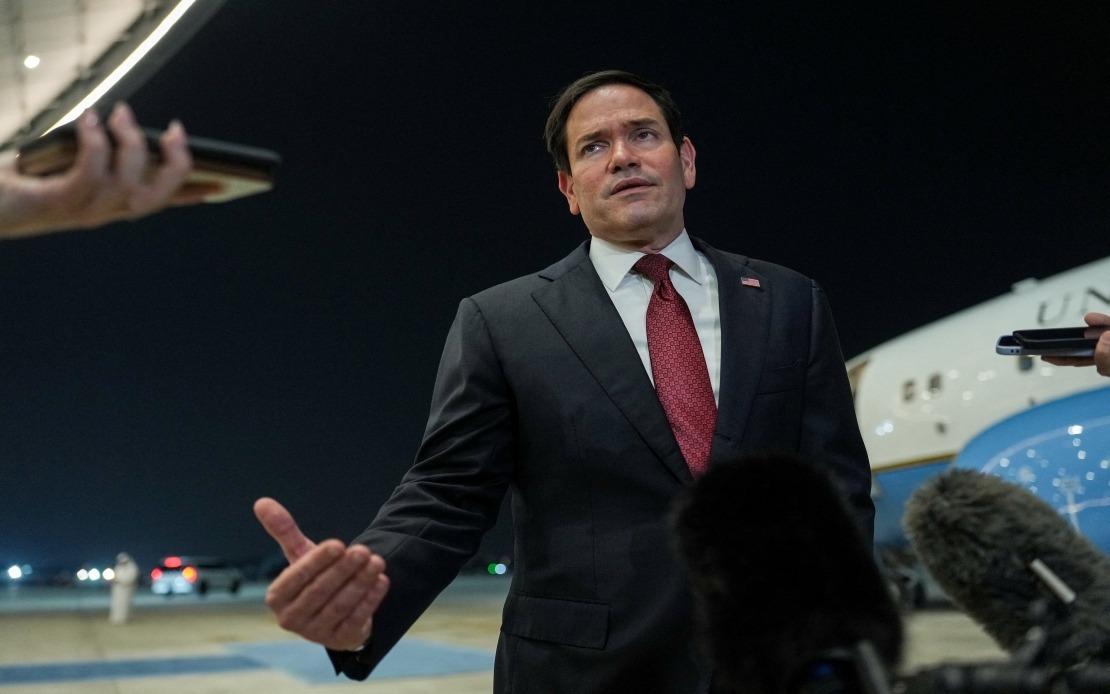
The United States has firmly signalled it will not participate in financing any reconstruction programme for Iran, according to Secretary of State Marco Rubio, who dismissed speculation about American involvement in such ventures during a Tuesday briefing. Rubio's statement addresses mounting speculation in regional circles about the composition and scope of potential economic initiatives tied to the broader normalisation efforts between Washington and Tehran, a development closely watched across the Middle East and Southeast Asia given the strategic implications for global energy markets and maritime security.
When questioned about the possibility of Gulf states channelling investments into an Iran reconstruction framework, Rubio indicated that decisions on participating nations remain far from settled. His emphatic disclaimer that "it won't be our investment. It won't be our government money" represents a deliberate attempt to temper expectations within both the Iranian and international investment communities that American capital or guarantees would underpin such schemes. This positioning reflects Washington's approach of encouraging others to lead economically while maintaining its focus on security matters that it views as prerequisite to normalisation.
The American position suggests that any financial mechanism supporting Iranian reconstruction would need to emerge from other sources, potentially from Gulf Cooperation Council states, China, or multilateral development institutions. This differentiation between American security engagement and financial contribution has become a hallmark of Trump administration diplomacy, emphasizing burden-sharing with regional allies while reserving Washington's leverage primarily for geopolitical objectives. For Southeast Asian economies, particularly those with significant Iranian trade interests such as Malaysia and Singapore, the implications centre on understanding which actors will ultimately shape Iran's economic trajectory and thus its receptiveness to broader regional trade and investment frameworks.
Rubio framed Iran's economic prospects as contingent on concurrent progress on security concerns that extend beyond the immediate bilateral relationship. His language suggests that any reconstruction effort would be viewed through the lens of whether Tehran has satisfied American demands regarding its regional military posture, missile capabilities, and support for non-state actors. This conditionality underscores how the US administration views economic normalisation not as an end in itself but as an instrument subordinate to strategic objectives, a distinction that matters significantly for businesses and governments attempting to forecast Iran's medium-term economic openness.
Earlier in June, President Donald Trump publicly rejected reports circulating about a proposed $300 billion fund allegedly structured to support Iran's economic rehabilitation. Trump's dismissal of these figures appeared designed to prevent market speculation and to signal that no extraordinary financial commitments were being contemplated at the presidential level. The recycling of such figures through international media likely reflected Iranian expectations or proposals rather than settled American policy, and Rubio's remarks serve to clarify the gap between what Tehran might seek and what Washington intends to offer.
The diplomatic momentum between the two nations has visibly accelerated in recent weeks. A significant breakthrough emerged when Iran and the United States remotely executed a memorandum of understanding on June 17 designed to terminate military hostilities that commenced on February 28. This agreement establishes concrete timelines governing American withdrawal of its naval blockade constraining Iranian shipping and corresponding Iranian restoration of navigation through the Strait of Hormuz, a passage handling approximately 30 percent of globally traded oil and therefore of paramount concern to energy-dependent Southeast Asian nations.
Sunday's negotiations in Burgenstock, Switzerland represented the highest-level in-person engagement to date in this round of diplomacy. The American delegation was headed by Vance, while Iran dispatched Mohammad Bagher Ghalibaf, its parliamentary speaker, signalling the political weight each side attached to the proceedings. Qatar and Pakistan facilitated these discussions, their roles underscoring the importance of trusted intermediaries in bridging the substantial trust deficit between Washington and Tehran. Both Ghalibaf's team and Vance subsequently reported forward movement on outstanding issues, though specifics remained closely held.
Central to the normalisation agenda is the nuclear dimension, an area where disagreements have historically proven most intractable. The recent memorandum explicitly commits Iran to non-acquisition of nuclear weapons while designating Iran's broader nuclear programme as subject to separate negotiation. The framework allocates 60 days for the parties to achieve an accord on this critical file, a timeframe that reflects either genuine confidence in breakthrough possibilities or political pressure to demonstrate progress before other regional or domestic developments intervene. The nuclear agreement's terms will prove decisive for international business confidence in Iran's economic reopening and for perceptions among Gulf states about the durability of any security arrangements.
For Malaysia and other Southeast Asian trading partners, the unfolding Iran-US normalisation carries several implications. Resolution of the blockade on Iranian shipping will restore access to markets and supply chains currently constrained, potentially expanding opportunities for regional exporters and shipping firms. Conversely, the nuclear negotiations' outcome will signal whether Iran's international reintegration will be comprehensive or limited, affecting investment calculus and partnership strategies. The explicit American refusal to fund reconstruction, meanwhile, suggests that developing nations and private investors rather than Washington will shape Iran's economic modernisation trajectory, creating space for non-Western powers to expand influence.
Rubio's framing also reflects internal American debate about the proper sequencing of engagement with Iran. By conditioning economic assistance on security progress and explicitly excluding Washington from reconstruction financing, the administration preserves flexibility to escalate or de-escalate without having made financial commitments that could complicate future policy shifts. This approach prioritises maintaining negotiating leverage over building trust through economic interdependence, a calculation that could either accelerate or prolong the normalisation process depending on how Tehran interprets American intentions.
The broader context of these developments involves recognition that neither unilateral sanctions nor military confrontation has achieved American objectives regarding Iranian behaviour. The shift toward negotiated settlements on military conflict and nuclear programmes represents an acknowledgement that sustainable outcomes require institutionalised agreements rather than coercive pressure alone. However, the American government's explicit distance from financing reconstruction suggests that Washington remains fundamentally wary of Iran's intentions and unwilling to invest its own resources in economic rehabilitation that could be reversed if security commitments prove ephemeral.

