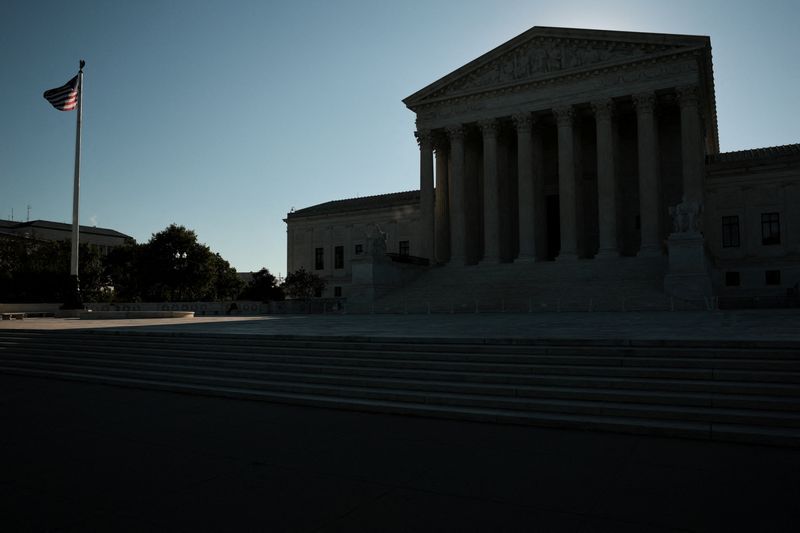
The US Supreme Court has declined to intervene in a major intellectual property dispute, letting stand a $168 million damages award against India-based Tata Consultancy Services for the alleged theft of trade secrets. The decision, announced on Monday, represents a significant setback for one of Asia's largest IT services firms and underscores the serious consequences American courts impose for intellectual property violations.
The case centres on life-insurance software originally developed by Computer Sciences Corp, or CSC, and subsequently owned by DXC Technology, an Ashburn, Virginia-based firm. CSC had licensed this proprietary platform to insurance company Transamerica during the 1990s. When Tata Consultancy Services recruited approximately 2,200 former Transamerica employees, DXC alleged the Indian company leveraged these workers' direct knowledge and access to CSC's confidential systems to construct a competing life-insurance platform. This recruitment strategy, DXC argued, amounted to systematic misappropriation of protected business information.
Tata's legal team mounted a vigorous defence, contending that the information in question lacked the protections afforded to trade secrets under American law. The company also maintained it had accessed the software through lawful means and that the alleged proprietary information was neither secret nor uniquely valuable. These arguments, however, failed to persuade multiple levels of the American judiciary.
The litigation itself began in 2019 when DXC filed suit in Dallas federal court. A jury in 2023 initially recommended damages of $210 million, though this was an advisory verdict offering non-binding guidance to the presiding judge. Federal Judge Brantley Starr subsequently reduced the award to $168 million, comprising $56 million in compensatory damages and $112 million in punitive damages. When Tata appealed, the New Orleans-based 5th Circuit Court of Appeals upheld Judge Starr's revised judgment in 2025, leaving the company with limited recourse.
Tata's final appeal to the Supreme Court centended that the damages framework employed by lower courts violated federal trade secrets law. Specifically, the company argued that DXC should not have been permitted to recover damages based solely on Tata's "unjust enrichment"—the profits gained illegally—without simultaneously proving that DXC itself had suffered quantifiable losses from the alleged misappropriation. This technical legal argument reflected a nuanced interpretation of how American trade secrets legislation should be applied.
The company further challenged the punitive damages component as excessive and disproportionate to the underlying violation. Punitive damages, awarded beyond actual losses to deter egregious conduct, remain contentious in American civil litigation, particularly in cross-border disputes involving multinational corporations. Tata's position was that even if some liability existed, the $112 million punitive award far exceeded what the law reasonably permitted.
Under US law governing trade secrets, courts may award monetary relief addressing two distinct categories of harm: the plaintiff's actual losses resulting from the secret's disclosure and the defendant's unjust enrichment from its unauthorised use. The entire award to DXC rested on the unjust enrichment theory—compensating DXC for profits Tata reaped through wrongful conduct, regardless of whether DXC could quantify its own foregone revenue.
DXC's response to Tata's Supreme Court petition was characteristically succinct. The company argued that the appellate court's application of well-established legal principles to the factual circumstances of this case presented no novel constitutional or statutory question warranting the nation's highest court's intervention. This position proved persuasive, as the Supreme Court declined to grant certiorari, effectively ending Tata's legal remedies in the American system.
For Malaysian and Southeast Asian technology companies, this decision carries sobering implications. Tata Consultancy Services, despite its Indian domicile, operates extensively throughout the region and maintains significant relationships with Malaysian enterprises. The judgment demonstrates that American courts will impose substantial penalties when multinational firms employ mass recruitment of employees from competitors as a vehicle for acquiring trade secrets. The reliance on the unjust enrichment doctrine means companies cannot escape liability by arguing the original company suffered no measurable loss—the mere fact of wrongful profit is sufficient.
The case also highlights the vulnerability of business models centred on hiring talent from rival firms. While employee mobility is generally protected in Western economies, courts distinguish between hiring individuals for their skills versus systematically recruiting workers specifically to gain access to confidential systems and methodologies. The scale of Tata's recruitment—2,200 employees from a single customer—likely influenced judicial findings that this constituted orchestrated misappropriation rather than organic talent movement.
For Australian and Southeast Asian companies doing business with American firms, the ruling reinforces the importance of robust non-disclosure agreements, restrictive covenants, and documented intellectual property protection measures. The substantial damages award reflects both compensatory and deterrent purposes, signalling to technology firms globally that American courts take trade secret theft with extreme seriousness.
Tata now faces the practical challenge of managing a $168 million liability while defending its reputation in what remains one of the world's most competitive technology services markets. The company has not publicly indicated whether it will seek settlement negotiations with DXC or pursue other remedies. Regardless, the Supreme Court's silence amounts to a decisive victory for DXC and a cautionary tale for multinational enterprises navigating intellectual property disputes in American jurisdictions.