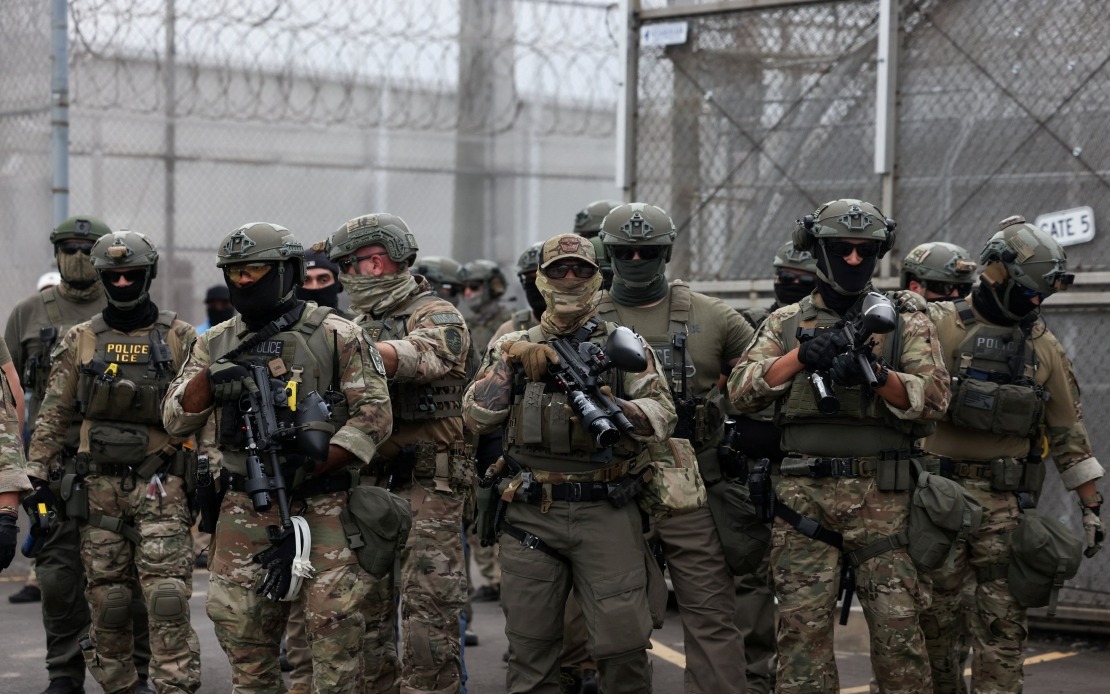
A federal judge in California has issued a nationwide order prohibiting United States Immigration and Customs Enforcement from conducting arrests of migrants within and around immigration courthouses, effectively halting a significant enforcement tactic introduced under President Donald Trump's second term. The ruling represents a substantial legal setback for the administration's aggressive deportation strategy and reflects mounting judicial scrutiny of enforcement methods that advocates argue compromise fair legal proceedings.
The practice that the court has now blocked allowed ICE agents to arrest undocumented immigrants at courthouses even when their deportation cases remained unresolved. Immigration courts specialise in handling removal proceedings and determine whether migrants facing deportation charges have valid legal grounds to remain in the United States. The ability to arrest individuals before their cases were fully adjudicated created what many legal experts viewed as a perverse incentive structure, effectively discouraging attendance at mandatory hearings.
ICE initiated widespread courthouse arrests last year as part of a broader enforcement expansion, arguing that immigration facilities provided efficient locations to identify and apprehend individuals subject to removal. However, the practice quickly drew criticism from immigration advocates, legal scholars, and civil rights organisations who contended that it fundamentally undermined due process protections. When migrants fear arrest upon appearing for court proceedings, they face an untenable choice between risking detention and defaulting on legally mandated appearances—a situation that can result in adverse judgments regardless of the actual merits of their cases.
The federal judge's decision focused on procedural and administrative deficiencies in how the Trump administration implemented its new courthouse arrest guidelines. Rather than simply rejecting the policy on constitutional grounds, the court found that ICE had adopted new enforcement procedures without adequately evaluating or documenting the practical consequences of the shift. The agency presented the changes as enhancing immigration enforcement efficiency but failed to provide reasoned analysis addressing documented concerns about negative impacts on the judicial process itself.
This judicial reasoning is particularly significant for regional observers. The decision exemplifies how courts in established democracies scrutinise enforcement agencies when they alter practices affecting fundamental rights, even during crackdowns. For Southeast Asian nations with developing legal frameworks, the case illustrates how independent judiciaries can serve as checks on executive power, particularly when enforcement agencies expand their authority without transparent justification. Malaysia's own legal system has similarly grappled with balancing security concerns against individual protections.
The nationwide scope of the ruling means immigration agencies across all US states must immediately cease courthouse arrests pending further legal proceedings. This affects thousands of immigration cases currently progressing through federal courts and creates immediate operational complications for enforcement personnel accustomed to the expanded arrest authority. ICE facilities will likely experience reduced admissions from courthouse operations, though the agency retains broad arrest powers in community settings and workplace enforcement contexts.
The practical consequences extend beyond enforcement statistics. Immigration attorneys report that courthouse arrest fears have historically depressed appearance rates among undocumented immigrants, leading to case dismissals by default and complicating the efficient resolution of immigration proceedings. By removing this incentive for non-appearance, the court decision may paradoxically facilitate faster case resolution and more thorough judicial examination of individual circumstances. Judges can now conduct hearings with greater confidence that migrants understand they can appear without risking immediate detention for immigration violations.
The Trump administration is expected to challenge the ruling through appellate processes, arguing that immigration enforcement at courthouses serves legitimate governmental interests and that courts should defer to executive judgment on enforcement prioritisation. However, the judge's specific finding that the agency failed to engage in proper administrative procedures creates a higher bar for the government to overcome. The administration would need to document extensive analysis of courthouse arrest impacts and provide detailed justifications for the policy—a substantial undertaking.
The decision also reflects broader ideological divisions within the American legal system regarding immigration enforcement priorities. Conservative judges and officials emphasise enforcement efficiency and border control, while liberal jurists emphasise procedural fairness and access to legal remedies. These competing values have produced inconsistent courtroom outcomes across different jurisdictions, though this California federal court ruling now establishes binding precedent nationwide for courthouse arrests specifically.
For migrants themselves, the ruling provides temporary relief from a practice that created genuine obstacles to legal representation and case preparation. Immigrants facing deportation can now attend proceedings with reduced anxiety about immediate arrest, potentially enabling more substantive engagement with their legal defences. This includes gathering evidence, consulting with attorneys, and presenting coherent arguments about asylum eligibility, family ties, or humanitarian grounds for remaining in the United States.
The broader enforcement landscape remains substantially restrictive despite this single judicial victory for immigrant advocates. ICE maintains extensive authority to arrest undocumented immigrants in communities, workplaces, and detention facilities. The Trump administration has signalled intentions to expand interior enforcement operations generally, and this courthouse arrest prohibition represents only one constraint among numerous ongoing enforcement activities. However, the judicial intervention demonstrates that even during periods of aggressive immigration enforcement, courts retain capacity to demand administrative accountability and procedural regularity from executive agencies, a principle with relevance across different democratic systems grappling with migration challenges.

