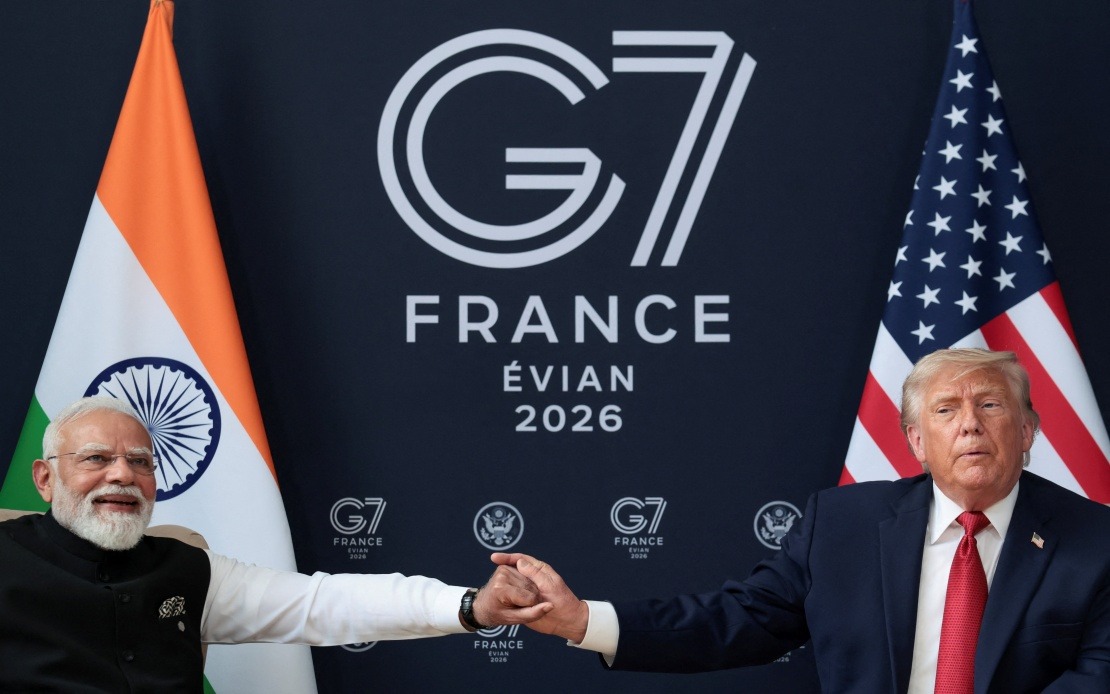
Negotiations between Washington and New Delhi have reached an important inflection point, with both governments announcing they have made substantial headway towards concluding a bilateral trade agreement that has eluded them for months. The breakthrough emerged during talks between Indian Prime Minister Narendra Modi and US President Donald Trump at the Group of Seven summit held in Evian, France on Wednesday, signalling renewed momentum after a prolonged period of trade tensions between the two nations.
The two leaders, meeting on the sidelines of the G7 gathering, discussed the state of play in their trade negotiations and expressed satisfaction with progress achieved thus far. According to India's External Affairs Ministry, both governments have instructed their negotiating teams to accelerate work towards reaching what they describe as a "balanced, mutually beneficial, and commercially meaningful agreement" without further delay. The joint statement reflected optimism that a comprehensive accord could materialise in the near term, though no specific timeline was provided for completion.
The momentum gained during the Evian summit has practical implications for bilateral commerce. US Trade Representative Jamieson Greer is scheduled to visit India in the coming week to continue talks, underlining the urgency both capitals place on resolving outstanding trade issues. This visit represents a concrete follow-up action to the leaders' summit discussion and signals both sides remain committed to narrowing remaining gaps in their negotiating positions.
Trump's characterisation of Modi as a formidable negotiating partner offers insight into the dynamics of these talks. The US president described the Indian premier as "one of the toughest" negotiators he has encountered, suggesting India has held firm on key demands throughout the bargaining process. Trump's candid assessment—that Modi appears gentle but negotiates with steely determination—hints that India has successfully resisted pressure to accept terms unfavourable to its interests, a notable achievement for a nation substantially smaller than the United States in economic terms.
The context for these negotiations remains shaped by recent tariff escalations that had strained ties between the two countries. In early 2025, Trump's administration imposed 25 percent tariffs on Indian goods, followed by an additional 25 percent penalty specifically targeting India's purchases of Russian crude oil. These levies raised substantial friction, with Indian policymakers concerned about the impact on exporters and the message such measures sent about US protectionism under the new Trump administration.
The parties had previously reached an interim trade agreement in February of this year, under which the United States agreed to lower its tariff rate to 18 percent on specified Indian products. That interim measure represented a partial de-escalation but fell short of a comprehensive, long-term arrangement addressing the full scope of bilateral trade relations. The current negotiations aim to build on that interim framework and establish a more durable and expansive commercial architecture between the two economies.
For Malaysia and other Southeast Asian nations, the outcome of US-India trade talks carries significance beyond bilateral commerce. A successful agreement could reshape regional trade dynamics, potentially offering alternatives to supply chains concentrated elsewhere and creating opportunities for triangular trade relationships. Moreover, how the US and India resolve their differences carries implications for the broader international trading system and signals whether major powers can find common ground on commercial matters despite geopolitical competition.
India's position as both a growing economic power and a key US strategic partner in the Indo-Pacific region adds complexity to these negotiations. New Delhi seeks to maintain strong ties with Washington while protecting domestic industries from import surges and defending its energy security relationship with Russia. Balancing these competing interests has made the negotiations intricate, yet the reported progress suggests both sides have found workable compromises on key sticking points.
The interim agreement framework, with its reduced tariff rate, already provides some relief to Indian exporters facing US market access. However, industry observers in India have highlighted the need for a comprehensive settlement that addresses non-tariff barriers, intellectual property protections, and sectoral arrangements affecting goods ranging from pharmaceuticals to textiles. The current negotiations appear to be tackling these deeper structural issues, moving beyond simple tariff rate adjustments.
Trump's personal investment in reaching an agreement reflects the administration's desire to demonstrate successful deal-making and to strengthen ties with India as part of a broader strategic reorientation toward the Indo-Pacific. For Modi's government, concluding a visible trade win with the US provides domestic political benefits and reinforces India's status as a nation capable of negotiating effectively with the world's largest economy. Both leaders thus have incentives to complete negotiations relatively promptly.
The emphasis on a "commercially meaningful" agreement suggests both parties recognise that any deal must deliver tangible benefits to their respective business communities and consumers. For Indian exporters, this likely means tariff reductions across multiple sectors and rollback or modification of recent penalties. For American businesses, it probably encompasses improved market access for services, agricultural products, and manufactured goods alongside enhanced intellectual property protections.
Looking ahead, the timing of Greer's visit to India will be crucial in determining whether the momentum can be sustained through the final negotiating stages. The stakes are high: a successful US-India trade agreement would demonstrate that even amid broader geopolitical tensions, major democracies can forge mutually advantageous commercial relationships. Conversely, failure to reach a deal could signal a retreat into protectionism and complicate efforts to build the democratic coalition Washington seeks to assemble as a counterweight to China's economic influence in Asia.