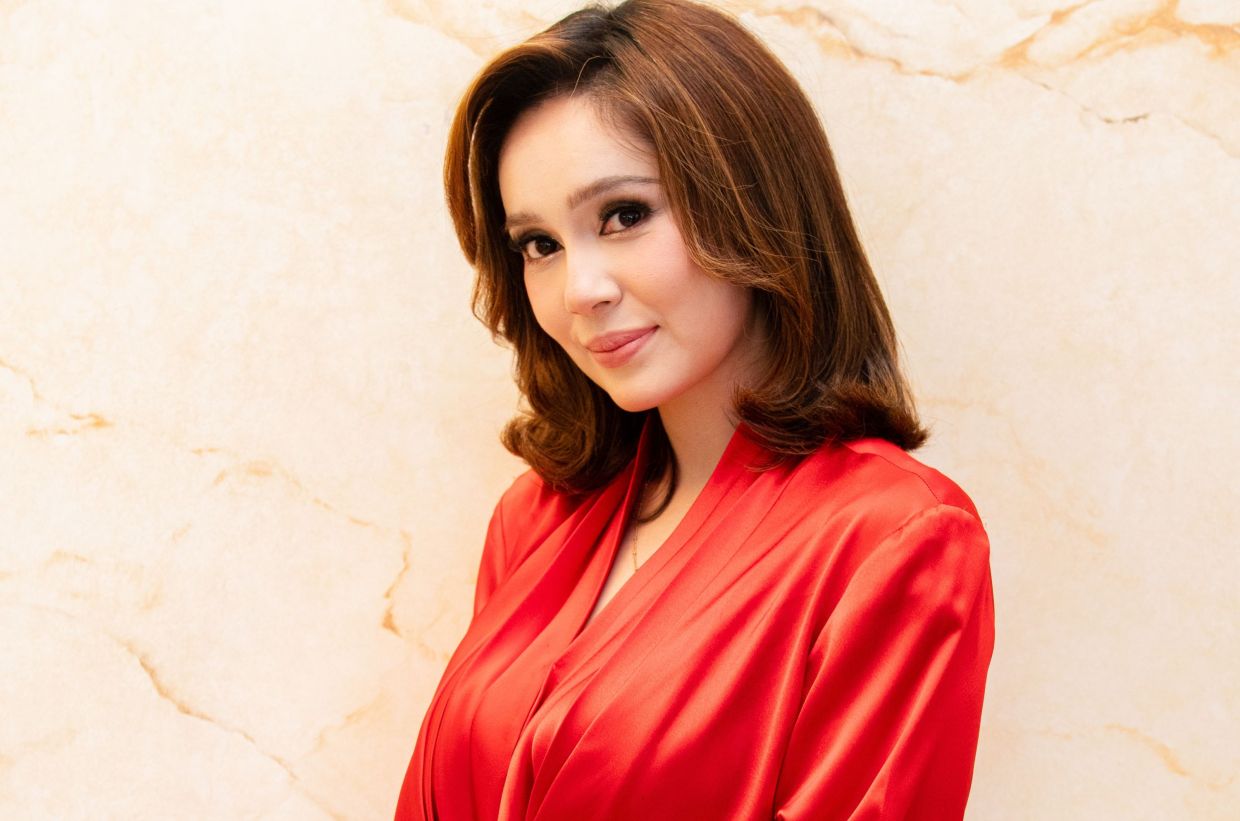
Malaysian actress Uqasha Senrose has opened up about her working relationship with co-star Aliff Aziz on an upcoming 12-episode television series, addressing the elephant in the room directly by acknowledging the actor's highly publicised personal difficulties while maintaining that professionalism on set remained uncompromised throughout production.
Aliff Aziz became the subject of significant public scrutiny in March 2024 when he was implicated in a khalwat incident, which subsequently triggered the dissolution of his marriage to Malaysian entertainer Bella Astillah. The former couple share two children, and the situation generated considerable media attention and public commentary across Malaysia's entertainment landscape. Despite this backdrop, Uqasha found herself working closely with Aziz on the series, which explores the complicated dynamics of polygamous relationships through its ensemble cast.
When discussing her decision to proceed with the project despite the controversy surrounding her colleague, Uqasha adopted a measured and empathetic stance. She articulated a philosophy rooted in personal humility, noting that she herself is not without fault and has navigated significant life challenges. This perspective shaped her approach to her professional obligations, allowing her to compartmentalise between Aliff's personal circumstances and his capability to deliver work on set.
Uqasha emphasised that during the entire filming process, her co-star demonstrated consistent professionalism and commitment to the production. He arrived prepared, executed his scenes competently, and created no disruptions or tensions that might have affected the working environment. From her vantage point as a fellow cast member, these factors were paramount—his personal life, however turbulent, did not intrude upon the professional sphere they shared during production.
Her perspective reflects a broader industry principle about separating an artist's personal struggles from their professional capacity. She resisted the notion of penalising someone's livelihood based on their personal misfortunes, arguing that both she and Aliff were entitled to pursue their respective careers and earn their living through their craft. This stance carries particular resonance given that Uqasha herself has recently emerged from her own marital difficulties, creating a nuanced understanding of personal crisis.
Uqasha filed for divorce from actor Kamal Adli in October 2025, with the proceedings concluded in January 2026. The separation involved serious allegations, with Uqasha accusing her former husband of domestic abuse—charges he refuted. The couple share a daughter together, and the dissolution required navigating the emotional and practical complexities that accompany contested divorce proceedings. This recent personal upheaval positioned Uqasha in a place of particular sensitivity regarding judgment and redemption.
The series itself, which centres on a polygamous marriage, presented an additional layer of complexity given Uqasha's concurrent personal turmoil. She portrays Azura alongside Aliff's character Adli and Elisya Sandha as Nikita. Rather than drawing upon her own marital struggles to authenticate her performance, Uqasha made a deliberate artistic choice to maintain clear boundaries between her lived experience and her fictional character. She resisted the temptation to channel her own pain into Azura, recognising that doing so might have compromised her ability to portray the character authentically according to the script's demands.
Uqasha described her character Azura as a distinct person with her own narrative arc, one that diverges meaningfully from her own biography. This separation proved essential to her creative process, allowing her to inhabit the role fully without her performance becoming a therapeutic outlet for her personal experiences. By maintaining this professional distance, she ensured that her portrayal remained rooted in the character's circumstances rather than her own emotional landscape.
Nevertheless, Uqasha acknowledged that immersing herself in Azura's emotionally demanding journey did extract a personal cost during production. Her character navigates intense psychological terrain, featuring multiple scenes where she must convey vulnerability, pain, and heartbreak. In some moments, Azura experiences physical violence, including being struck and dragged across scenes. The repeated emotional exertion required to authentically portray these experiences cumulated over filming into genuine emotional fatigue.
Uqasha articulated how certain moments of performance felt viscerally real, as though she were directly experiencing the anguish her character endured. Azura's narrative trajectory—wherein she believes she has earned a reprieve from past suffering only to confront fresh challenges—resonates with universal experiences of hope meeting disappointment. This emotional authenticity, while artistically valuable, demanded considerable reserves of emotional labour from the actress.
Beyond its exploration of polygamy, Uqasha highlighted a thematic sophistication embedded within the series: a refusal to present characters as morally binary. Neither the sympathetic nor the antagonistic characters function as simple archetypes. Individuals who project kindness may harbour selfish motivations, whilst those who appear harsh frequently possess understandable justifications for their behaviour. This moral complexity elevates the narrative beyond melodrama into genuine psychological territory.
Looking forward, Uqasha has recalibrated her priorities toward her own wellbeing and that of her daughter. She emphasises how the accumulated difficulties she has weathered have fostered greater emotional maturity and resilience. Motherhood has crystallised her understanding that her responsibilities extend beyond her personal ambitions; she carries obligations that transcend her own immediate interests. This reorientation suggests an actress consciously choosing to invest her energy in the domains—family and meaningful work—that nourish sustainable flourishing rather than chasing professional validation at any cost.

