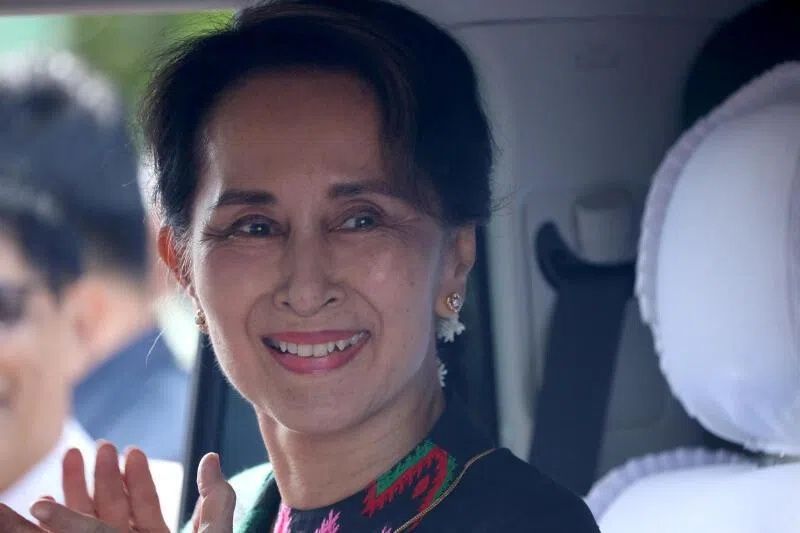
The United Nations' special envoy to Myanmar has intensified diplomatic pressure on the military junta to release Aung San Suu Kyi, the nation's detained opposition icon, as she marked her 81st birthday while held in an undisclosed location. Julie Bishop made the call during remarks to UN member states on Friday, June 19, signalling sustained international concern over the Nobel Peace Prize laureate's detention more than two years after Myanmar's military coup toppled her elected government.
Bishop, who returned from her fourth visit to Myanmar just weeks earlier, underscored the urgency of Suu Kyi's case by highlighting the complete absence of independent verification about the conditions under which she is being held. The Australian diplomat pointed out that the situation has persisted for years, leaving the international community unable to assess whether Myanmar's most prominent opposition figure is safe or receiving basic humanitarian treatment. Her remarks reflect growing frustration among Western governments and multilateral institutions over the military's opacity regarding one of Asia's most recognisable political prisoners.
The special envoy framed Suu Kyi's continued detention as a fundamental obstacle to Myanmar's path toward reconciliation and political stability. "In the eyes of many, there can be no progress to peace while the State Counsellor Daw Suu is held prisoner," Bishop stated, using the honorific "Daw" and Suu Kyi's former official title before the February 2021 coup. This framing carries significant weight in diplomatic circles, suggesting that the international community views her release as a prerequisite condition for any meaningful dialogue aimed at restoring democratic governance to Southeast Asia's largest country by population.
Suu Kyi's legal situation remains extraordinarily severe. In the months following the military takeover, junta courts convicted her on multiple charges and imposed cumulative sentences exceeding 30 years imprisonment. The nature of these convictions has drawn widespread criticism from human rights organisations, which argue that the charges—ranging from sedition to election law violations—were politically motivated and lacked due process. The junta's legal proceedings against her have been characterised as lacking transparency and failing to meet international standards for fair trial procedures.
In April of this year, junta leader Min Aung Hlaing announced that Suu Kyi would transition from prison confinement to house arrest, a measure ostensibly framed as a humanitarian gesture. However, this announcement has provided little reassurance to her family or international observers. The stated shift in detention status has not been accompanied by any meaningful access for independent monitors or family members, leaving questions about whether the transition represents genuine improvement or merely a change in the legal classification of her captivity.
The whereabouts of the Myanmar opposition leader have remained deliberately obscured by military authorities. This secrecy has prompted her son, Kim Aris, to make increasingly urgent public demands that the junta provide verifiable proof of his mother's current condition and location. His appeals underscore a growing concern within Suu Kyi's immediate family that the military's refusal to allow independent verification creates room for deterioration of her health or wellbeing without public knowledge. Such opacity is particularly troubling given Suu Kyi's advanced age and the fact that she spent 15 years under house arrest during Myanmar's previous authoritarian period, an experience that may have affected her physical resilience.
For Southeast Asian observers, Suu Kyi's case carries profound implications for democratic institutions across the region. She has long symbolised resistance to military authoritarianism and the possibility of democratic transition in Myanmar. Her continued detention under what many regard as spurious legal pretexts suggests that the junta views her political rehabilitation as incompatible with its retention of power. The military's resistance to international pressure regarding her case sends a cautionary message to pro-democracy movements throughout Southeast Asia about the willingness of armed forces to consolidate control through indefinite detention of civilian leaders.
The timing of Bishop's appeal on Suu Kyi's birthday carries symbolic weight beyond the immediate diplomatic message. It draws international attention to her personal suffering and maintains her case in the global consciousness at a moment when Myanmar's coup and humanitarian crisis risk becoming overshadowed by other international events. Birthday commemorations for detained political figures have historically served as focal points for mobilising international advocacy and reminding both domestic and foreign audiences of unresolved injustices.
Myanmar's military government has shown little inclination to respond to international pressure regarding Suu Kyi's status. The junta continues to portray her detention as a matter of domestic legal process rather than a political detention, rejecting what it characterises as foreign interference in internal affairs. This defensive posture reflects the junta's broader isolation from the international community, with Western nations and the ASEAN bloc expressing grave concern over the military's consolidation of power and suppression of democratic processes.
Bishop's persistent engagement with Myanmar's military authorities, evidenced by her four visits to the country, reflects a diplomatic strategy that combines public pressure with private dialogue. Her willingness to maintain channels of communication with the junta, even as she publicly criticises its treatment of Suu Kyi, suggests international recognition that complete isolation of Myanmar may prove counterproductive to eventual restoration of democratic governance. Yet her repeated calls for Suu Kyi's release indicate that this diplomatic approach has yielded no tangible improvements in the opposition leader's circumstances.

