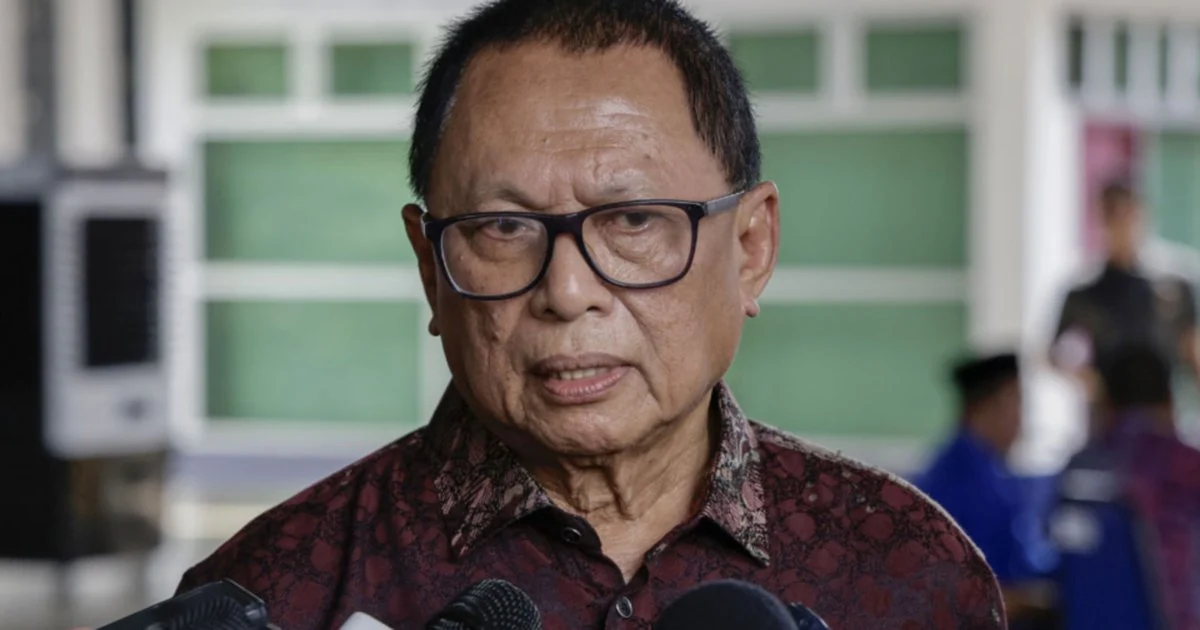
A prominent figure within Umno's highest decision-making body has terminated his membership in Malaysia's oldest political party, signalling deepening tensions within the organisation over internal governance and the independence of its state branches. Datuk Puad Zarkashi, who held a seat on the Umno Supreme Council, made the announcement public in Kuala Lumpur on Tuesday, stepping down with immediate effect and citing fundamental disagreements over the party's operational structure.
The resignation of a Supreme Council member carries particular weight within Umno's hierarchy, as these positions are reserved for senior party figures who shape major policy decisions and party direction. Zarkashi's departure represents not merely a personal exit but a statement about dissatisfaction at the organisation's most senior levels, where questions about hierarchy, delegation, and branch autonomy have clearly become sources of friction.
At the heart of Zarkashi's grievance lies a concern specific to Johor Umno, the party's branch in Malaysia's southern economic powerhouse. He contended that the state-level organisation has progressively lost the capacity to exercise independent judgment on matters affecting its members and constituency. This complaint touches on a recurring challenge in large political parties across Southeast Asia: the tension between centralised national leadership and the operational needs of regional or state divisions.
Johor represents a significant power base within Umno, historically wielding considerable influence due to its electoral importance and economic clout. Any perception that this branch lacks meaningful autonomy in decision-making could undermine morale among local party members and cadres who expect their leadership structure to retain genuine authority. The state branch's reduced independence, from Zarkashi's perspective, compromises the party's organisational health and its capacity to respond to ground-level political realities.
The timing of this resignation coincides with a broader period of reassessment within Umno following a series of electoral setbacks and internal power struggles. The party has faced persistent questions about leadership, direction, and unity after a decade marked by factional disputes, institutional challenges, and electoral volatility. Zarkashi's departure adds to a pattern of high-profile exits and public disagreements that have characterised Umno's trajectory in recent years.
For Johor Umno specifically, losing a Supreme Council representative who advocates for the branch's autonomy removes a potential champion for state-level interests at the national level. This could further entrench centralised decision-making structures and reduce channels through which state party machinery might push back against directives from the national headquarters. Such dynamics often create resentment among rank-and-file members who feel disconnected from leadership processes.
The question of branch autonomy within Umno reflects broader governance challenges facing Malaysia's political ecosystem. As parties consolidate power or face existential threats, the temptation to centralise decision-making intensifies, often at the expense of grassroots input and regional flexibility. Yet this approach frequently backfires, as members become demotivated when they perceive their voices are ignored or their branch lacks agency in shaping its own political strategy.
Zarkashi's resignation may also signal divisions within the Supreme Council itself regarding the party's direction and management. If a senior council member felt compelled to exit over these concerns, it raises questions about whether other council members share similar frustrations or whether Zarkashi represents an isolated perspective. The depth and breadth of discontent within Umno's top leadership structure will prove crucial to the party's stability in the months ahead.
The implications extend beyond Umno's internal politics to affect Malaysia's broader political landscape. Umno remains a heavyweight in Malaysian politics despite recent setbacks, and any destabilisation of its organisational coherence creates ripple effects across the country's coalition arrangements, state governments, and electoral calculations. A party struggling with internal governance and member confidence may find it increasingly difficult to mobilise support or project political strength.
For observers tracking Umno's evolution, Zarkashi's departure exemplifies a recurring pattern: senior figures departing when their vision for the party's future conflicts irreconcilably with the prevailing trajectory. Whether this resignation prompts genuine reflection within Umno about its organisational model, or whether it becomes merely another episode in a lengthy narrative of factional discontent, remains to be seen.
The coming weeks will likely reveal whether Zarkashi's concerns resonate sufficiently within Johor Umno to trigger broader discussion about branch autonomy, or whether his exit proves to be an isolated incident. Either way, the resignation underscores persistent weaknesses in Umno's institutional architecture at a moment when the party can ill afford further erosion of internal cohesion and member confidence.

