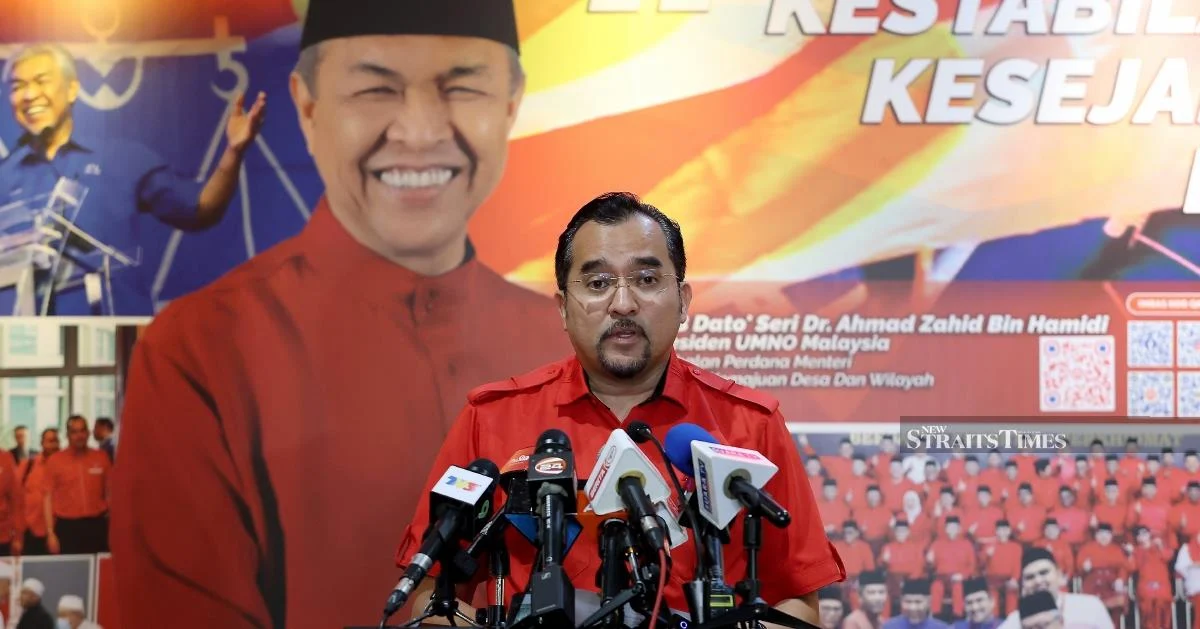
Umno's leadership has committed to running substantive campaigns centred on policy proposals and public benefit during the upcoming state elections in Johor and Negri Sembilan, steering the party away from what party officials characterise as negative electioneering tactics. The commitment comes from party secretary-general Datuk Dr Asyraf Wajdi Dusuki, signalling organisational discipline as Umno looks to strengthen its electoral position across the peninsula.
The pledge reflects a calculated strategic choice by the party's governing apparatus, which appears intent on repositioning Umno's public image following years of internal turbulence and electoral setbacks. By explicitly renouncing personal attacks and mudslinging, the leadership aims to appeal to swing voters who have grown weary of caustic political rhetoric. This approach differs markedly from the character-driven campaigns that have periodically characterised Malaysian politics, where personal failings and scandals often dominate the narrative landscape.
For Johor, historically a crucial Umno stronghold, the emphasis on policy delivery carries particular weight. The state has served as a testing ground for electoral innovations and remains vital to national political calculations given its large population and economic significance. A campaign focused on substantive governance proposals could help Umno consolidate support among middle-income voters concerned with practical improvements in services, infrastructure, and economic opportunities rather than partisan point-scoring.
Negri Sembilan presents distinct challenges and opportunities. The state's relatively smaller population and more fragmented electoral dynamics mean that targeted policy messaging around specific local concerns—such as land issues, agricultural development, and connectivity—could prove effective in shaping voter preferences. Umno's historical performance in the state has been mixed, making a credibility-based strategy potentially advantageous for rebuilding party standing.
The secretary-general's public commitment also serves an internal disciplinary function within Umno's complex organisational hierarchy. By articulating clear campaign guidelines from the top, party leadership restricts the scope for individual politicians, component parties, or grassroots operatives to engage in independent attacks that might undermine the party's broader messaging or create embarrassing headlines. This vertical communication reinforces central control over campaign strategy and tone.
Contextually, Malaysian voters in recent years have shown increasing sophistication in distinguishing between substantive policy debates and personality-driven narratives. The 2022 federal election and subsequent state contests demonstrated that voters reward parties presenting coherent development agendas, particularly those addressing bread-and-butter concerns such as cost of living, employment stability, and infrastructure quality. Umno's pivot toward this messaging reflects recognition of evolving voter preferences.
The approach also contrasts with political dynamics in the opposition camp, where internal fragmentation and leadership disputes have occasionally dominated coverage. By maintaining organisational discipline and focusing public communications on policy substance, Umno can potentially establish a contrast that appeals to voters seeking stability and serious governance from their representatives.
Regionally, this positioning matters beyond Johor and Negri Sembilan. Other Malaysian states will observe how effectively Umno executes a clean campaign strategy, and the results could influence tactical decisions elsewhere. Should voters respond positively to issue-centred electioneering, it could establish a precedent that elevates the overall tone of Malaysian political discourse, benefiting democratic deliberation more broadly.
The commitment requires meaningful implementation across diverse political organisations and individuals claiming Umno affiliation. Success depends on consistent messaging, campaign material that emphasises solutions rather than criticism, and party mechanisms that discourage and address any infractions. The sophistication of modern media and social platforms means that a single inflammatory statement from a candidate can swiftly contradict centralised messaging, requiring vigilant oversight.
Meanwhile, the timing of this announcement demonstrates Umno's awareness that electoral credibility extends beyond policy content to encompass the manner and tone through which campaigns are conducted. Voters increasingly factor in how political parties conduct themselves, viewing campaign behaviour as indicative of governance approach. A party capable of restraint during contested elections signals capacity for measured decision-making in government.
For Malaysian observers and international analysts tracking Southeast Asian political trends, Umno's positioning offers insight into how major regional parties are adapting to contemporary voter expectations. The transition from personality-dominant to issue-centred political competition reflects maturation within electoral systems, though implementation remains the ultimate test of such declarations.
The coming weeks will prove whether Umno's leadership can sustain this commitment throughout the campaign period, as competitive pressure intensifies and political allies press for more aggressive strategies. The credibility of the party's democratic credentials and governance philosophy may ultimately depend on whether this pledge translates into visible campaign practice across Johor, Negri Sembilan, and beyond.