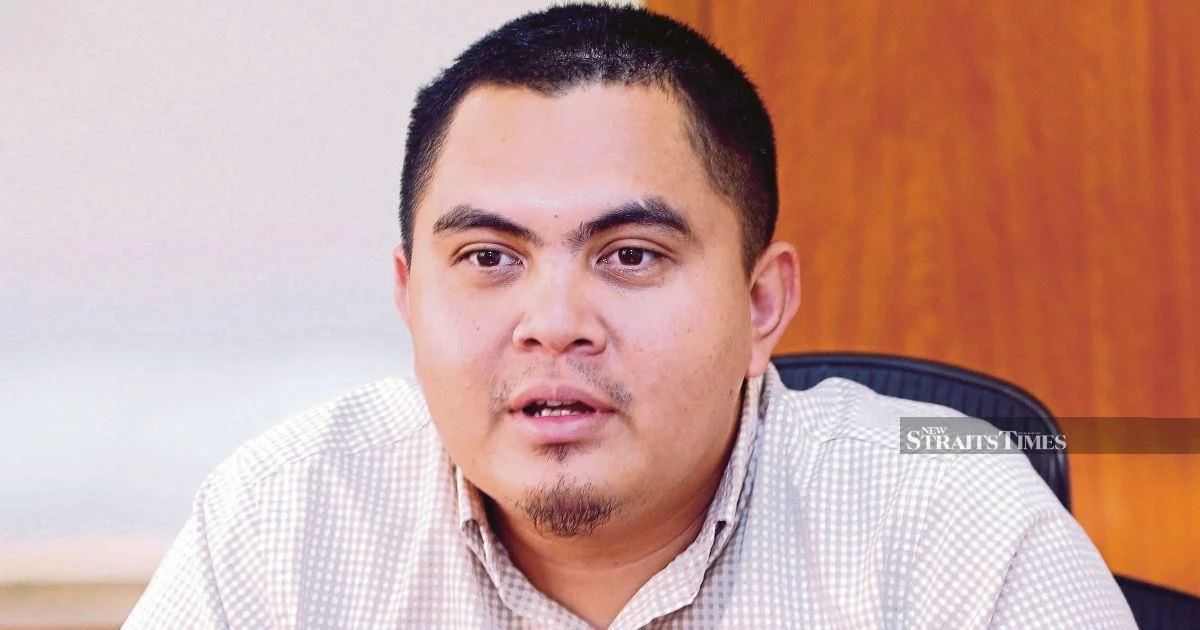
In a pointed statement at the party headquarters in Johor Baru, Umno Youth chief Datuk Dr Muhamad Akmal Saleh has pushed back against persistent characterisations of the party as a vehicle for familial advancement, asserting instead that candidate nominations rest on qualifications and grassroots support rather than bloodline connections.
The declaration represents a significant effort to counter a widespread perception that has dogged Malaysia's largest Malay-Muslim political organisation for years. Veteran party members and observers have increasingly noted a pattern whereby relatives of senior figures—including former prime ministers and state leaders—have secured prominent positions within both government and party structures. This narrative has become particularly acute in recent electoral cycles, where questions about meritocratic selection have shadowed internal party deliberations.
Akmal's intervention directly addressed concerns raised by fellow senior member Datuk Puad Zarkashi, suggesting internal fractures over governance principles within Umno's upper echelons. The youth wing leader's forceful rebuttal indicates mounting pressure from the grassroots and mid-ranking party members who feel sidelined by an apparent dominance of dynastic figures in ticket placements. Such tensions, while not uncommon in established political parties across Southeast Asia, carry particular weight in Malaysia's competitive multiparty democracy where voters have demonstrated increasing willingness to punish perceived institutional corruption or unfairness.
The timing of these remarks carries implications extending beyond internal party housekeeping. Umno's legitimacy and electoral viability hinge substantially on its projection as a mainstream, institutionalised party committed to democratic principles and transparent governance. Any sustained perception of endemic nepotism threatens to erode support among younger urban voters and professionals who have grown increasingly sceptical of traditional power-broking arrangements. This demographic cohort represents precisely the constituency Umno has struggled to retain during recent electoral contests, particularly following the fallout from the 1MDB scandal and subsequent political realignments.
Looking at regional contexts, this internal debate also reflects broader patterns visible across Southeast Asia, where established ruling parties frequently confront legitimacy challenges stemming from hereditary political succession. Thailand's Democrat Party, Indonesia's Golkar, and the Philippines' various provincial dynasties have all grappled with similar criticisms. Malaysia's explicit attention to these questions through public statements by senior figures suggests a party attempting to navigate democratic expectations while managing factional interests within its own structure.
The assertion that Umno operates merit-based selection processes, however, requires scrutiny against documented outcomes. Historical analysis of party ticket distributions reveals recurring instances wherein family members of prominent leaders obtained winnable seats without apparent organisational resistance. The disconnect between Akmal's proclamation and observable patterns creates a credibility gap that internal rhetoric alone cannot bridge. Party leadership must therefore demonstrate through concrete mechanisms—transparent candidate selection criteria, independent oversight committees, and publicly disclosed evaluation rubrics—that merit rather than kinship determines electoral positioning.
Akmal's intervention also signals potential repositioning ahead of anticipated electoral cycles. Malaysian electoral dynamics have shifted substantially in recent years, with swing voters increasingly concentrated among educated urban populations and younger demographics. These voters respond to transparency messaging and institutional reform commitments. By explicitly rejecting family-party characterisations, Umno's youth wing appears to be staking claim to a modernising, anti-nepotism position that could resonate with previously alienated constituencies. Whether this rhetorical stance translates into genuine institutional reform remains the critical question facing the party's credibility.
Further complicating the picture, Umno operates within Malaysia's unique constitutional framework where traditional Malay-Muslim institutions hold special constitutional status. This arrangement sometimes encourages deference to established hierarchies and respected figures regardless of merit considerations. Party leadership navigates constant tension between modernisation pressures from society and institutional expectations rooted in traditional governance concepts. Acknowledging this structural reality while simultaneously rejecting family-based advancement presents a fundamental challenge that requires sophisticated institutional innovation.
The exchange between Akmal and Puad also reflects generational dynamics within Umno's command structure. Younger leaders seeking to revitalise the party's appeal increasingly challenge older guard approaches. This contestation, visible through public statements and policy initiatives, demonstrates democratic processes functioning within the party's internal mechanics. Nevertheless, such visible disagreements can simultaneously signal institutional weakness to external observers and electoral opponents who view internal discord as evidence of organisational deterioration and ideological confusion.
For Malaysian voters beyond Umno's traditional support base, this debate carries significance primarily insofar as it affects government quality and institutional integrity. If Umno continues dominating electoral outcomes through broad Malay and Muslim voter coalitions, internal governance practices directly impact national policy formation and administrative competence. Conversely, if the party's failure to address nepotism concerns contributes to electoral losses, power may shift to alternative political coalitions with equally uncertain governance implications. Either pathway has consequences for Malaysia's trajectory and regional standing.
Moving forward, Umno faces pressure to operationalise its anti-nepotism messaging through substantive institutional mechanisms rather than relying on rhetorical commitments. Establishing independent candidate selection bodies, implementing transparent evaluation criteria, and demonstrating willingness to exclude prominent individuals' relatives from automatic consideration would provide concrete validation of leadership claims. Such measures would simultaneously strengthen the party's electoral appeal and reinforce democratic norms across Malaysia's broader political system, ultimately serving both partisan and national interests.

