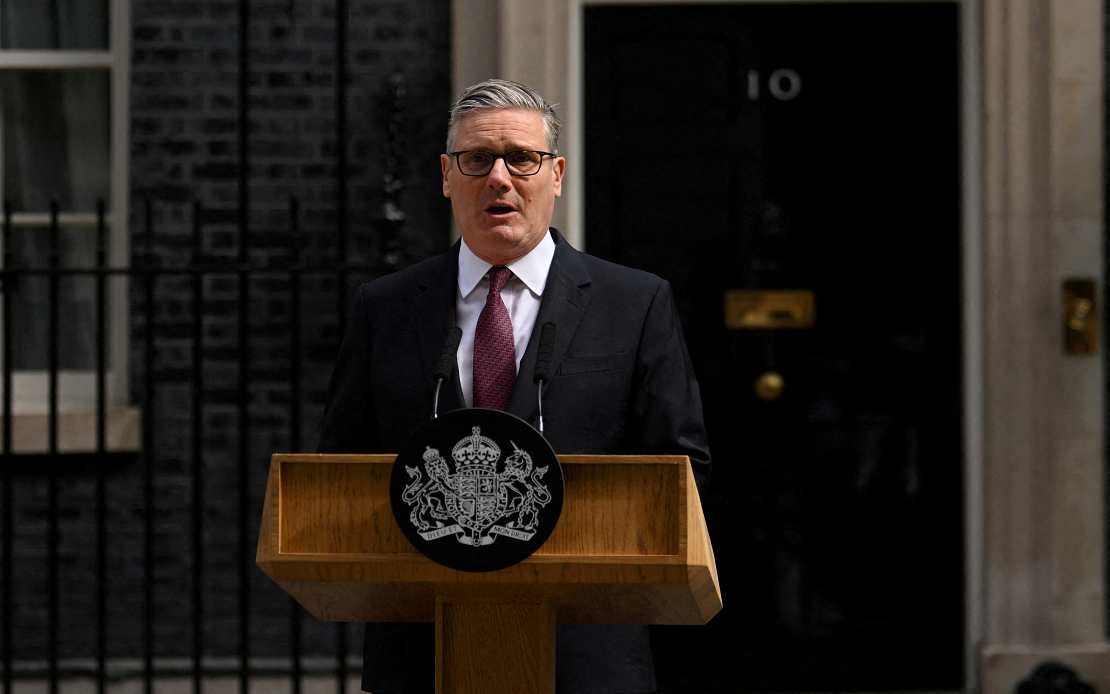
British Prime Minister Keir Starmer has announced his intention to resign from office, marking a dramatic reversal of fortunes for a leader who arrived at Number 10 just under two years ago on the back of a commanding electoral mandate. The transition will occur before parliament resumes in September, allowing the incoming prime minister time to establish themselves before the new legislative session. His decision to step down represents one of the swiftest collapses of a premiership in recent British political history, raising fresh questions about the country's underlying political instability.
Starmer's announcement comes after an extended period of deteriorating public support that gathered momentum over recent months. The Prime Minister, who once promised to restore stability and purpose to British governance following years of turbulent Conservative rule, has seen his approval ratings sink to historic lows. His commitment to support whoever emerges victorious from the forthcoming Labour Party leadership contest underscores the inevitability of his departure and his apparent acceptance that the party membership has moved decisively against him.
The immediate trigger for accelerated speculation about Starmer's future came following a significant parliamentary by-election result. Andy Burnham, the prominent Mayor of Greater Manchester and a former cabinet minister, secured a commanding victory in a Westminster election, defeating a candidate from Nigel Farage's Reform UK party. This triumph resonated powerfully among Labour's parliamentary ranks because it demonstrated electoral viability in a political environment where the party has bled support under Starmer's leadership. Burnham's success offered Labour lawmakers a tangible alternative, someone with proven communication abilities and a track record of winning over voters.
Burnham's rise to prominence within Labour circles reflects deeper frustrations about the party's direction under Starmer. The former health secretary has cultivated a reputation as a skilled communicator capable of articulating Labour's message in accessible terms. His ability to win in a competitive electoral battle, particularly against Reform UK's surging popular appeal, suggested to many within the party that he possessed the electoral magic that Starmer appeared to have lost. However, Burnham has not yet articulated comprehensive positions across key policy domains, particularly foreign affairs, defence, and economic management.
The economic circumstances facing any incoming prime minister will severely constrain their room for manoeuvre and policy ambition. Britain currently carries the highest borrowing costs among Group of Seven nations, a consequence of elevated public debt levels, substantial interest payment obligations, and persistently sluggish economic growth. These structural challenges have left successive governments struggling to simultaneously reduce spending, invest in critical areas like national defence, and address public demands for lower living costs. The bond market investors who effectively hold the power of veto over major fiscal decisions remain deeply sceptical of any borrowing-financed spending initiatives.
Burnham himself has previously expressed frustration with market constraints on government policy, remarking last September that Britain must move beyond dependence on bond market confidence. However, analysts question whether his stated convictions would survive the harsh realities of office. Financial institutions including Citibank have warned that a Burnham-led government would inherit an extraordinarily precarious fiscal position with minimal practical tools to implement the transformative changes voters are demanding. This suggests that regardless of who occupies the premiership, the fundamental mismatch between public expectations and economic reality will persist.
The accelerating churn of British prime ministers itself constitutes a substantive political problem with implications stretching far beyond Westminster. Starmer will become Britain's seventh prime minister since the 2016 Brexit referendum, a turnover rate that exceeds anything witnessed in nearly two centuries of British political history. This extraordinary instability reflects widespread voter dissatisfaction with the performance of successive governments and their apparent inability to improve living standards, strengthen public services, or effectively address voter concerns about illegal immigration. Each leadership change creates additional uncertainty for international partners and undermines Britain's diplomatic standing.
The timing of Starmer's departure, should it proceed as announced, creates a window of opportunity within the British political calendar. A leadership transition completed by September would allow the new prime minister to attend scheduled UK-European Union reset discussions planned for July, representing continuity in diplomatic engagement at a delicate moment in Britain-EU relations. Simultaneously, Burnham or another incoming leader would gain several months to prepare for the substantial challenges awaiting them when parliament returns, including contentious decisions on taxation, spending, and defence policy that cannot be deferred indefinitely.
For Malaysia and other Commonwealth nations in Southeast Asia, the continuing instability in British politics carries broader implications for strategic partnership and regional engagement. A Britain consumed by repeated domestic leadership crises has diminished capacity to maintain consistent foreign policy engagement with Indo-Pacific partners. Malaysian policymakers monitoring the unfolding British political drama will note that neither Starmer nor his likely successors have prioritized Asian relationships or demonstrated sophisticated understanding of regional dynamics. The leadership vacuum in London occurs precisely when geopolitical developments in Asia demand sustained attention and strategic clarity from established democratic powers.
The underlying causes of British political dysfunction extend beyond the personal failings of individual leaders or the Brexit rupture that fractured Conservative dominance. Voters across the United Kingdom express mounting disillusionment with their political system's capacity to deliver meaningful improvement to their circumstances. Public services face genuine strain, economic prospects appear constrained, and the gap between political rhetoric and practical outcomes has widened substantially. Until any incoming government demonstrates tangible progress on these fundamental challenges, speculation about the next leadership crisis will likely begin before the current one has fully concluded.

