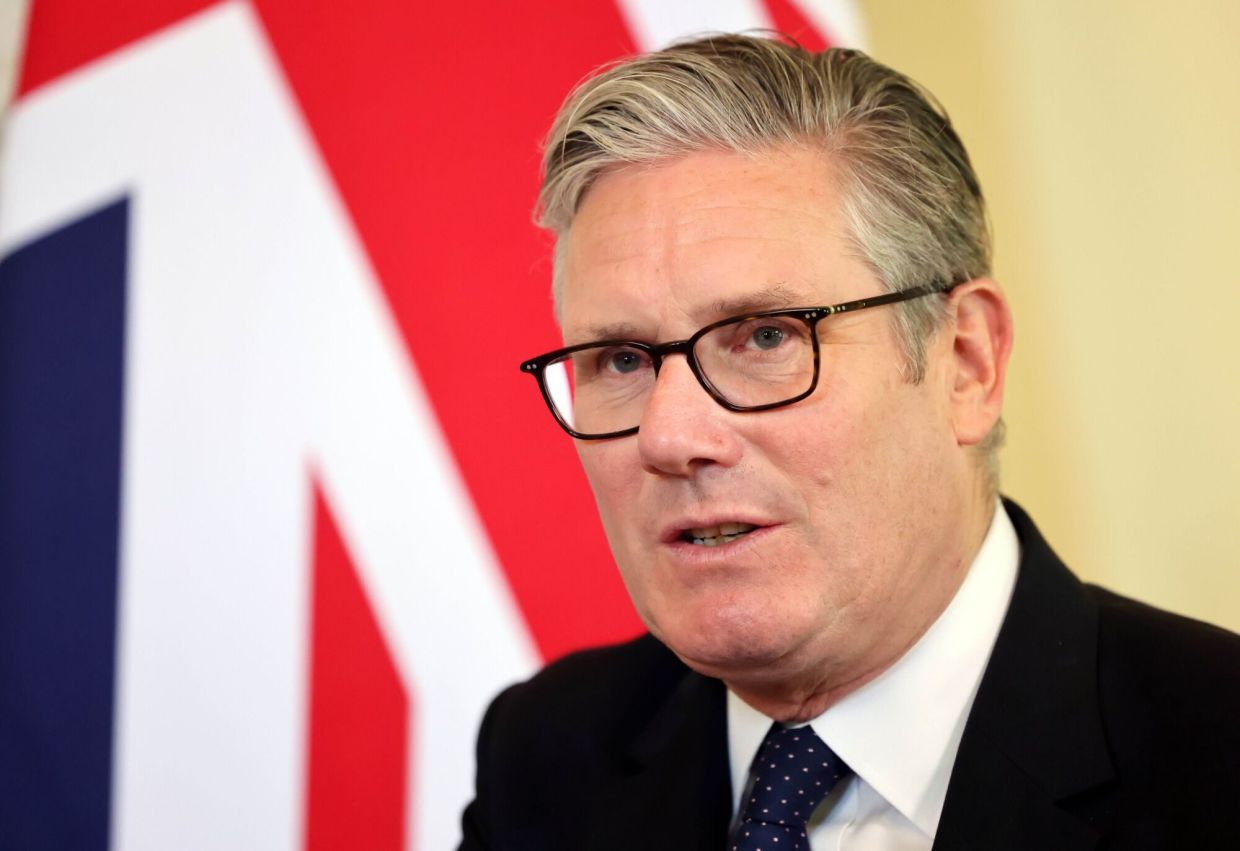
Prime Minister Keir Starmer is set to unveil a comprehensive package of restrictions aimed at shielding British teenagers from digital threats, marking a significant intervention in online safety policy. The announcement, expected on Monday, will include a ban preventing under-16s from accessing major social media platforms, complemented by curfew provisions for older teenagers and stringent oversight of chatbot systems. This move comes as Starmer prepares to travel to the Group of Seven summit in Évian-les-Bains, France, where he will face mounting scrutiny over the recent departure of his defence secretary and ongoing concerns about the UK's military spending commitments.
The proposed restrictions represent one of the most aggressive stances on teen social media access globally, surpassing measures already in place in Australia, where a comparable prohibition took effect last year. Starmer's government has chosen to extend the scope beyond social platforms alone, incorporating regulations on interactive gaming environments and artificial intelligence chatbots that young people frequently encounter online. In a statement released late Sunday, the Prime Minister framed the initiative as a fundamental choice between supporting families across Britain and maintaining an ineffective status quo that leaves young people vulnerable to harm.
Public sentiment appears favourable towards the core concept of restricting teenage social media access, though implementation challenges loom large. Enforcement mechanisms for age verification and geographic restrictions remain untested at scale, raising legitimate questions about whether such a ban can be effectively administered without creating workarounds. Nevertheless, the political calculation within Starmer's administration appears to rest on the assumption that voters will reward decisive action on youth welfare, regardless of practical obstacles that may emerge during implementation.
The timing of this announcement has drawn criticism from unexpected quarters, including from figures whose causes align with the government's protective aims. Ian Russell, whose teenage daughter died by suicide in 2017 following exposure to damaging online material, cautioned the BBC that rushing the policy announcement could appear opportunistic if motivated by electoral considerations rather than genuine concern for youth safety. Russell's pointed remark that such timing would be "deplorable" highlights how even supporters of social media restrictions question whether they are being pursued for the right reasons.
Internal government documents and conversations suggest that the decision to implement a full ban on social media for under-16s may have been accelerated beyond the normal policy-development timeline. A public consultation on youth protection mechanisms closed fewer than three weeks prior to this announcement, a compressed schedule that some of Starmer's own cabinet members view with concern. Multiple sources indicate that the administration prioritised announcing the policy before Thursday's parliamentary by-election in Makerfield, northwest England, a decision that appears driven partly by political urgency rather than thorough deliberation.
Starmer faces a critical juncture in his premiership, with considerable uncertainty about his long-term political future. His primary rival, Andy Burnham, is positioned to secure a parliamentary seat in the Makerfield contest, and if he defeats the candidate from Nigel Farage's Reform UK party, he would have a clear platform to challenge Starmer for party leadership. Such an internal Labour contest during the summer months would inject instability into British governance at a sensitive moment internationally. The opposition Liberal Democrats have seized on these concerns, accusing the Labour government of crafting "a half-baked policy just to secure a political legacy" rather than developing sound long-term strategy.
The government has also been destabilised by the recent resignations of Defence Secretary John Healey and junior defence minister Al Carns, along with two additional ministerial aides, all departing within a single week. Healey's departure specifically cited frustration with Starmer's failure to secure what he considered adequate military funding increases, particularly given heightened security threats emanating from Russia and other adversarial powers. This departure sent reverberations through Westminster, suggesting fundamental disagreement within the executive branch about national defence priorities.
Yet signals from within the government suggest that spending negotiations remain fluid. Lisa Nandy, the Culture Secretary, indicated during a BBC interview on Sunday that Starmer's team has not abandoned efforts to locate additional defence funding by identifying savings from other government departments. Her statement that "negotiation is happening as we speak" suggests the Prime Minister may be reconsidering his initial position on military expenditure, potentially moving toward a larger budget increase than previously proposed. Should Starmer reverse course and approve enhanced defence spending after Healey's resignation, he risks exposing himself to accusations of performing another policy U-turn, further undermining his political credibility at a delicate moment.
For Malaysian and regional observers, the UK's social media restriction framework warrants close attention, as several Southeast Asian governments have considered comparable measures. The Australian precedent, which Starmer's model explicitly seeks to exceed, provides partial evidence of how such policies function in practice, though full assessment of their effectiveness remains premature. The UK's approach differs significantly from strategies pursued in regions like Southeast Asia, where concerns about social media's role in spreading misinformation and radicalisation have driven regulatory responses focused on content moderation rather than age-based access prohibition.
The disconnect between the timing of Starmer's announcement and his government's broader instability raises questions about whether the social media initiative will receive adequate legislative attention and resources once initial political momentum dissipates. The compressed timeline for policy development, combined with Starmer's vulnerability to leadership challenges and defence spending controversies, creates an environment where ambitious regulations might struggle to achieve the comprehensive implementation their architects envision. This pattern reflects a broader challenge in contemporary governance: the tension between responsive political communication and the patient, methodical work required to implement complex policies effectively.
As Starmer departs for France, the G7 summit will demand his attention on international security and economic coordination at precisely the moment when domestic political circumstances demand constant vigilance. His European counterparts will likely raise questions about the UK's defence commitments and financial contributions to collective security arrangements, conversations that become considerably more complicated if Starmer appears uncertain about his government's own military priorities. The social media ban announcement, designed to project decisiveness on the home front, occurs against a backdrop of institutional uncertainty that may ultimately undermine its effectiveness as a political tool.
The initiative demonstrates how social media regulation has become a central concern for developed democracies grappling with the intersection of youth protection, parental authority, and technological innovation. Whether the UK's ban succeeds in protecting young people while avoiding unintended consequences like digital underground markets or mental health impacts from social isolation will shape how other nations, including those in Southeast Asia, calibrate their own regulatory approaches in coming years.