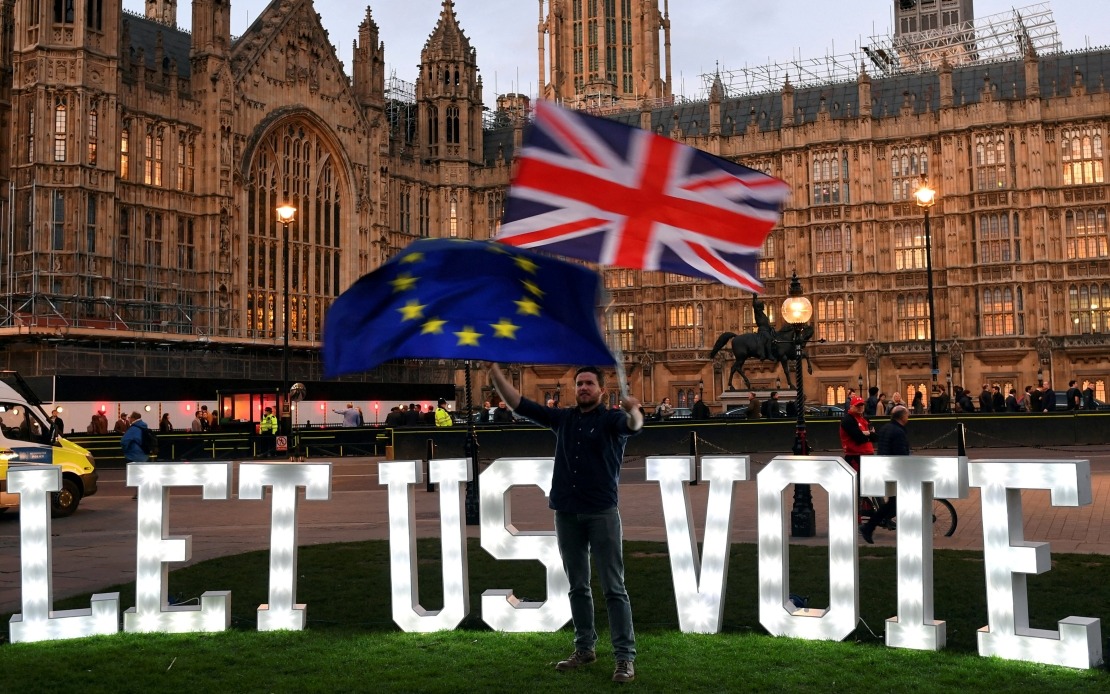
The prospect of Britain reversing its Brexit decision appears remote regardless of who leads the UK government, according to Richard Balfe, a prominent member of the Conservative Party in the House of Lords. Speaking to RIA Novosti, Balfe expressed scepticism about any serious attempt to undo the country's departure from the European Union, characterizing such an endeavour as inherently destined to fail. His comments come as the UK prepares for a significant political transition, with implications that extend beyond Westminster to influence London's broader geopolitical alignment.
Balfe's assessment carries weight given his position within the Conservative establishment and his longstanding involvement in European affairs. When pressed on whether a new government might pursue EU readmission, he conceded that while half-hearted attempts might materialize, ultimate success would prove elusive. This candid acknowledgement from within the Conservative ranks suggests that even those who once supported Britain's EU membership have largely accepted the irreversibility of the Brexit decision in practical political terms. The calculus involves not merely undoing a referendum outcome, but navigating the complex legal and diplomatic machinery that would necessarily accompany such a reversal.
The timing of Balfe's remarks coincides with significant upheaval in British politics. Prime Minister Keir Starmer, who leads the Labour Party that returned to power with promises of closer EU cooperation and smoother trade relations, announced his resignation as party leader on Monday, though he will remain in office until his successor is chosen. The Labour Party will select its new leader through an election process beginning July 9 and concluding before Parliament reconvenes in September. This leadership transition comes after disappointing electoral outcomes that have shaken confidence in Starmer's premiership.
The timing proves particularly symbolic given that June 23 marks the tenth anniversary of the 2016 Brexit referendum, when 52 per cent of British voters opted to sever ties with the European bloc. That decision, delivered through a narrow popular mandate, triggered one of the most significant constitutional upheavals in modern British history. The formal departure occurred on January 31, 2020, ending nearly five decades of EU membership that had profoundly shaped British law, trade relationships, and political identity.
The transition period that followed allowed Britain to operate under existing EU frameworks while negotiating new arrangements. This arrangement persisted until December 31, 2020, providing businesses and government departments time to adapt to separation. When the transition ended, a trade and cooperation agreement took effect on January 1, 2021, establishing the new legal foundation for Britain's economic relationship with the Union. However, successive years have revealed substantial costs embedded within this arrangement.
Economic analyses paint a sobering picture of post-Brexit Britain. The Financial Times documented a significant diminution in Britain's standing as a global trade and investment hub, with the country's departure from the EU fracturing supply chains and complicating foreign investment decisions. Multinational corporations have relocated operations, research facilities, and headquarters to continental Europe, reflecting the altered landscape for doing business from British soil. These structural changes suggest that any future political reversal would require not merely diplomatic negotiation but substantial economic repositioning.
Balfe's suggestion that Britain will ultimately "muddle along" under new leadership reflects a pragmatic assessment of current political realities. The incoming Labour government, while signalling warmer relations with Brussels and seeking to improve practical cooperation on security and trade matters, has not articulated a coherent strategy for fundamentally restructuring Britain's EU relationship. Instead, the focus appears oriented toward incremental improvements and managing inherited complications. This approach prioritizes immediate governance challenges over long-term constitutional questions.
Crucially, Balfe indicated that Britain's future direction will ultimately follow Washington's lead rather than pursue independent European integration. This observation highlights how geopolitical considerations increasingly constrain British policy options. The UK's deepening security ties with the United States, particularly through NATO and intelligence-sharing arrangements, create powerful structural incentives to maintain distance from European institutional integration. For Southeast Asian observers, this dynamic illuminates how Britain's post-Brexit trajectory reflects broader global power realignments affecting strategic partnerships across regions.
The implications for Malaysia and Southeast Asia extend beyond mere curiosity about European politics. Britain remains a significant trading partner and investor in the region, and its economic direction influences market dynamics and investment flows. A Britain struggling with diminished trade hub status may prove less dynamic in pursuing new regional partnerships, while a Britain more aligned with American geopolitical strategies may recalibrate its Asia engagement accordingly. The region's relationship with London depends substantially on how successfully Britain adapts to its new international position.
The resignation of Keir Starmer, despite leading the party to electoral victory less than a year earlier, underscores deeper anxieties within British politics about national direction and competence. The Labour government inherited substantial economic challenges and public dissatisfaction that transcend any single leader's capacity to resolve quickly. This instability raises questions about Britain's ability to execute coherent long-term strategies, whether regarding EU relations or broader international engagement. For regional partners seeking reliable and predictable British engagement, such political turbulence introduces uncertainty into relationship planning.
Looking forward, the consensus emerging from senior British political figures suggests that rather than pursuing wholesale reconciliation with the EU, Britain will pursue a middle path characterized by pragmatic cooperation on specific issues while maintaining formal separation. This trajectory, while disappointing to those who believed Brexit reversible, reflects recognition that political energy and capital must focus on maximizing Britain's advantages within its chosen position rather than relitigating fundamental choices. The new Labour leadership will likely embrace this reality rather than champion EU rejoining.
For the broader international community, Britain's post-Brexit trajectory demonstrates how significant constitutional decisions, once implemented and operationalized through new institutional arrangements, acquire substantial permanence. Reversing such decisions requires not merely changed political will but overcoming accumulated institutional, economic, and diplomatic inertia. This insight applies beyond Britain to other nations contemplating significant institutional shifts, reminding policymakers that such decisions carry consequences extending far beyond initial deliberation.
Ultimately, Balfe's assessment reflects a hardening consensus that Britain's future lies in managing its Brexit reality rather than reversing it. Whether the incoming Labour leadership embraces this reality or attempts incremental steps toward closer EU alignment, fundamental reintegration appears increasingly unlikely. For Malaysia and Southeast Asian nations engaging with Britain, this reality necessitates calibrating expectations and relationships based on Britain's position as a reformed outsider seeking selective cooperation rather than a prospective EU member state.

