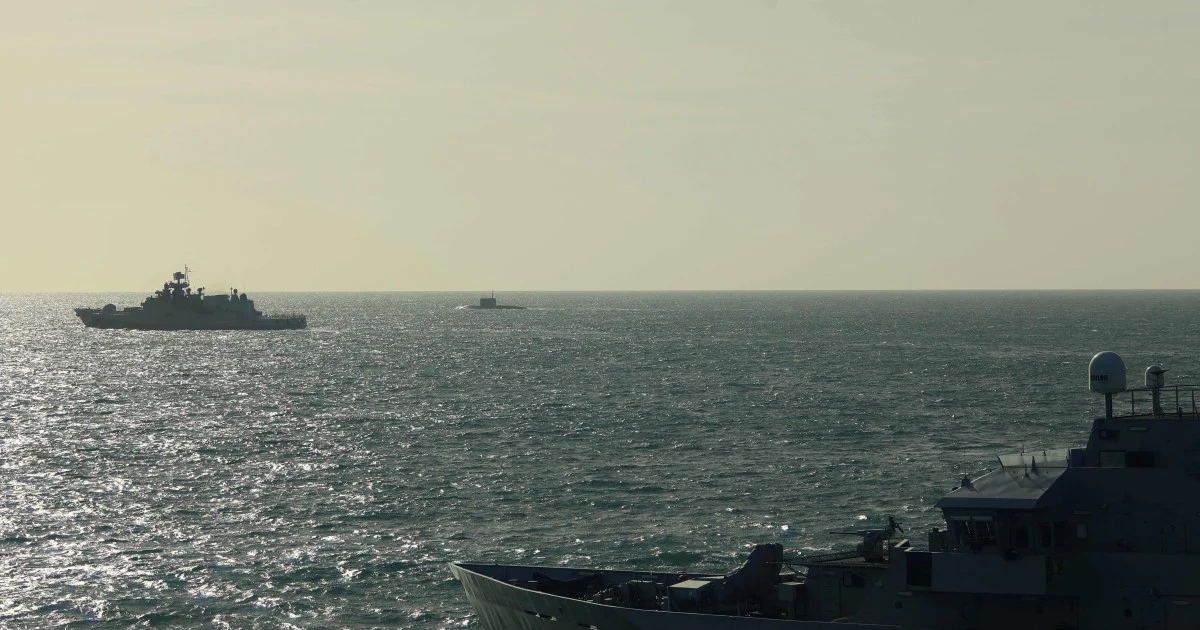
British Prime Minister Keir Starmer attempted to strike a careful diplomatic balance on Wednesday when describing a recent incident involving a Russian military vessel firing warning shots near a yacht operating in the English Channel. Starmer's characterisation of the event as "reckless" rather than "sinister" suggests the UK government is keen to avoid further escalating tensions with Moscow while simultaneously acknowledging the provocative nature of the encounter.
The incident represents the latest flashpoint in a pattern of increasingly fraught naval interactions between the United Kingdom and Russia in waters critical to European shipping and strategic interests. The warning shots, fired in proximity to the civilian yacht, have reignited concerns about the unpredictability of Russian military operations in contested maritime zones and the potential for miscalculation at sea.
Starmer's measured language reflects a broader British policy approach that distinguishes between deliberate hostility and risky military conduct. By framing the incident as reckless—suggesting poor judgment or careless disregard for safety protocols—rather than sinister, the Prime Minister appears to be avoiding the inference that Russia intentionally sought to escalate the conflict or provoke a direct confrontation. This linguistic distinction carries diplomatic weight, allowing the UK to lodge formal complaints while maintaining channels for dialogue.
The incident occurs against a backdrop of heightened NATO activity in Northern Europe and persistent Russian assertions that Western naval operations near its borders constitute provocations. The contrast between London's characterization and likely Russian justifications for the warning shots underscores the yawning gap between how each side interprets the other's military conduct in shared waters. What Britain views as recklessness, Moscow may characterize as legitimate responses to perceived threats.
For Southeast Asian observers, the English Channel incident serves as a sobering reminder of how tensions between great powers can materialise through ostensibly minor maritime encounters. The region faces similar challenges, with competing territorial claims, freedom of navigation concerns, and military activities by external powers creating potential flashpoints. The UK-Russia dynamic demonstrates how quickly routine maritime operations can escalate when underpinned by deeper geopolitical antagonism.
The yacht involved in the incident represents not merely a recreational vessel but symbolically a civilian presence in waters where military tensions have been mounting. The positioning of warning shots near civilian traffic raises questions about proportionality and the application of naval rules of engagement. These considerations resonate particularly for Malaysia and other Southeast Asian nations that depend on secure and predictable maritime corridors for trade and economic activity.
Starmer's public comments suggest the UK government is attempting to manage domestic and international perceptions simultaneously. Domestically, avoiding extreme language forestalls demands for military escalation, whilst internationally, the reckless characterisation signals to allies that Britain takes the incident seriously without necessarily triggering the kind of response cycle that could rapidly intensify confrontation.
Russian explanations for the warning shots will likely emphasise perceived violations of maritime boundaries or claims that the vessel was engaged in legitimate military exercises. The fundamental disagreement about what constitutes appropriate conduct in disputed waters reflects the absence of agreed protocols between the two nations for managing tensions at sea. This absence becomes particularly acute when civilian traffic intersects with military operations.
The incident also highlights vulnerabilities in the broader international system for maritime governance. While established conventions theoretically govern naval conduct, their effectiveness depends substantially on shared interpretations and mutual respect for boundaries—commodities in short supply between London and Moscow. For regional players like Malaysia, strengthening multilateral frameworks for maritime safety and predictability offers insulation against the unpredictability exhibited in European waters.
The timing of Starmer's remarks reflects ongoing British efforts to position the UK as a measured, responsible actor in international affairs while maintaining the security commitments required by NATO alliance obligations. Finding this equilibrium proves challenging when Russian military activities test boundaries with increasing regularity. The Prime Minister's balancing act—acknowledging recklessness whilst rejecting attributions of sinister intent—attempts to preserve the possibility of deescalation without appearing weak.
Looking forward, such incidents may become more frequent rather than exceptional as Russia continues demonstrating its capacity and willingness to operate provocatively in strategically important waterways. The accumulated effect of repeated reckless incidents, even if individually not characterised as sinister, can gradually shift the nature of bilateral relations and regional security calculus. For countries in Southeast Asia dependent on maritime commerce and regional stability, the English Channel tensions serve as a cautionary tale about the consequences of unmanaged great power competition conducted through military posturing and boundary-testing operations.
The distinction Starmer drew between recklessness and sinister intent may ultimately prove less important than the undeniable fact that a Russian warship fired weapons near a civilian vessel in European waters, demonstrating that the risk of accidental escalation remains uncomfortably high. Managing such risks will require sustained diplomatic effort and clearer delineation of acceptable military conduct, lessons equally applicable to other regions navigating strategic competition among powerful maritime actors.

