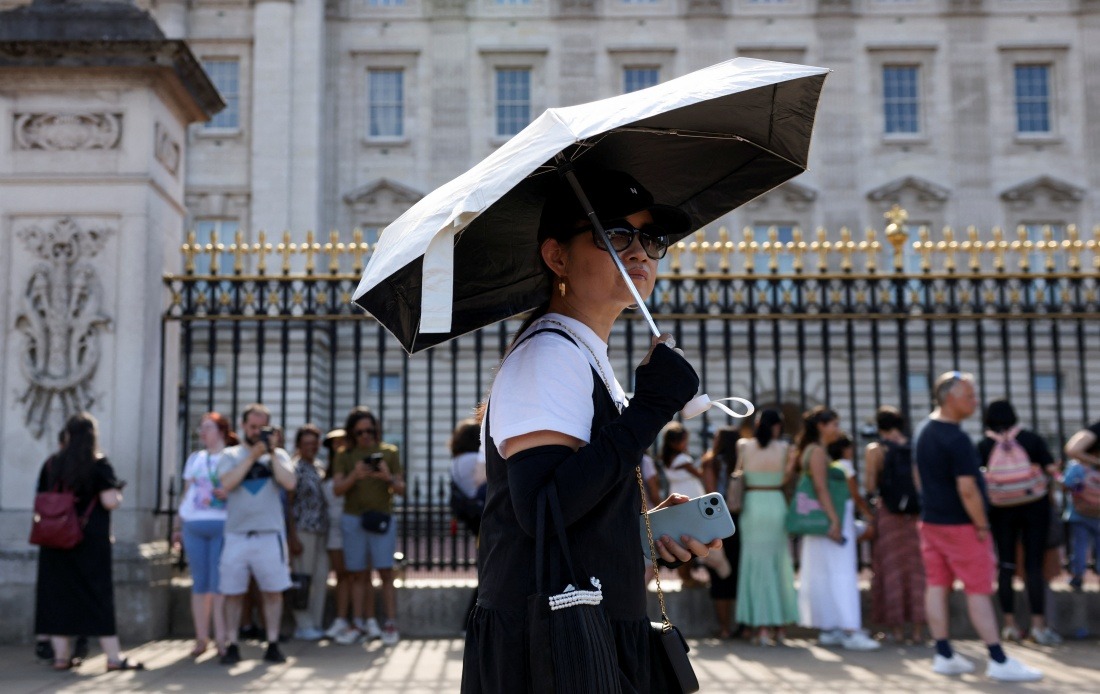
Britain's Household Division announced the suspension of ceremonial guard changes across London and Windsor on Tuesday, Wednesday and Thursday, citing a severe heatwave that has triggered a rare red weather alert from the Met Office. The decision reflects mounting concerns over the welfare of soldiers, military working horses, and large crowds traditionally gathering to witness these iconic pageantry events, with officials emphasising that public and personnel safety take precedence over ceremonial tradition.
The United Kingdom faces an exceptional weather event this week, with temperatures forecast to reach 39 degrees Celsius on Wednesday and Thursday, potentially surpassing the June temperature record. The Met Office's red weather warning, issued on Monday, covers an expansive area including Wales, southern England, and London, indicating that the anticipated heat represents an unusually severe threat to public health and essential services. Such red alerts are rare occurrences in the British climate calendar, reserved only for conditions posing genuine danger to the population.
The Household Division's statement reflected the extraordinary nature of these circumstances. Officials acknowledged that while ceremonial guard changes form a cornerstone of British royal pageantry and visitor experiences, the forecasted conditions necessitated a departure from standard operations. The decision underscores how even deeply entrenched institutional practices must adapt when confronted with genuine health and safety imperatives, particularly where vulnerable populations—including elderly spectators, young children, and animals—might be exposed to dangerous heat conditions.
Where feasible, the military has attempted to maintain limited ceremonial operations with modified protocols. The Royal Horse Guards' changing ceremony scheduled for Wednesday will proceed earlier in the morning, stripped of its usual elaborate ceremonial components. Soldiers participating in any outdoor duties will be repositioned in shaded locations and given more frequent rotation breaks, allowing them to rest and rehydrate during peak heat hours. These adjustments represent a pragmatic compromise between honouring institutional commitments and protecting personnel from heat-related illness.
The broader educational sector across southern England has similarly responded to the unprecedented forecast temperatures. School closures have rippled across multiple counties falling within the red weather warning zone, reflecting authorities' recognition that young people face particular vulnerability during extreme heat. Somerset county council confirmed the closure of approximately 100 schools, matching the scale of shutdowns in Buckinghamshire, while Gloucestershire has suspended classes in more than 80 educational institutions. In London itself, nearly 10 major schools have cancelled in-person instruction, effectively shifting education online where possible.
These closures extend beyond simple heat discomfort. Schools across southern England typically lack air-conditioning systems common in hotter climates, with buildings designed to regulate temperature through ventilation and shade rather than mechanical cooling. When outdoor temperatures exceed 37 degrees Celsius, indoor spaces can become dangerously warm, particularly in enclosed classrooms where large numbers of children generate additional body heat. Local authorities have concluded that maintaining normal school operations would expose students to genuine health risks, particularly those with pre-existing medical conditions or respiratory sensitivity to heat stress.
The heatwave reflects broader climatic patterns affecting the Northern Hemisphere, with extreme temperatures increasingly becoming a feature of British summers. While such conditions remain less common than in Mediterranean or tropical regions, the UK's infrastructure, building stock, and public health systems were historically optimised for cooler conditions. The escalating frequency of such events poses challenges for adaptation, from public transportation systems to healthcare capacity, as emergency services typically experience surge demand during extreme weather events.
For Malaysian and Southeast Asian observers, the scene presents an instructive contrast. Tropical nations routinely manage ambient temperatures exceeding 35 degrees Celsius year-round, with sophisticated building standards, widespread air-conditioning, and population acclimatisation to heat stress. The British response to 39-degree forecasts—including major institutional closures and modification of ceremonial traditions—illustrates how climate vulnerability remains relative to local infrastructure and habituation. What represents routine summer weather in Kuala Lumpur constitutes a national emergency requiring policy intervention in London.
The incident also highlights the cascading nature of climate impacts across interconnected systems. When extreme heat forces school closures, parents must make childcare arrangements, potentially disrupting workplace productivity. Cancelled tourist attractions affect hospitality revenue. Modified military operations create logistical adjustments across the Ministry of Defence. These second-order effects demonstrate how climate adaptation extends far beyond individual decisions to implement institutional change across multiple sectors simultaneously.
Looking forward, the UK's experience with increasingly frequent heat extremes will likely accelerate infrastructure modernisation and policy development. Building standards may evolve to require greater thermal resilience, public health campaigns will address heat safety, and emergency response protocols will mature. The Household Division's willingness to suspend centuries-old ceremonial traditions signals that even the most institutionally conservative organisations recognise the imperative for climate adaptation, a lesson with relevance across Commonwealth nations and democratic societies grappling with similar meteorological shifts.

