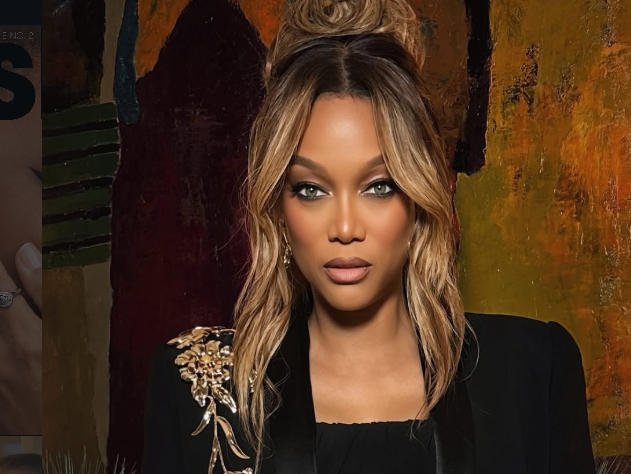
Tyra Banks has initiated legal action against Netflix, accusing the streaming platform and the creators of a docuseries about her long-running reality competition show of defamation through deceptive editing practices. The lawsuit, filed Saturday in Los Angeles federal court, names directors Daniel Sivan and Mor Loushy, along with production company EverWonder Studio as defendants. Banks is pursuing monetary damages and seeking an injunction to prevent the use of her image in connection with the documentary's accompanying soundtrack album.
At the heart of the dispute lies what Banks' legal team characterises as a carefully constructed falsehood. The lawsuit contends that the Netflix docuseries employed "selective editing, deliberate omission, and surgical manipulation of continuous footage" to create the impression that Banks knowingly permitted a contestant to experience sexual assault on set, subsequently exploited the incident for ratings purposes, and then attempted to evade discussion of the matter during her interview with filmmakers. The complaint alleges that Banks was never actually informed about or questioned regarding the assault during the recording session, yet the final edit presents her responses as evasive acknowledgment.
"The accountability Ms. Banks took ended up on the cutting room floor. It was there, but viewers were never given the opportunity to see it," her lawyers argued in court documents, suggesting that contextual information demonstrating her willingness to address criticisms was deliberately excluded from the final product.
The documentary arrives during a broader cultural reckoning with America's Next Top Model, the show that launched in 2003 and maintained a 24-season run before concluding. In recent years, the programme has faced intense scrutiny over documented instances of body-shaming remarks directed at contestants, manipulative casting and production decisions, and photographic concepts widely considered inappropriate or exploitative. Banks herself acknowledged these controversies in prior public statements, recognising "the insensitivity of past ANTM moments" and "some really off choices," indicating her willingness to engage with legitimate criticism.
A significant procedural concern underpins Banks' case: she received access to the completed documentary merely one day prior to its February 16 release date. This minimal preview period prevented meaningful review or response preparation. Furthermore, her legal representatives assert that Netflix and EverWonder refused to provide fact-checking opportunities following her interviews and declined to offer Banks the chance to respond to allegations levelled by other show participants. The lawsuit suggests this asymmetrical access proved particularly problematic given that other ANTM judges, including one her lawyers characterise as harbouring a personal grievance against Banks, served as consultants actively shaping the documentary's editorial direction.
"Had Ms. Banks known these individuals were so deeply involved in the formulation of the Netflix Series, also serving as consultants shaping the editorial direction, and that she had been excluded from such a role, it would have raised a red flag," the filing stated. "She would have known she was being set up."
The legal challenge reflects broader concerns about documentary ethics and editorial transparency in the streaming era. Banks' team emphasises that she came to interviews prepared for genuine reflection on ANTM's complicated legacy, including substantive dialogue about the show's documented missteps. That narrative has been overwhelmed by the documentary's central accusation, which Banks contends she was never afforded opportunity to directly address because she was unaware of the specific allegations when questioned.
Attempts at private resolution proved unsuccessful. Banks' representatives contacted Netflix in March requesting access to the full footage of her interviews for comparative analysis. Netflix and EverWonder declined that request, according to court documents, leaving litigation as the sole remaining avenue for contested disputed facts.
The reputational fallout has extended beyond typical media criticism into tangible economic and commercial harm. Banks operates SMiZE & DREAM, an ice cream establishment in Sydney, Australia. Following the documentary's release, the business became subject to coordinated review bombing on Google, suggesting the accusation's negative impact penetrated her entrepreneurial ventures. Public reaction has been described in the lawsuit as "swift, harsh, and directed squarely at Ms. Banks," demonstrating how digital platforms can amplify documentary narratives into real-world consequences.
The case highlights the power asymmetry between individual creators and major streaming platforms in controlling narrative framing. Banks served as both creator and host of the original series that launched her career; yet she possessed minimal influence over how her legacy would be presented in the authorised documentary. The lawsuit suggests that Netflix's editorial control, combined with restricted access and selective consultation from former colleagues, created conditions favourable to a particular interpretive narrative.
For Malaysian and Southeast Asian audiences, the dispute resonates beyond celebrity gossip, illustrating broader questions about streaming platform accountability, documentary truthfulness, and the vulnerability of public figures to curated representations they cannot effectively counterbalance. The case may establish important precedent regarding documentarians' obligations to subject-participants and whether streaming platforms bear responsibility for editorial decisions that former defendants characterise as deceptive. The outcome could influence how future documentary projects approach the interview process and final edit when controversial allegations are central to the narrative.
Banks' legal team has framed the lawsuit not merely as vindicating her reputation but as enabling her voice to finally be heard authentically. "Every other conversation about ANTM's legacy - including the candid reflection Ms. Banks came prepared to have - is now drowned out by an accusation she was never given the chance to answer," her lawyers wrote. "This lawsuit is that answer - particularly after her efforts to resolve the matter directly with Netflix and the producers were refused."