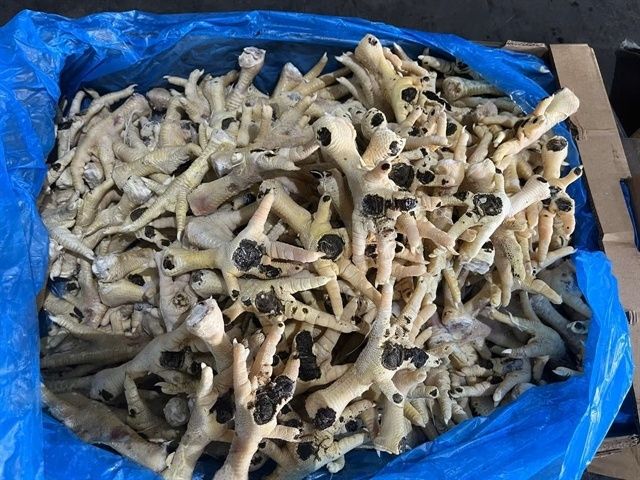
Hanoi police have brought smuggling charges against two Vietnamese women accused of orchestrating an elaborate scheme to illegally import and distribute hundreds of containers of frozen chicken feet across the country, sidestepping strict biosecurity laws designed to protect domestic poultry stocks. The investigation, concluded on Friday, June 19, reveals a sophisticated operation that circumvented customs regulations over a three-year period, resulting in the movement of more than 10,000 metric tonnes of potentially contaminated product into the Vietnamese food supply chain.
The two suspects are Nguyen Thi To Loan, 47, who directly operated ABF Food Import-Export JSC based in Ninh Binh Province, and Trang Tuyet Ngoc, 45, who held the position of head of the assistant department at An Binh Group. Both have reportedly admitted to all charges levelled against them. Their operation centred on importing poultry products from countries known to have active avian disease problems, then deliberately misrepresenting the goods in the domestic market rather than adhering to the legal requirement to re-export such materials unchanged.
Vietnamese law explicitly restricts the importation of poultry products from disease-affected regions to processing and re-export purposes only. Domestic sale of such goods is strictly prohibited due to the serious public health and biosecurity risks. The regulatory framework reflects Vietnam's vulnerability to avian influenza and other poultry diseases, which have periodically caused significant economic disruption and posed human health risks throughout Southeast Asia. By deliberately circumventing this restriction, the operation undermined national disease prevention efforts and exposed the food service industry to contaminated product.
Between 2023 and 2026, ABF Food Import-Export JSC imported a total of 339 containers of frozen chicken feet. Throughout this period, the company maintained false customs documentation declaring the shipments as goods destined solely for processing and subsequent re-export. In reality, Loan directed Ngoc to distribute the entire volume onto the domestic market, selling to food-service businesses across multiple provinces including Hanoi, Cao Bang, Ninh Binh, Quang Ninh and others. This deliberate misrepresentation allowed the operation to bypass import duties entirely, adding tax evasion to the charges.
The total value of imported goods involved in the scheme reached more than VNĐ347 billion, equivalent to approximately US$13 million. This substantial figure underscores the commercial scale of the operation and suggests that the two charged individuals likely worked within a broader network of distributors and purchasers. The investigation has revealed the sophistication required to move such volumes through multiple provinces without detection, indicating potential involvement of additional parties whose roles remain under investigation.
When Hanoi police conducted raids on cold-storage facilities connected to the operation, they uncovered more than 2,000 metric tonnes of frozen chicken feet still in storage. At the An Viet 2 freezer facility located in Hanoi's Quang Minh Industrial Zone, officers discovered over 1,000 metric tonnes, including approximately 260 metric tonnes that had passed their expiration dates and exhibited visible signs of deterioration including mould and foul odours. Notably, these expired products appeared to be staged for further distribution to unsuspecting businesses and consumers, raising serious questions about the health consequences already inflicted.
A second facility, the THL cold-storage warehouse in Lang Son Province in northern Vietnam, yielded an additional 1,030-plus metric tonnes. The discovery of such massive quantities still in storage, alongside the evidence of significant volumes already distributed, suggests that the operation had been operating with considerable capacity and logistical sophistication. The geographic spread of storage facilities across multiple provinces indicates an established distribution network capable of supplying restaurants, food courts, and other food-service establishments across substantial portions of the country.
Both suspects have been formally charged under Article 188 of Vietnam's 2015 Penal Code, which addresses smuggling offences. This charge carries serious criminal penalties reflecting the severity with which Vietnamese authorities treat violations of biosecurity regulations. The investigation remains active as police work to establish the identities and roles of other individuals and organisations potentially involved in the broader smuggling network. Authorities are particularly focused on identifying downstream distributors and the food-service businesses that received contaminated product, a process that carries implications for public health authorities seeking to assess consumer exposure.
For Southeast Asian readers, this case illustrates the persistent vulnerability of regional food supply chains to criminal manipulation, particularly in developing markets where enforcement resources remain stretched. Vietnam's experience demonstrates how smuggling operations exploit the gap between strict legal requirements and the capacity of border agencies to monitor every shipment. The case also highlights the ongoing tension between agricultural protectionism and the reality of informal trade networks that operate across borders. Given that similar poultry disease risks affect Malaysia, Thailand, and other ASEAN nations, the case offers relevant lessons about the importance of robust cold-chain monitoring and vendor verification systems in the food service industry.

