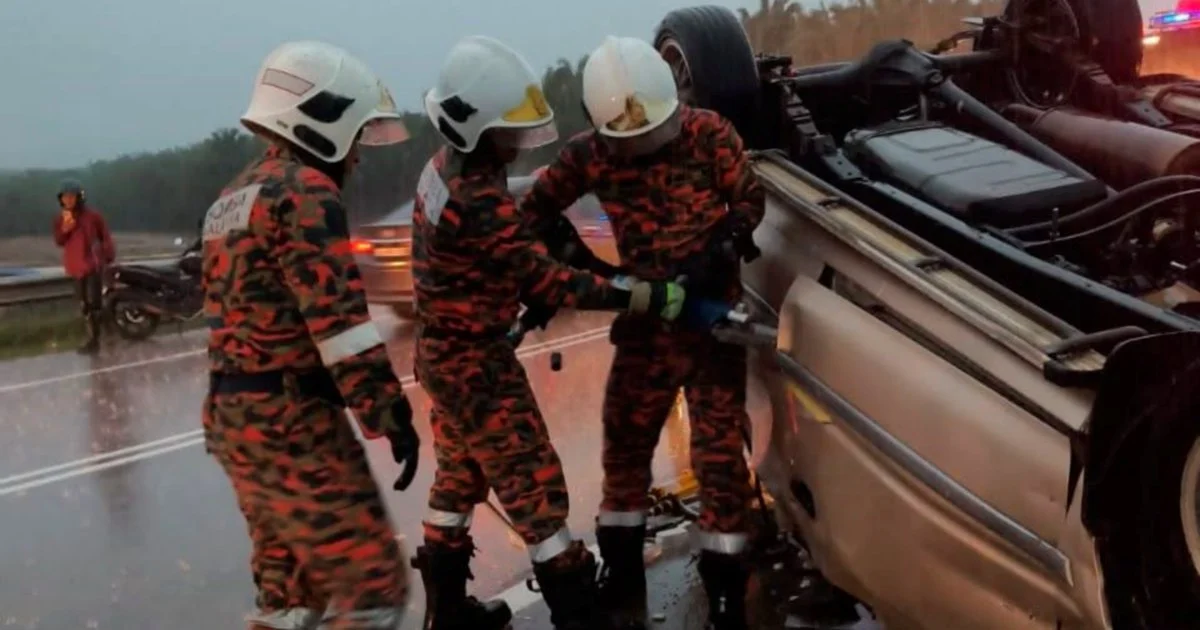
Two sisters were among four people who lost their lives in two separate road accidents that unfolded within less than an hour in Pahang today, marking a tragic sequence of events in the state's Maran and Pekan districts that has reignited concerns about vehicular safety on Malaysian highways.
The first incident claimed two lives, while the second crash claimed another two fatalities, according to emergency response officials who attended both scenes. The proximity of these tragedies—both in time and location—has drawn immediate attention from authorities investigating whether any commonalities exist in the circumstances surrounding each accident.
Pahang has long grappled with road safety challenges, with the state recording higher-than-average fatality rates on its major thoroughfares. The state's geography, featuring winding roads through mountainous terrain and busy commercial routes connecting major towns, creates conditions that have historically contributed to serious accidents. These latest deaths underscore persistent vulnerabilities in traffic management and driver behaviour across the region.
The identification of two sisters among the victims adds a particularly poignant dimension to today's incidents. Such losses often ripple through extended family networks and communities, leaving lasting emotional scars beyond the immediate statistics of road fatalities. In Malaysia, where family ties remain central to social fabric, such tragedies resonate broadly and frequently prompt public discussions about preventative measures and enforcement.
Investigations into both accidents are underway to determine the precise causes of each collision. Authorities will examine factors including vehicle condition, driver behaviour, road conditions, and environmental circumstances such as weather and visibility. Understanding these details will be crucial for determining whether the incidents resulted from similar causative factors or represented coincidental occurrences during what proved to be an exceptionally deadly afternoon.
Road safety remains a critical public health issue across Malaysia, with annual fatality figures consistently ranking among Southeast Asia's highest per capita. The Malaysian government has implemented various initiatives aimed at reducing accident rates, including enhanced enforcement of traffic regulations, public awareness campaigns, and infrastructure improvements. However, individual incidents like today's crashes demonstrate that systemic challenges persist despite these efforts.
The timing of these accidents—occurring within a single hour—raises questions about traffic conditions and congestion that may have contributed to dangerous driving situations. Peak travel periods, particularly around work commuting hours or holiday seasons, frequently correlate with increased accident frequency. Understanding whether today's crashes occurred during predictably busy times could inform future traffic management strategies in the Maran and Pekan areas.
For residents of Pahang and broader Malaysian audiences, such incidents serve as sobering reminders of the inherent risks associated with road travel. While statistics can feel abstract, individual tragedies like the loss of two sisters illustrate the human consequences of traffic accidents. These events often catalyse renewed emphasis on defensive driving practices, proper vehicle maintenance, and strict adherence to traffic safety regulations.
Authorityresponse times and emergency services coordination proved critical in managing today's dual incidents. The rapid deployment of rescue personnel to both accident scenes demonstrated established protocols for handling multiple simultaneous emergencies. However, such coordination exercises also highlight the pressures placed on emergency services when multiple serious incidents occur in close geographical and temporal proximity.
The loss of four lives in a single afternoon inevitably prompts reflection on broader road safety strategies. Malaysia has invested significantly in technological solutions, including the installation of traffic cameras, improved street lighting, and highway safety barriers. Yet human factors—driver fatigue, speeding, distracted driving, and intoxication—continue accounting for substantial proportions of serious accidents across the country.
Families affected by today's tragedies will require comprehensive support services, including immediate assistance with formal procedures and longer-term bereavement counselling. Malaysian communities often demonstrate remarkable compassion in responding to such losses, with neighbours and extended networks providing practical and emotional support during difficult periods. Nevertheless, access to professional psychological support remains unevenly distributed across rural and urban areas.
Looking forward, the detailed findings from investigations into both accidents may yield insights valuable for accident prevention strategies throughout Pahang and neighbouring states. Whether today's incidents resulted from preventable factors or represented unavoidable circumstances will significantly influence recommendations emerging from official inquiries. The goal of continued investigation extends beyond assigning liability to identifying systemic improvements that might prevent similar tragedies.
For Malaysian motorists generally, particularly those regularly travelling through Pahang's Maran and Pekan districts, today's events underscore the importance of maintaining heightened vigilance on the roads. Conditions that contributed to these fatal accidents may persist, requiring drivers to exercise exceptional caution, maintain appropriate speeds, and avoid behaviours that increase accident risk. While individual responsibility matters enormously, effective road safety ultimately requires coordinated efforts spanning driver behaviour, vehicle maintenance, infrastructure quality, and enforcement consistency.

