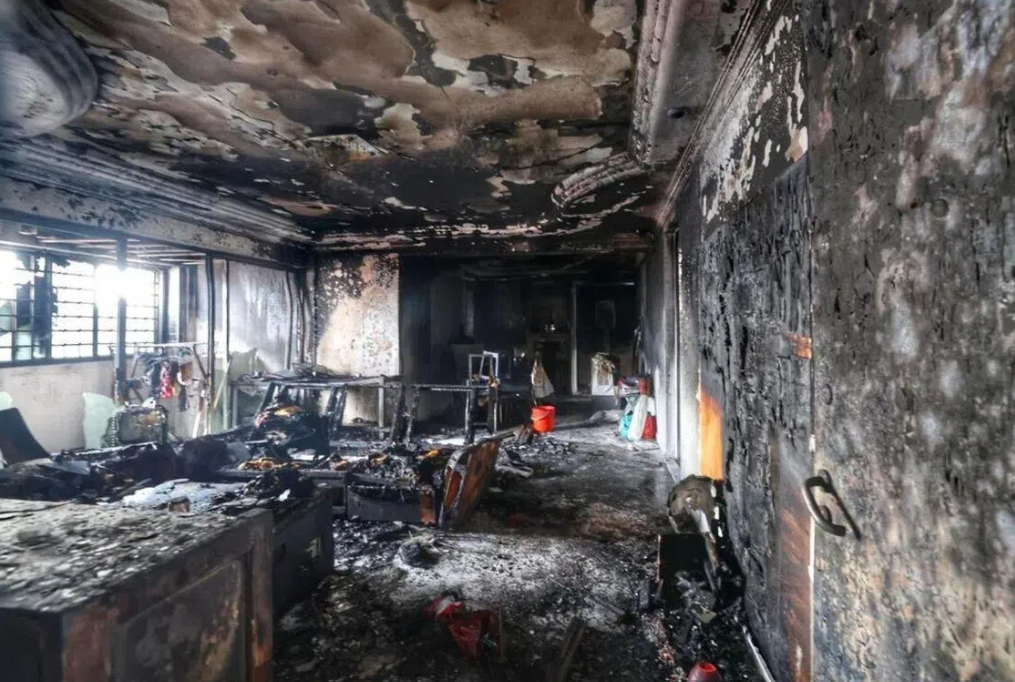
A residential fire that engulfed a high-rise flat in Singapore's Jurong West neighbourhood in the pre-dawn hours of June 17 prompted a swift rescue operation that saved two occupants from the burning unit. The Singapore Civil Defence Force (SCDF) was alerted to the incident at Block 842 Jurong West Street 81 shortly after 3.35am, discovering flames actively consuming the living room of the 13th-storey apartment when personnel arrived on scene.
Fighting against thick smoke that had filled the interior spaces, SCDF firefighters moved quickly into the hazardous environment to battle the blaze using a high-pressure water jet that ultimately suppressed the flames. The investigation into the fire's origin has pointed toward an electrical source within the living room, a finding consistent with Singapore's rising residential fire statistics and the growing concern about household electrical safety across urban residential precincts in the region.
The family unit occupying the flat—four people in total—were all transported to Singapore General Hospital for medical treatment, with two requiring rescue assistance from firefighters. As a standard precautionary protocol, approximately 40 neighbouring residents across multiple storeys were evacuated from the building while emergency services worked to contain the situation and ensure the structure's safety. The evacuation, while disruptive, reflects the cautious approach that authorities adopt when dealing with high-rise residential fires where smoke can spread rapidly through shared ventilation systems and stairwells.
Photographs and observations gathered by journalists who visited the scene hours later at around 4pm revealed the extent of the damage inflicted by the fire. The interior walls and ceiling of the affected unit were heavily blackened by soot and flames, and the windows had been shattered—either by the intense heat or by firefighting efforts to ventilate the space and combat the blaze. Such visible destruction underscores the ferocity of fires fuelled by electrical failures in enclosed residential spaces.
Accounts from neighbours provided a detailed picture of how the incident unfolded and how alert residents played a critical role in preventing a potentially more serious outcome. The family had been sleeping when the fire ignited, completely unaware of the danger developing in their living room. An 18-year-old student residing in the unit directly above theirs, who happened to be awake at the unusual hour engaged in gaming, detected the presence of smoke filtering upward through the gaps in his floor and the unit below's ceiling.
Rather than dismissing what could have been a minor anomaly, the young resident made the decision to investigate further. Upon touching the door of the affected unit downstairs, he perceived the intense heat radiating from within, immediately recognising the gravity of the situation. He then took decisive action, knocking forcefully on doors throughout the corridor to alert sleeping neighbours of the danger and urge them to evacuate, before rushing back to his own family to warn them to leave the building immediately. His mother subsequently contacted emergency services, setting in motion the official response that would ultimately save lives.
The student's account also captured a haunting moment when one of the residents, a young woman from the burning unit, appeared at his family's door while the situation was still unfolding. She had come seeking towels, intending to provide assistance to her father who had sustained injuries. The visible signs of trauma were apparent—her hair was singed and her face blackened by smoke and soot, while a man accompanying her displayed severe burns across his back and arms, his skin showing the characteristic bright red inflammation of thermal injury.
Other residents witnessed the scale of the emergency response, with one neighbour from the 12th floor reporting that at least five fire engines were positioned below the building, a deployment reflecting the seriousness with which SCDF treated the incident and the multiple hazards presented by a burning unit in a densely populated residential tower. The presence of such resources underscores how Singapore's emergency services mobilise comprehensively when dealing with high-rise residential fires, given the potential for rapid spread and the vulnerability of neighbouring units.
In the aftermath of the incident, the SCDF has reiterated essential safety guidance aimed at preventing similar electrical fires in residential settings. The agency specifically warns residents against overloading electrical outlets, a common practice in homes where multiple devices compete for limited power points. The recommendation to switch off appliances when they are not in active use addresses the reality that many household devices continue to draw power and generate heat even in standby modes, creating sustained fire risk over extended periods.
Authorities emphasise the importance of using only electrical appliances and extension cords that bear the Safety Mark certification, a standard issued by Singapore's Consumer Product Safety Office that certifies products meet established safety specifications. Additionally, SCDF advises against leaving batteries and electronic devices—particularly newer lithium-based batteries in phones, tablets, and portable power banks—charging unattended overnight or for prolonged periods, as such practices have been linked to thermal runaway incidents that can rapidly escalate into fires.
The timing of this advisory holds particular relevance given recent fire statistics released by SCDF in February. The data revealed a concerning trend: the total number of fires across Singapore increased by three percent year-on-year, rising from 1,990 reported incidents in 2024 to 2,050 in 2025. More significantly, residential buildings accounted for just over half of these fires, with 1,051 incidents occurring in housing units. This upward trajectory suggests that electrical safety in residential spaces remains an inadequately addressed vulnerability across Singapore's housing stock, with implications for the wider Southeast Asian region where similar high-density residential patterns and electrical infrastructure challenges exist in countries including Malaysia.

