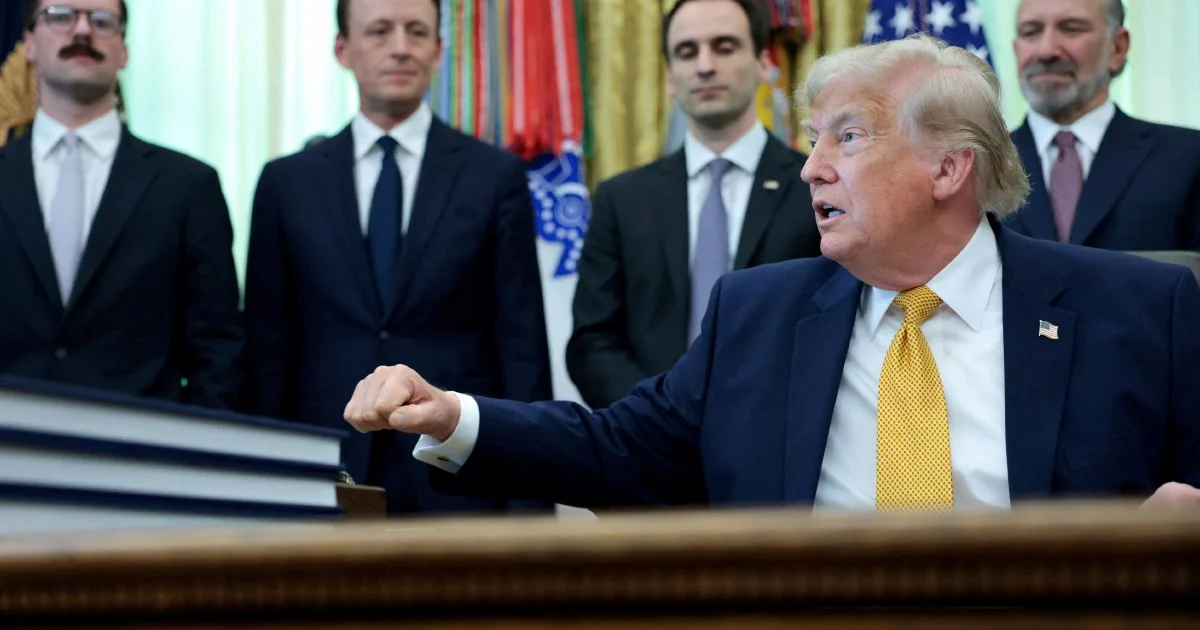
Federal law enforcement officials have secured two further arrests in connection with an alleged plot to strike at the White House while President Donald Trump was scheduled to host a mixed martial arts competition on the presidential grounds. The Justice Department made the announcement on Monday, signalling an expansion of the investigation into what authorities characterise as a coordinated threat against the nation's highest office.
The arrests represent a significant escalation in what appears to be a multi-person scheme that has already drawn the attention of multiple federal agencies. Law enforcement operations of this scale typically indicate that investigators have uncovered sufficient evidence to move beyond the initial suspect pool and pursue additional individuals believed to be involved in planning or coordinating the alleged attack. The expansion of arrests suggests the scope of the alleged conspiracy may be broader than initially apparent.
Details regarding the precise roles of the newly arrested individuals remain limited as the Justice Department assessment continues. Federal prosecutors typically withhold comprehensive information during active investigations to preserve the integrity of ongoing proceedings and avoid compromising prosecutorial strategy. This measured release of information is standard practice when multiple defendants are involved and cases are still in preliminary stages.
The fact that the alleged attack was to occur during a high-profile sports event hosted at the White House underscores the symbolic and practical significance authorities appear to place on the threat. Such events draw substantial media attention and require extensive security arrangements, making them potential focal points for individuals seeking maximum visibility for their actions. The presence of international athletes and media coverage would amplify any incident occurring during the occasion.
For Malaysian and Southeast Asian observers, this incident illustrates the ongoing security challenges facing the United States and the priority federal agencies place on preventing attacks against protected facilities. The consistent targeting of the White House and other government installations reflects a persistent security concern that transcends political cycles and administrations.
The Justice Department's proactive approach to expanding arrests suggests investigators have identified a pattern of communication or coordination among multiple parties. Modern investigative techniques, including digital forensics and surveillance capabilities, often reveal interconnected networks of individuals who might not have direct contact but share ideological motivations or tactical planning.
Such allegations also highlight the intersection of security concerns with major public events. The integration of sporting events with governmental functions, while symbolically important, creates complex security protocols that law enforcement must continually refine. The UFC event example demonstrates how apparently routine activities can become security flashpoints requiring unprecedented measures.
The timing of the announcements may reflect investigative breakthroughs or the completion of certain evidentiary thresholds necessary for federal prosecutors to move forward with charges. Arrests in conspiracy cases often proceed in waves as investigators develop sufficient evidence against additional suspects, rather than occurring in a single coordinated operation.
For individuals facing federal charges in connection with alleged White House attacks, the legal stakes are extraordinarily high. Federal courts treat threats against the president and attacks on government installations as among the most serious offences, carrying potential penalties that reflect the severity with which the judicial system regards such conduct.
The incident raises questions about threat assessment capabilities and how federal intelligence agencies evaluate and prioritise various reported dangers. The resourced allocation required to investigate, prevent, and prosecute such schemes represents a significant commitment of taxpayer resources and government attention.
International dimensions may also be relevant, particularly regarding how other nations view American security capacity and governmental stability. While law enforcement success in disrupting alleged plots demonstrates system resilience, the repeated emergence of new threats indicates that underlying motivational factors continue to drive individuals toward violent schemes against government targets.
As the investigation progresses and additional details emerge through court filings and public statements, the full scope of the alleged conspiracy will likely become clearer. The Justice Department's commitment to pursuing all individuals believed responsible for planning or supporting such efforts reflects a broader determination to maintain security around critical government facilities and officials, regardless of the complexity or resources required.

