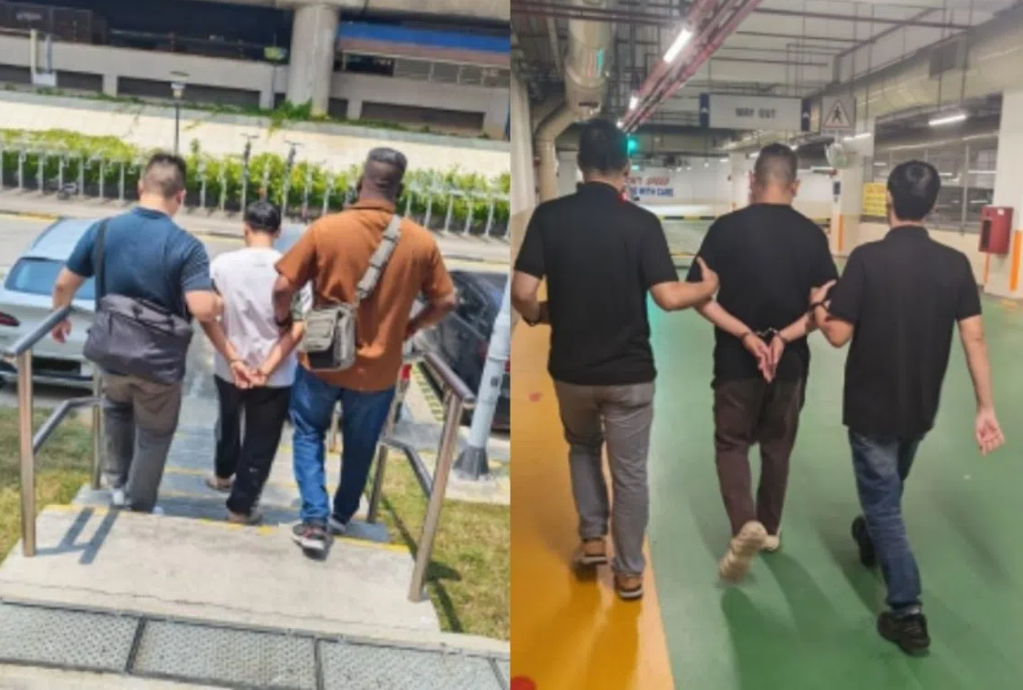
Singapore's police force has arrested two Malaysian men employed at mobile phone retail shops for their suspected role in an identity theft operation that compromised digital credentials belonging to more than 170 residents and foreign workers. The pair, aged 25 and 47, were detained on Tuesday, August 25, for exploiting their access to customer information to perpetrate what authorities describe as a sophisticated account fraud scheme centred on the LiquidPay digital payment platform.
The accused individuals are believed to have systematically obtained Singpass login credentials—Singapore's national digital identity authentication system—from unsuspecting customers, often during routine transactions such as mobile phone or SIM card purchases. Police say the older suspect, in particular, leveraged moments when customers required assistance updating their Singpass details to surreptitiously create linked financial accounts without consent. This tactic exploited the trust inherent in customer-service interactions, converting legitimate moments into opportunities for identity theft.
LiquidPay, operated by Singapore-based financial technology company Liquid Group, serves as a mobile wallet and payment processing platform widely adopted across the city-state's digital economy. The platform's integration with Singpass—which functions as a trusted gateway for government and private sector authentication—made it an attractive conduit for laundering illicit funds. By establishing LiquidPay accounts under stolen identities, the suspects created a mechanism through which scam proceeds could be rapidly received, converted, and potentially transferred elsewhere within Southeast Asia's interconnected financial networks.
Investigations conducted by Singapore's Cyber Command division, working alongside the Singpass Trust & Safety team at the Government Technology Agency, revealed that the two Malaysian workers operated within a larger criminal network focused on account compromise activities. The scale of their operation proved extensive: fraudulently obtained Singpass credentials were weaponised to establish more than 160 additional LiquidPay accounts, each created without the knowledge or consent of the legitimate account holders. This multiplication effect amplified the scheme's reach far beyond the initial identity theft, creating multiple channels for scam earnings to flow through the compromised platform.
Since early March 2026, at least 20 Singapore citizens and work permit holders have come under police investigation for their involvement in registering LiquidPay accounts that collectively received approximately S$110,063 traced to various scam operations. This figure represents only the confirmed scam proceeds linked to cases under investigation; the actual financial harm may be substantially larger given that only a portion of fraudulent activities are typically discovered and quantified by authorities. The sum underscores how identity theft schemes operating at scale can rapidly accumulate significant sums that might otherwise remain undetected across multiple transactions.
The operational methodology revealed during this investigation carries particular significance for Malaysian readers and regional observers. It demonstrates how cross-border employment networks in retail and service sectors can become vectors for transnational financial crime. The two suspects' positions in Singapore's mobile phone retail industry—sectors that typically employ significant numbers of Malaysian and other Southeast Asian workers—provided them privileged access to customer identity data and authentication systems. This pattern suggests that businesses throughout the region ought to implement stricter protocols around data handling and customer credential management, particularly in roles where employees interact with sensitive personal information.
The legal consequences facing the two arrested men are substantial. They face charges under Singapore law for assisting another to retain benefits from criminal conduct, an offence carrying potential imprisonment of up to ten years, fines reaching S$500,000, or both penalties combined. The severity of these sanctions reflects Singapore's determination to treat identity theft and account compromise as serious organised crime rather than opportunistic white-collar misconduct. Beyond the two main suspects, police investigations continue into Singaporean Singpass users who voluntarily relinquished their account credentials, whether through coercion, deception, or incentive. These individuals face potential penalties of three years' imprisonment and fines up to S$10,000.
The incident exposes vulnerabilities within Singapore's digital identity ecosystem that have regional implications. While Singpass represents one of the region's most robust and widely-adopted digital identity systems, this case demonstrates that even well-designed authentication infrastructure remains susceptible to compromise when human factors—employee integrity, customer vigilance, and organisational security protocols—prove inadequate. The attack vector employed here was not sophisticated technology but rather social engineering and trusted-access exploitation. For Malaysia and other Southeast Asian nations developing their own digital identity systems, the incident provides a cautionary lesson about the necessity of end-to-end security culture encompassing not merely technical safeguards but also employee vetting, transaction monitoring, and customer education.
The broader context of this operation reflects growing sophistication in transnational scam networks throughout Southeast Asia. Rather than operating isolated schemes, organised criminal groups increasingly coordinate across multiple jurisdictions, with different team members handling specialised functions—recruitment, credential acquisition, account creation, and fund movement. The Malaysian workers' role in credential acquisition and account registration represents just one component within a larger apparatus. This distributed, cross-border approach complicates law enforcement investigations and enables rapid scaling of fraudulent operations while distributing legal risk across multiple low-level operatives.
For Malaysian authorities and regional regulators, the case underscores the imperative of enhanced cooperation mechanisms between Singapore, Malaysia, and other ASEAN members. Financial crime networks operating across borders require coordinated investigative responses, information-sharing protocols, and harmonised legal frameworks. The involvement of Malaysian nationals suggests that additional suspects or supporting infrastructure may exist within Malaysia itself, warranting follow-up investigation by Malaysian law enforcement agencies working in tandem with their Singapore counterparts.
The investigation's success in identifying and apprehending these individuals came through the coordinated effort of Singapore's cybercrime and digital trust specialists collaborating with the Government Technology Agency. This interagency approach proved effective in tracing compromised accounts back to their source and identifying the physical locations and employment details of the suspects. The willingness of digital payment platforms like LiquidPay to cooperate with law enforcement investigations—providing transaction records and account creation metadata—also proved essential to case resolution. Going forward, enhanced data-sharing arrangements between payment service providers, identity authentication agencies, and law enforcement across the region could multiply the effectiveness of such investigations.

