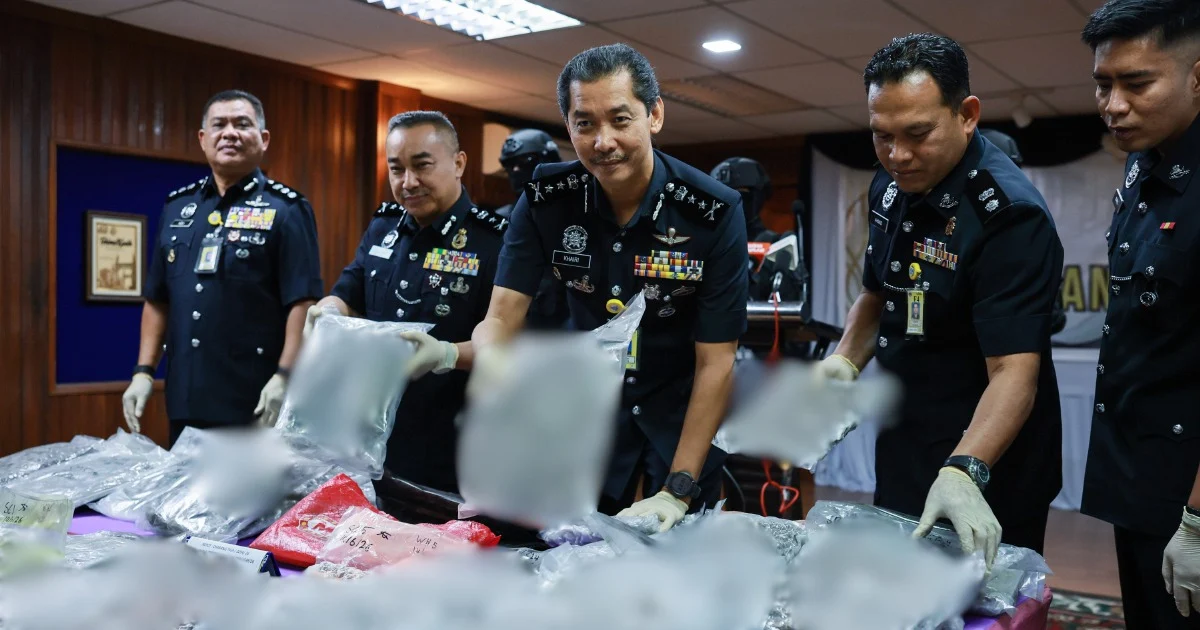
The Terengganu police force has moved decisively against what authorities describe as a significant drug trafficking operation, apprehending two brothers accused of converting their family home in Kampung Duyong Besar, Kuala Terengganu, into a substantial storage and distribution centre. The coordinated operation has resulted in the seizure of drugs estimated at RM1.76 million, marking a substantial breakthrough in regional enforcement efforts against organised narcotics trafficking.
The targeting of residential properties as clandestine warehouses represents an increasingly common tactic among drug syndicates operating throughout Southeast Asia. By disguising distribution facilities as ordinary family homes, traffickers attempt to avoid the heightened scrutiny typically placed on commercial premises, warehouse facilities, and known drug manufacturing sites. The Terengganu operation underscores how local police units have become more attuned to such deceptive practices, leveraging intelligence networks and community cooperation to identify suspect locations before contraband can be moved through distribution channels.
The scale of the seizure—nearly RM1.76 million in street value—suggests the Kampung Duyong Besar site was not merely a minor storage point but rather served as a hub within a broader trafficking network. For a single residential operation to accumulate drugs of this magnitude points to the involvement of higher-level organisers and potentially connections to larger transnational smuggling rings that move substances across borders into Malaysia. The concentration of valuable narcotics at one location also indicates the operation may have been in an intermediate phase, with stocks awaiting redistribution to smaller dealers operating throughout Terengganu and neighbouring states.
The brothers' alleged role as custodians of this operation reflects a pattern observed across Malaysia where family members are recruited into drug enterprises. Such arrangements offer traffickers certain advantages: built-in loyalty ties, reduced likelihood of law enforcement infiltration through undercover operatives, and simplified control mechanisms. However, they also create vulnerabilities, as law enforcement has developed sophisticated surveillance and intelligence-gathering techniques specifically targeting residential operations and family-based networks engaged in organised crime.
For Terengganu residents, the arrest carries mixed implications. On one hand, it demonstrates police capacity to identify and dismantle major drug distribution points operating within residential communities, offering reassurance that authorities maintain active enforcement operations. On the other, the discovery that such a large cache could accumulate within a neighbourhood highlights the persistent presence of organised trafficking networks and the ongoing vulnerability of quiet residential areas to infiltration by criminal enterprises seeking inconspicuous locations for their activities.
The timing and effectiveness of this operation align with national drug enforcement priorities. Malaysia has maintained elevated focus on dismantling large-scale trafficking operations rather than pursuing only street-level dealers, recognising that disrupting supply chain infrastructure produces more lasting impact on drug availability and street prices. By targeting nodes within distribution networks—particularly significant storage facilities—authorities can simultaneously apprehend multiple participants, seize substantial quantities of narcotics, and interrupt the supply flow to end-user markets across the peninsula.
The investigation leading to these arrests likely involved coordination between multiple police units and potentially intelligence cooperation with federal narcotics agencies. Such multi-level operations demonstrate how modern drug enforcement in Malaysia has evolved from isolated local actions to sophisticated, networked intelligence operations. The fact that authorities identified the Kampung Duyong Besar location and executed a successful arrest operation suggests methodical investigation work extending well beyond initial tipoffs, possibly including surveillance, financial investigations tracking money flows, and communications monitoring.
For policymakers and law enforcement planners in Malaysia and across ASEAN, this Terengganu case exemplifies both the scale of trafficking challenges confronting the region and the viability of targeted enforcement responses. The residential nature of the operation underscores why community awareness programmes and tip-line networks remain essential components of comprehensive drug control strategies. Many significant narcotics operations are disrupted following reports from alert residents or business owners noticing suspicious activity.
The arrest and seizure also contribute to enforcement statistics that inform resource allocation decisions. Each successful major operation justifies continued investment in drug task forces, advanced investigation techniques, and inter-agency cooperation mechanisms. However, the continued discovery of large-scale warehousing operations suggests that despite enforcement successes, trafficking organisations retain capacity to establish substantial distribution nodes, indicating the persistent economic viability of the drug trade across Malaysia and the sustained international demand driving supply-chain establishment.
As these brothers face prosecution through Malaysia's drug trafficking laws, their case will likely carry substantial sentences reflecting both the quantity of narcotics involved and their apparent supervisory role within the distribution network. The outcomes will also provide deterrent messaging to would-be traffickers considering similar residential operations. Whether these particular defendants were independent operators or nodes within larger syndicates will be clarified through investigation and court proceedings, with implications for potential follow-up enforcement actions targeting connected parties elsewhere in the supply chain.

