Thailand's volatile southern borderlands erupted in violence on Friday as suspected militant groups launched coordinated bomb attacks against law enforcement personnel, wounding 11 officers across Yala and Pattani provinces. The twin strikes underscore the ongoing security crisis in this Muslim-majority region that has plagued the government for nearly two decades and poses significant implications for cross-border stability affecting Malaysia and the broader Southeast Asian region.
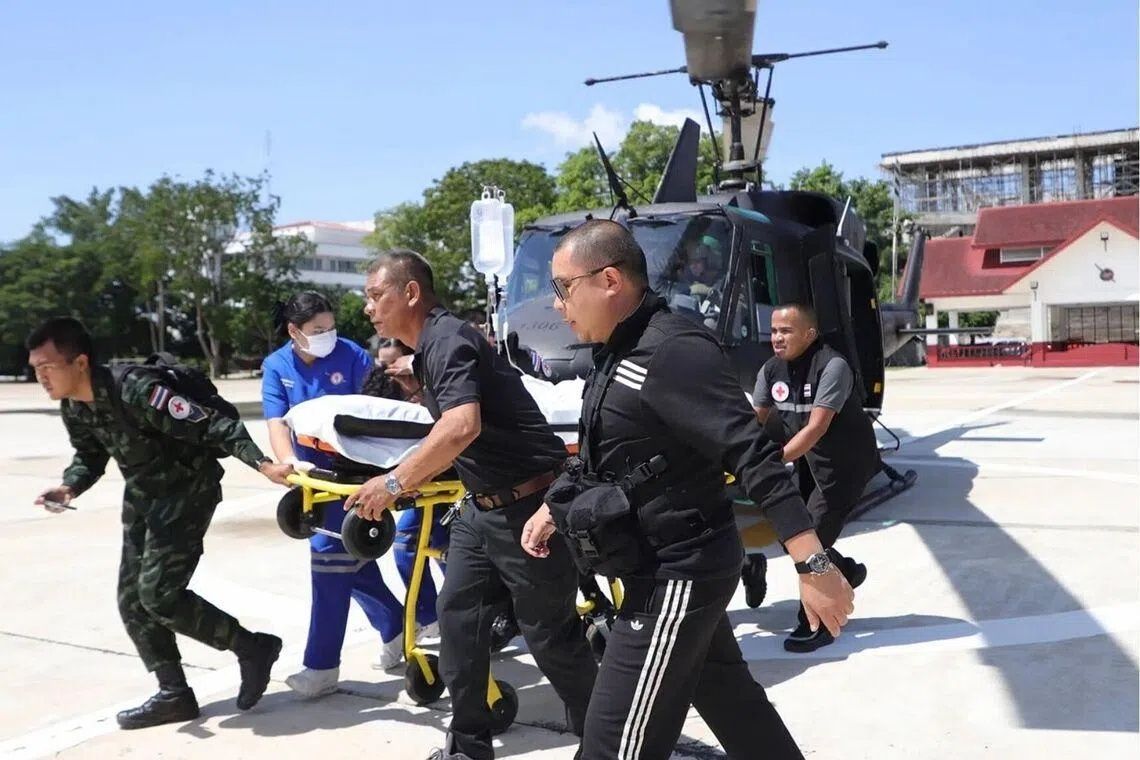
The first assault occurred just after 8am in Yala province when an explosive device detonated along a roadway in Ban Rae sub-district's rural Thanto district. The blast targeted a vehicle carrying border patrol police from a teacher protection unit, a specialised force deployed to safeguard educational facilities in the unrest-prone region. The explosion inflicted injuries on six officers, though the severity varied considerably. Two sustained critical wounds requiring immediate helicopter evacuation and intensive medical intervention, while four others suffered less severe trauma.
Among the critically injured was Corporal Kittisak Saksang, whose face bore the brunt of shrapnel fragmentation, and Corporal Poraphat Wongruaydee, whose chest cavity sustained traumatic damage. Medical personnel at Yala Regional Hospital subsequently determined that Wongruaydee required emergency surgical intervention to drain accumulated blood from his pleural cavity and repair pulmonary tissue. The severity of these injuries prompted hospital authorities to issue an urgent appeal for blood donations of all types, reflecting the gravity of the medical situation.
Just over three hours later, precisely at 11.30am the same morning, a second bomb detonated approximately 100 kilometres away in Pattani province, suggesting either a coordinated campaign or rapid copycat attack. The target this time was a team from the Pattani Police Special Operations unit operating in the remote Pado sub-district of Mayo district. The officers were returning from establishing a temporary security checkpoint when the device exploded, injuring five personnel including Sergeants Anuchit, Bunyawat, Wisitphon, Aphisit and Sumit.
The pattern of targeting law enforcement personnel involved in security operations reflects a deliberate strategy by insurgent groups to undermine the state's capacity to maintain order in these territories. The teacher protection units and special operations divisions represent frontline efforts to extend government authority into areas where armed separatist movements retain significant operational capability. By striking these units with precision, attackers aim to demonstrate both capability and resolve to continue their campaign against Thai state presence.
These incidents illustrate the persistent challenge facing Thailand's security apparatus in the deep south, where a complex web of local grievances, religious nationalism, and transnational criminal networks sustain low-intensity but chronic violence. Since 2004, when the current insurgency intensified, the region has experienced cycles of bombing, shooting attacks and kidnappings that have claimed thousands of lives. The geographic proximity to Malaysia's Kelantan and Terengganu states has historically enabled cross-border movements and created security complications for both nations.
For Malaysian policymakers and security officials, these developments carry direct relevance. The southern Thai provinces have long served as operational bases and supply routes for militant networks with connections to Malaysian territory. Enhanced violence in Yala and Pattani typically precedes elevated security threats along Malaysia's northern border. The coordinated nature of Friday's attacks suggests sophisticated planning and logistical capability within insurgent structures, warranting heightened vigilance from Malaysian authorities.
The response from Thai authorities focused on conventional enforcement mechanisms. Forensic teams and explosive ordnance disposal specialists descended on both blast sites to gather evidence and establish investigative leads. Security cordons secured the areas while search operations commenced to identify perpetrators. Such investigative work, whilst necessary, historically has yielded limited success in identifying the fractionalised groups responsible for attacks in this region, where multiple armed organisations operate independently and coordinate only intermittently.
The choice of targeting educational-security personnel carries symbolic weight beyond immediate tactical considerations. Teacher protection units represent state efforts to maintain civilian services and normalcy in contested areas. By striking these forces, insurgents communicate that the government cannot guarantee safety even to personnel charged with protecting education. This messaging aims at civilian populations, discouraging cooperation with authorities and reinforcing perceptions that government presence offers limited genuine protection.
The injuries sustained by officers on Friday—particularly the chest trauma inflicted in the Pattani bombing—reflect the devastating design of insurgent explosive devices. Constructed to fragment violently and create blast waves that compromise internal organs, these weapons maximise human suffering while complicating medical treatment. The requirement for helicopter evacuation and specialised surgical care demonstrates the severe physiological damage such devices inflict, straining medical resources in provinces that already face healthcare challenges.
As investigations proceed, Thai security officials will likely intensify operations throughout both provinces. Checkpoint establishments, vehicle searches and community intelligence-gathering typically spike following major attacks. These measures, whilst necessary for gathering leads, also generate friction with local populations and can inadvertently deepen grievances that fuel recruitment into insurgent networks. The cycle of attack-response-intensification has characterised the conflict's dynamics for nearly two decades.
The frequency and coordination of Friday's attacks suggest an insurgent movement maintaining operational capacity despite previous government operations and counterinsurgency efforts. Intelligence assessments in Bangkok will likely conclude that militant organisations retain ability to plan and execute complex strikes against defended targets. This assessment carries implications extending beyond Thailand's borders, as regional security partnerships and intelligence-sharing arrangements increasingly focus on understanding and disrupting networks that operate across Southeast Asia's porous boundaries.

