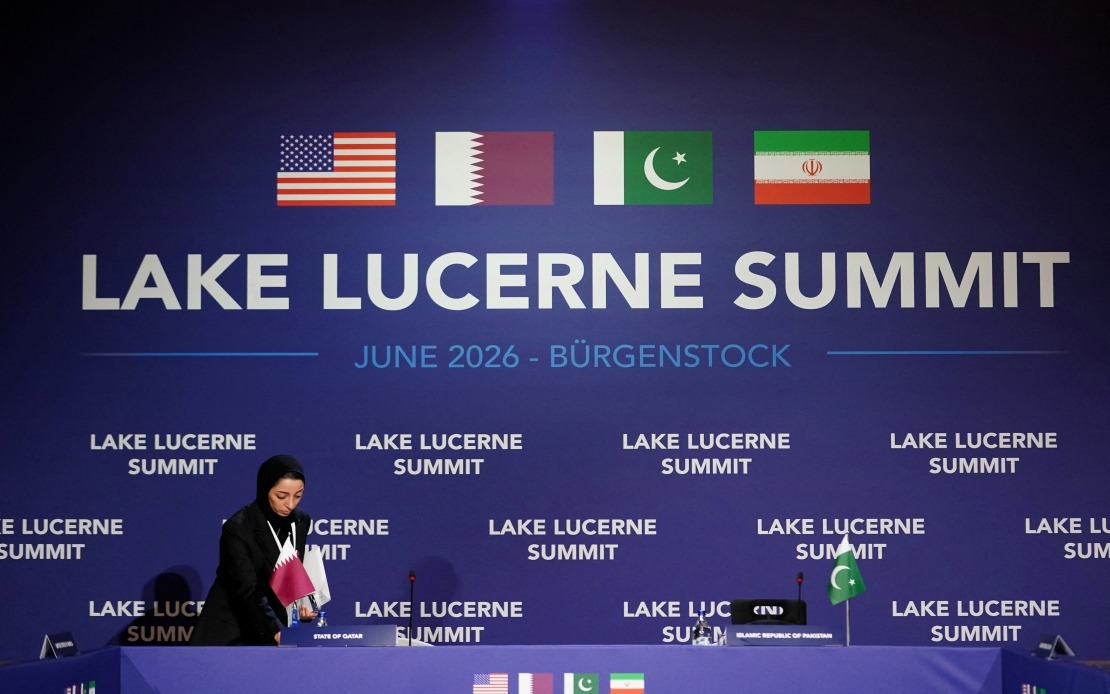
The foreign ministers of Türkiye, Egypt, Pakistan and Saudi Arabia have publicly endorsed the recent agreement signed between the United States and Iran, framing it as a pivotal development for regional stability in West Asia. The joint statement, released on Sunday following diplomatic meetings in Cairo, characterises the Islamabad Memorandum of Understanding as a meaningful step backward from escalation and toward genuine de-escalation in one of the world's most strategically sensitive regions.
The four nations expressed particular satisfaction with the substance and structure of the Islamabad MoU, viewing the negotiated settlement as addressing longstanding sources of tension that extend beyond bilateral US-Iran relations. Their statement emphasises that the agreement carries implications for the entire region, directly affecting energy security, safe passage through international maritime corridors, supply chain resilience, and global trade flows—concerns that resonate across Southeast Asia and beyond.
Pakistan received specific acknowledgment for its instrumental role in shepherding the negotiation process toward completion, demonstrating Islamabad's capacity to serve as a bridge-builder in complex geopolitical disputes. The four foreign ministers also recognised Qatar's significant diplomatic support in facilitating discussions, highlighting how smaller regional actors have proven essential to achieving breakthrough agreements on contentious issues.
The statement underscores that this accord, while welcomed, represents only an initial phase in what must be a sustained diplomatic engagement. The ministers called for swift movement toward comprehensive negotiations that would produce a permanent, verifiable framework addressing outstanding disagreements between Washington and Tehran. This measured tone reflects awareness that initial agreements, though significant, require careful follow-up to achieve lasting results and rebuild confidence between parties with deep historical mistrust.
Central to the four nations' position is their insistence that any subsequent agreements must carefully consider the legitimate security interests of Gulf Cooperation Council states and nations across the Levant. This language indicates that signatories to the accord—or potential future signatories—must ensure that regional stakeholders feel adequately protected and consulted, rather than having major security arrangements imposed upon them without input from directly affected neighbours.
The Palestinian question received prominent treatment in the joint statement, reflecting the primacy this issue commands across the Arab world and broader Muslim-majority nations. The four foreign ministers reaffirmed their conviction that resolving the Israeli-Palestinian conflict remains foundational to achieving sustainable peace and stability throughout West Asia, suggesting they view the US-Iran agreement not in isolation but as part of a broader regional reconciliation process.
Their support for Palestinian statehood based on 1967 borders with East Jerusalem as capital, as mandated by United Nations resolutions, reiterates a consistent position held by the majority of nations globally. This statement serves as a reminder that the international community, including major regional powers, continues to regard the Palestinian issue as central to addressing root causes of West Asian instability rather than peripheral to broader geopolitical calculations.
For Malaysian observers, this multilateral endorsement carries significance beyond Middle Eastern affairs. Malaysia, as a Muslim-majority nation with substantial economic interests in Middle Eastern stability, has long supported international efforts to reduce tensions in the region. The accord and its backing by four strategically important nations signals potential for reduced volatility in energy markets and maritime security—factors directly affecting ASEAN economies heavily dependent on Gulf oil and reliant on freedom of navigation through critical shipping lanes.
The involvement of Türkiye in this joint statement is particularly noteworthy, given Ankara's position straddling European and West Asian geopolitics. Türkiye's endorsement suggests that NATO's sole Muslim-majority member sees benefits in pursuing regional de-escalation even as it manages complex relationships with both Western and non-Western powers. This diplomatic posture may offer lessons for Southeast Asian nations similarly navigating great power competition.
Pakistan's prominent role in facilitating these talks demonstrates how medium powers can exercise disproportionate diplomatic influence when positioned as trusted intermediaries. For ASEAN nations seeking to maintain centrality in regional architecture amid competing great power interests, Pakistan's example illustrates the value of cultivating neutral credibility and demonstrating genuine commitment to facilitating dialogue rather than merely advancing narrow national interests.
The joint statement's emphasis on process and follow-through suggests these four nations recognise that meaningful diplomatic achievements require sustained attention and incremental building of trust. This patient, methodical approach contrasts sharply with periodic crises and dramatic statements that have characterised US-Iran relations in recent years, pointing toward a potentially more stable era in West Asian affairs.
As these negotiations proceed, the position articulated by Türkiye, Egypt, Pakistan and Saudi Arabia will likely influence how other regional and international actors calibrate their own responses to ongoing US-Iran developments. Their collective voice carries weight within Islamic and Non-Aligned Movement forums, potentially shaping how broader international opinion coalesces around any future comprehensive agreements.

