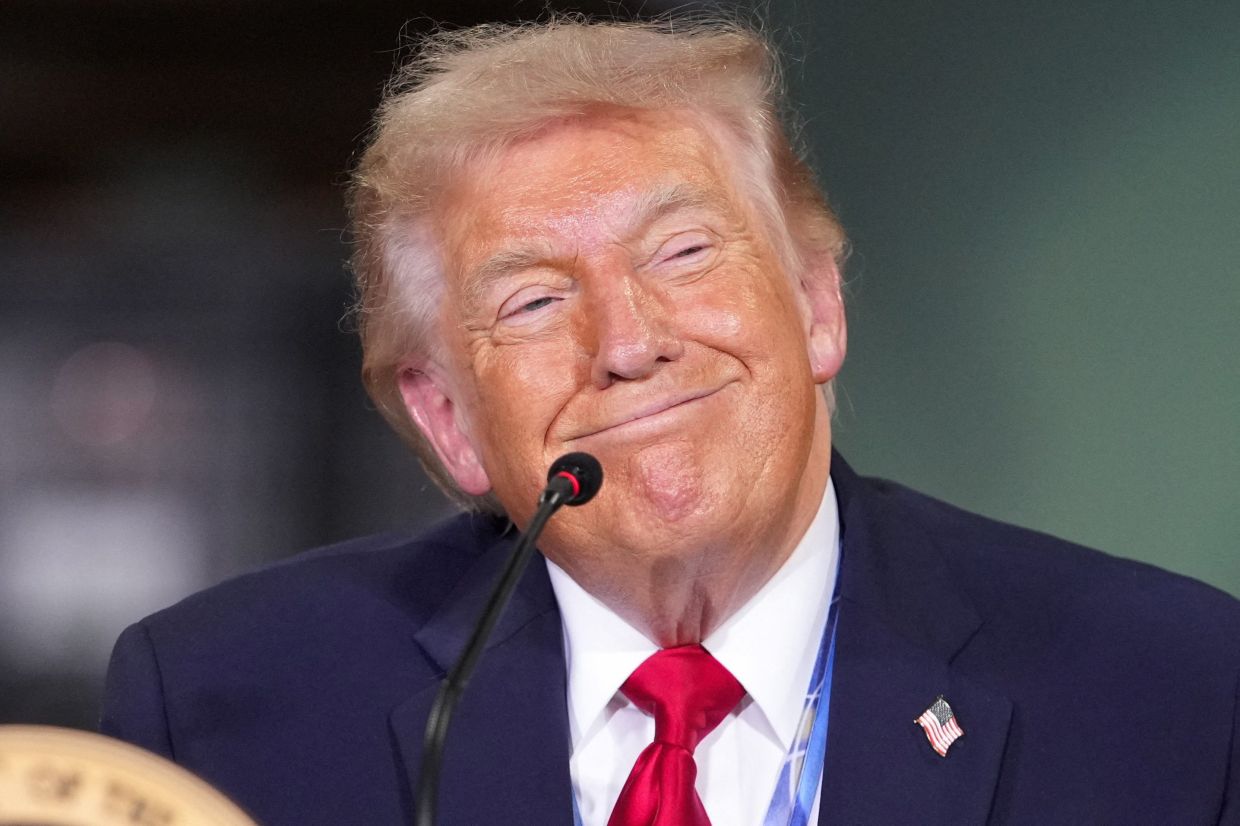
President Trump's administration has engineered a fundamental redesign of its protectionist trade framework after the Supreme Court invalidated his initial sweeping tariff architecture. Rather than retreat from his core objective of reshaping global commerce, the White House has constructed a legally defensible alternative that aims to achieve substantially similar outcomes through investigative mechanisms tied to specific trade violations. This methodological shift, while appearing technical, carries profound implications for which countries gain competitive advantages and which face intensified trade barriers in the months ahead.
The foundation of the revised approach rests on Section 301 of the Trade Act of 1974, a legal instrument that permits tariffs based on unfair trade practices rather than blanket protectionism. Two categories of investigations now dominate the landscape: allegations concerning forced labour in production processes, and accusations of excessive industrial capacity that distorts international markets. These investigative grounds provide ostensible justification for tariff determinations that, in practice, often align closely with Trump's original Liberation Day levies announced on April 2, 2025. However, the transition between these two frameworks has created measurable disparities in how different nations will be treated, opening opportunities for some while closing doors for others.
Southeast Asia exemplifies this bifurcated outcome. The Philippines represents perhaps the clearest beneficiary under the emerging tariff hierarchy. Where the country faced a 19 per cent rate under the initial framework, the forced-labour investigation is expected to settle at 12.5 per cent, representing a nearly seven percentage-point reduction that could meaningfully alter investment decisions for multinational supply chains. This tariff relief arrives as US imports from the Philippines have surged dramatically, climbing 51 per cent during the first four months of 2025 compared with the same period in 2024, suggesting that manufacturers are already repositioning production to capture lower-cost advantages. The Philippines' omission from the excess-capacity investigation means no further tariff escalation looms, providing clarity that other nations lack.
Singapore, conversely, occupies a precarious position that underscores the unpredictability embedded in Trump's revised system. As Asia's premier transhipment hub, the city-state handles the movement of raw materials and semi-finished goods that transit through its ports en route to final markets, making tariff determinations particularly consequential for its economy. Singapore did not receive a country-specific emergency tariff when April 2025 Liberation Day tariffs were imposed, instead benefiting from the universal 10 per cent baseline rate applied across all trading partners. Yet that relatively benign status now faces significant jeopardy. The forced-labour investigation threatens to impose an additional 12.5 per cent duty, while the excess-capacity probe creates the prospect of further escalation beyond that level. As trade policy expert Deborah Elms of The Hinrich Foundation has observed, Singapore's business community remains acutely conscious that its previously comfortable 10 per cent baseline is rapidly becoming a liability rather than a cushion. The concentration of trade flows through Singapore's industrial zones means that tariff increases will have multiplier effects throughout regional supply networks.
Beyond Southeast Asia, several developing economies unexpectedly benefit from the tariff recalibration. Pakistan faces a 19 percentage-point reduction, declining from 29 per cent to a projected 10 per cent, a swing substantial enough to attract manufacturing investment seeking to avoid higher-tariff jurisdictions. Myanmar's situation is even more dramatic, with duties potentially dropping from 44 per cent in April 2025 to between zero and 2 per cent under the forced-labour investigation, provided the country demonstrates compliance with labour standards. Laos and Lesotho occupy similarly advantageous positions. These dramatic shifts create what observers describe as a new frontier for corporate supply-chain repositioning, as multinational manufacturers race to establish operations or redirect shipments through jurisdictions that have unexpectedly escaped heavy tariff burdens. This phenomenon could accelerate the geographic diversification of global manufacturing networks, particularly for companies seeking alternatives to higher-tariff regimes in traditional production centres.
South Africa presents a case study in the dramatic reversal possible within Trump's framework. The nation was subject to a punitive 30 per cent tariff under the original Liberation Day designation, reflecting Trump's repeated assertions that the South African government discriminates against white Afrikaners. Under the forced-labour investigation protocol, that rate is now expected to decline to 12.5 per cent, a reduction of 17.5 percentage points. South African goods exports to the United States have already contracted sharply, declining 56 per cent in value during the first four months of 2025 compared with the preceding year, a testament to the severe disruption caused by the initial tariff shock. The tariff reduction should provide modest relief, though it remains unclear whether South African exporters can rebuild market share and production capacity after such dramatic contraction.
The treatment of countries that maintain formal trade agreements with the United States adds another layer of complexity to the emerging tariff architecture. Nations including India, the European Union, Japan, South Korea, and the United Kingdom have negotiated bilateral or regional trade arrangements that ostensibly cap their tariff rates at predetermined levels, particularly for automobiles and other sensitive sectors. US Trade Representative Jamieson Greer's recent visit to India offered preliminary signals about how the administration intends to reconcile these contractual commitments with the new tariff investigations. India's Commerce and Industry Minister Piyush Goyal indicated that New Delhi's primary concern involves ensuring that Indian tariff rates remain lower than those applied to competing nations, suggesting that relative rather than absolute tariff levels will become the metric by which countries assess the fairness of their treatment.
Canada's position illustrates the instability that trade agreement holders face within the Trump framework. Although Canadian tariff rates appear improved compared with April 2025, this apparent advantage masks underlying vulnerabilities. The USMCA-qualified goods exemption provides some protection, yet industry-specific metal tariffs have created acute strain for Canadian producers. More fundamentally, Trump has repeatedly threatened to withdraw from the North American agreement he championed during his first presidential term, and he has voiced explicit grievances regarding Canadian retaliatory measures against earlier tariff actions. Even if such withdrawal threats function primarily as negotiating tactics, they render Canada incapable of proceeding with confidence. Renegotiations of the USMCA are scheduled to occur throughout the second half of 2025, a process that will likely extract additional concessions from Canada rather than produce stability.
Mexico faces analogous pressure within the USMCA framework, though its leverage points differ from Canada's. The country is pushing for relief from sector-specific automobile tariff rates, making the argument that Mexican vehicles face higher duties than some imports from South Korea or Japan. Simultaneously, the United States is demanding that Mexico implement a rule requiring that automobiles traded within the North American zone contain at least 50 per cent American-sourced components, a standard that would require substantial restructuring of regional supply networks. These negotiations, scheduled to continue through at least July 2025, remain sufficiently unresolved that Mexico's ultimate tariff treatment remains genuinely uncertain, creating planning difficulties for manufacturers dependent on the Mexican automotive industry.
The European Union confronts a compressed timeline that combines substantive trade policy stakes with procedural requirements. The administration has indicated that its willingness to maintain a negotiated trade agreement depends upon formal ratification before a July 4 deadline. Trump has threatened to raise automobile tariffs from 15 per cent to 25 per cent should the agreement not be finalized by that date. The European Parliament voted to approve the agreement last week, and EU member states are expected to provide their final ratification during the current week, completing the procedural steps necessary for implementation. However, the stability that such ratification would ostensibly provide was immediately complicated by Trump's launch of a Section 301 investigation against Germany specifically, citing persistent underpayment by German manufacturers for innovative pharmaceutical products. Chancellor Friedrich Merz responded that pharmaceutical pricing decisions remain domestic policy matters and that the United States should honour its trade commitments with Europe, yet the juxtaposition of these actions underscores that even formal agreements may not shelter trading partners from politically motivated investigations.
China occupies a strikingly transformed position relative to its standing at the outset of Trump's second term. During his 2024 campaign, Trump pledged to implement a 60 per cent tariff on Chinese goods, yet the effective rate now stands at approximately 21 per cent according to Bloomberg Economics analysis. This dramatic reduction reflects the administration's tactical decision to prioritize legal defensibility and the phased negotiation of specific sectoral disputes over the implementation of sweeping tariffs that courts would likely invalidate. The United States and China are scheduled to revisit their tariff arrangements during the autumn of 2025, a timeline that creates space for further evolution. China's demonstrated capacity to leverage trade relationships through mechanisms such as the rare-earth export restrictions it implemented last year suggests that the subsequent round of negotiations may produce outcomes substantially different from the current equilibrium.
The emerging tariff landscape defies simple characterization as either protectionist or liberalizing. Instead, it represents a highly differentiated system in which tariff treatment increasingly depends upon specific investigative findings, sectoral exemptions, and the bilateral negotiating power individual countries can mobilize. For Malaysian and Southeast Asian policymakers, the implications demand careful attention. The Philippines' apparent advantage and Singapore's vulnerability suggest that the region faces a bifurcated future in which some jurisdictions attract investment while others experience diversion. Companies operating within Southeast Asia must now evaluate not only their current tariff exposure but their trajectory as investigations progress, a calculus that may accelerate supply-chain reorientation toward lowest-tariff jurisdictions. The uncertainty embedded in ongoing negotiations regarding trade agreements and investigative timelines means that the tariff landscape will continue shifting throughout 2025, rendering any tariff hierarchy provisional and subject to rapid revision.

