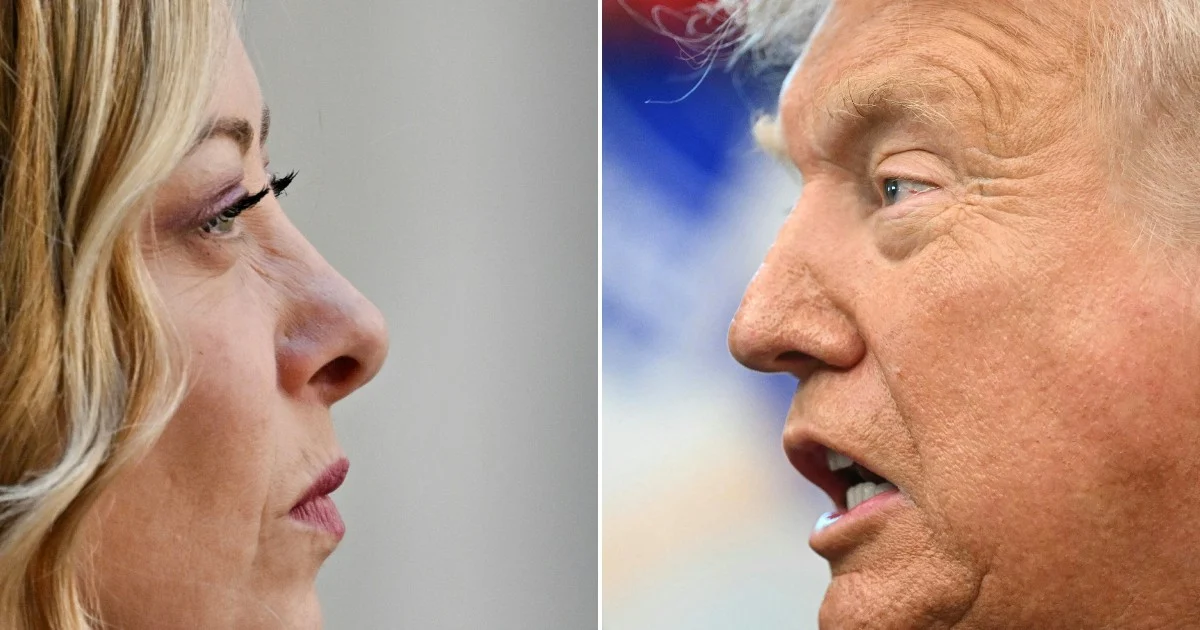
The diplomatic tension between Washington and Rome reached a new flashpoint on Saturday when US President Donald Trump publicly criticized Italian Prime Minister Giorgia Meloni, accusing her of attempting to secure multiple photographs with him during recent G7 interactions. The accusation, which might initially appear trivial, reflects deeper fractures emerging within Western alliance structures and signals an unprecedented willingness by Trump to conduct policy disputes through personal grievance.
The photograph allegation emerged as Trump sought to position himself as the arbiter of alliance dynamics, suggesting that Meloni's apparent interest in a bilateral image reflected broader strategic calculations on her part. By raising this complaint publicly rather than through diplomatic channels, Trump demonstrated a pattern of personalizing international relations that has characterized his current presidency, transforming what might typically remain confidential discussions into fodder for public discourse and media speculation.
Meloni's government, which has positioned itself as a pragmatic bridge between American and European interests, found itself unexpectedly placed on the defensive by the American President's assertions. The Italian leader, who has generally maintained cordial relations with Trump and sought to influence American policy toward Europe, appeared taken aback by the personalized nature of the criticism. Such public reproach carries particular weight coming from a sitting US President and risks damaging Italy's carefully cultivated role as an intermediary within transatlantic affairs.
The escalation extends beyond superficial protocol disputes, as Trump explicitly linked the photograph disagreement to substantive policy differences regarding Iran and NATO. These two issues represent some of the most consequential foreign policy fault lines within the Atlantic alliance. Trump's framing suggests that personal slights intertwine with genuine strategic disagreements, a characterization that complicates efforts to compartmentalize different areas of US-Italian relations and seek mutual accommodation.
On the Iran question, European nations including Italy have historically sought to maintain diplomatic channels and economic engagement despite American sanctions regimes, viewing dialogue as preferable to escalation. Trump's approach traditionally privileges maximum pressure tactics, creating an inherent tension between American unilateral measures and European preferences for multilateral negotiation. By linking this dispute to the photograph matter, Trump appears to suggest that personal loyalty correlates with policy alignment on his terms.
NATO burden-sharing remains another contentious domain within the alliance structure. Debates over defense spending contributions, the scope of European military commitments, and the strategic balance between American leadership and European autonomy have periodically strained relationships within the alliance. Trump's consistent emphasis on alliance members increasing their defense expenditures has created friction with partners like Italy, who balance NATO obligations against domestic budgetary constraints and domestic political considerations.
For Southeast Asian observers, this transatlantic friction carries important implications for the regional security architecture. As the United States maintains commitments to multiple alliance systems, including those in the Indo-Pacific, any erosion of Western cohesion potentially affects American reliability and credibility in other theaters. Partners in Southeast Asia, particularly those managing complex relationships with both the United States and China, monitor transatlantic dynamics carefully to assess the durability of American security guarantees.
The row also illustrates how Trump's negotiation style, characterized by personal dynamics and individual grievances, differs markedly from traditional diplomatic frameworks built on institutional relationships and impersonal protocols. This approach creates unpredictability for allied nations attempting to develop long-term strategic planning, as policy calculations must account for personal factors and the President's individual preferences rather than relying on stable institutional arrangements.
Meloni's position represents a particular challenge within this context. As a leader of the European Union's third-largest economy and a NATO member navigating between Atlantic and European interests, she requires functional working relationships across multiple constituencies. Public criticism from Trump complicates her efforts to maintain credibility with both American and European partners simultaneously, potentially forcing her to take public positions that satisfy one constituency while risking alienation from another.
The substance of Trump's complaints regarding Iran and NATO likely reflects genuine policy disagreements rather than stemming purely from interpersonal friction. However, the decision to publicly link these substantive issues to claims about photograph-seeking creates a problematic dynamic where strategic negotiations become entangled with personal narratives. This fusion makes it substantially more difficult to resolve disagreements through technical discussion or bureaucratic negotiation.
Diplomatically, the escalation raises questions about how the dispute might be managed moving forward. Meloni's government must weigh whether to respond in kind with public statements or attempt to contain the damage through private communication. Either path presents risks, as public silence might suggest acquiescence to Trump's characterization while public response risks further inflaming tensions within a relationship that Italy considers strategically vital.
The episode also reflects broader questions about the current state of the transatlantic relationship and whether traditional alliance frameworks can withstand this new style of presidential conduct. For countries monitoring developments from Southeast Asia and beyond, the spectacle of a sitting American President publicly feuding with a close NATO ally raises substantive concerns about the predictability and durability of American alliance commitments more broadly.

