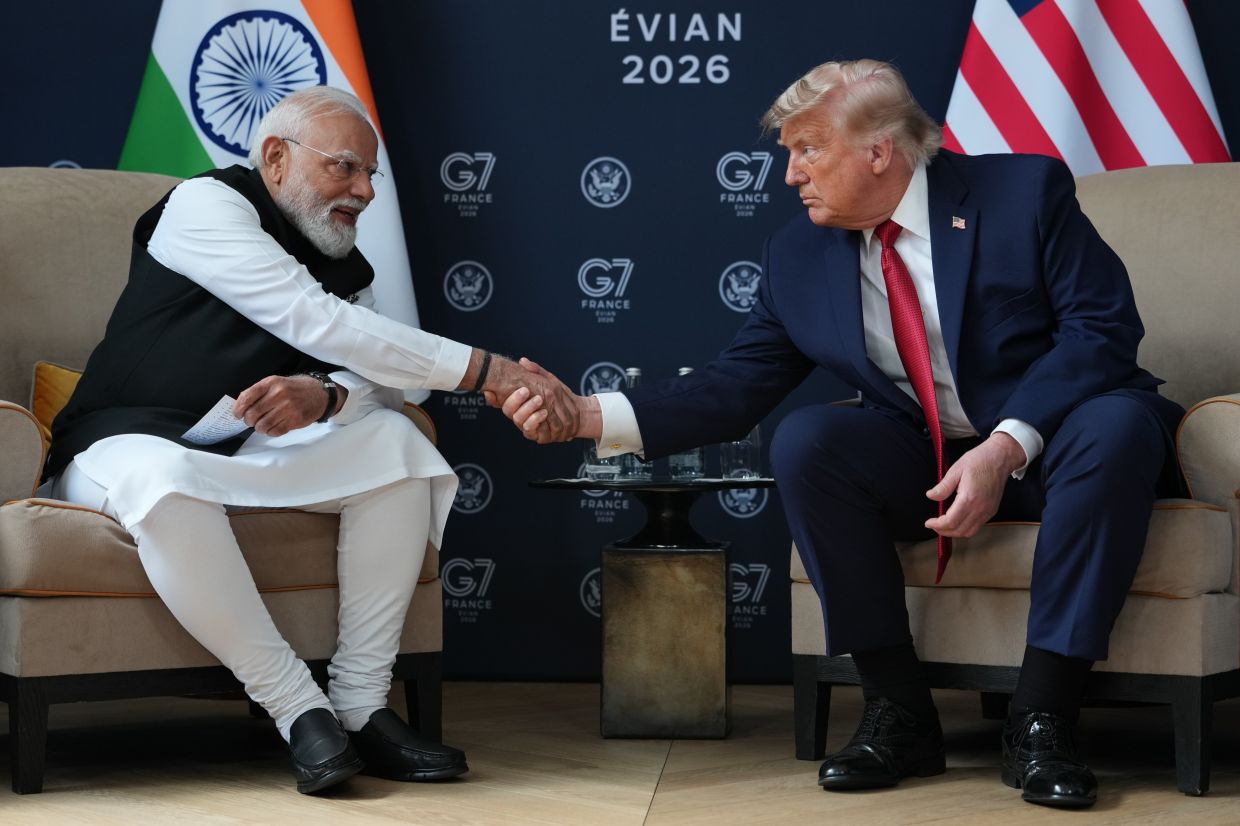
President Trump has drawn widespread criticism in India for displaying minimal sympathy over the deaths of three Indian nationals who were killed when US forces fired missiles at a commercial vessel in the Strait of Hormuz last week. Speaking to journalists after his first bilateral meeting with Prime Minister Narendra Modi in 16 months, Trump acknowledged hearing about the incident involving the Palau-flagged MT Settebello but refrained from offering condolences, instead framing maritime casualties as an inherent part of commercial shipping operations. His dismissive response, coupled with a broader American insistence on enforcing a blockade against Iranian oil transport, has ignited significant public anger across India and complicated what was meant to be a showcase of strengthening bilateral ties.
Trump's characterization of the deaths as simply part of shipping's harsh realities appeared tone-deaf to Indian sentiment. When asked about the incident, the American president stated that such occurrences have been commonplace throughout history, emphasizing instead that both nations continue working together on the matter. He added that Washington and New Delhi maintain strong affection for those affected, describing them as great people—remarks that Indian observers viewed as hollow given the context of the controversial military action. This approach stood in sharp contrast to what many in India expected: a recognition of the tragedy and acknowledgment of the sensitivities surrounding the loss of its citizens.
The underlying tension stems from the US military's decision to target multiple commercial vessels in the region it claimed were violating an American-imposed blockade on Iranian ports. Beyond the MT Settebello, US Central Command also attacked two other cargo ships carrying Indian crew members, citing breaches of sanctions enforcement. The escalation revealed the competing priorities facing Washington and New Delhi, with American security interests in containing Iranian activities clashing against Indian commercial and humanitarian concerns. India's External Affairs Minister S. Jaishankar had lodged a formal strong protest during conversations with American officials, signaling New Delhi's displeasure with the operations.
The State Department's official account of discussions between the two nations laid bare the ongoing friction. American officials underscored their determination to prevent further violations of the blockade and stop illicit Iranian oil shipments, effectively doubling down on their hardline position rather than seeking compromise or expressing regret. This intransigence triggered a wave of public resentment in India that extended beyond political circles. Videos circulated widely on social media showing Delhi's auto rickshaw drivers removing Trump posters—part of a US embassy campaign featuring birthday wishes for America alongside the president's image—in acts of symbolic protest against American policy.
The domestic backlash extended to India's political opposition, with Congress leader Rahul Gandhi using the incident to attack Prime Minister Modi's government. Gandhi accused the administration of appearing compromised in its dealings with Washington, arguing that a truly independent nation would never tolerate such language and actions from any power. He suggested that India's government was listening like an obedient servant rather than asserting the national interest, a potent criticism in a country fiercely protective of its sovereignty and non-aligned traditions. Such attacks highlight how the incident has become a flashpoint for questioning India's strategic autonomy in its relationship with the United States.
Trump attempted to smooth over tensions by emphasizing the depth of his personal relationship with Modi, claiming the two leaders and their nations could not be any closer. He reiterated that while no formal defense treaty exists between the countries, the United States would support India if attacked. Yet these reassurances rang hollow for many Indians who saw them as performative rhetoric divorced from tangible respect for Indian lives and interests. The president characterized Modi as both a tough trader and a great person, pledging to visit India in the future—comments that suggested business-as-usual diplomacy despite the fresh grievances.
The meeting occurred against the backdrop of ongoing negotiations over a comprehensive bilateral trade agreement. The two sides had begun serious discussions during Trump's previous meeting with Modi in February 2025 in Washington, making India one of the first nations to enter formal trade talks with the new American administration. These negotiations carry significant weight for both economies, with India seeking favorable market access and the United States pursuing strategic partnerships to counterbalance Chinese influence in Asia. However, the sailor deaths have injected uncertainty into these commercial discussions, with Indian negotiators facing domestic pressure to demonstrate toughness in their dealings with America.
Progress on finalizing an interim trade deal has continued despite the diplomatic turbulence, with discussions ongoing between senior trade officials. Secretary of State Marco Rubio visited India shortly after the incident and sought to reframe the relationship, characterizing India as one of America's most important strategic partners. His presence and diplomatic messaging appeared designed to contain the damage and reassure New Delhi of Washington's commitment to the partnership. Rubio's attendance at high-level meetings underscored the strategic importance the Trump administration places on India, even as fundamental disagreements persist over regional security matters.
The incident has exposed fractures in what both governments have presented as a flourishing strategic partnership. While the US views India primarily through the lens of containing Chinese power and maintaining control of crucial maritime chokepoints, New Delhi seeks to balance great power relations while protecting its commercial interests and the lives of its citizens. The deaths of three Indian sailors, combined with Trump's apparent indifference, have reminded Indians of the asymmetrical nature of the relationship and the potential costs of alignment with American strategic objectives. For Malaysia and other Southeast Asian nations watching these dynamics, the incident offers a cautionary tale about the complications that can arise when smaller powers become entangled in the geopolitical priorities of larger ones, particularly when those priorities conflict with local commercial and humanitarian interests.

