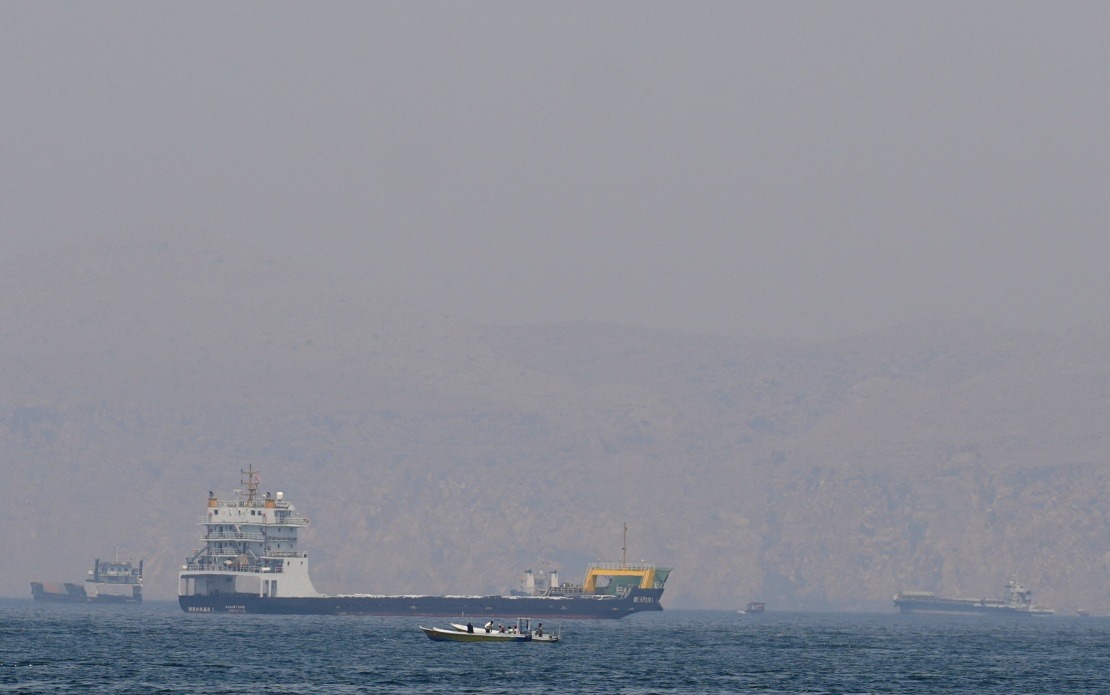
US President Donald Trump has declared that the Strait of Hormuz will remain free of maritime tolls for the next 60 days, but signalled Washington's willingness to introduce its own charges once the ceasefire period expires. In a statement posted on Truth Social on Saturday, Trump cautioned that any future fees imposed would be strictly controlled by the United States, effectively placing the world's most strategically vital shipping lane under potential American financial oversight.
The announcement follows mounting tensions over the waterway's security arrangements and who bears responsibility for maintaining freedom of navigation through one of global trade's most critical chokepoints. The Strait of Hormuz, through which roughly one-third of all seaborne oil trade passes daily, has long been a flashpoint for geopolitical competition between the United States, Iran, and regional powers. Trump's framing of potential future American tolls as compensation for "services rendered as the guardian angel" to West Asian nations reveals an explicit transactional approach to regional security commitments.
Should negotiations fail to produce a binding agreement within the 60-day window, Trump indicated that the United States would seek "reimbursement of costs" for both past and future protection arrangements. This language suggests Washington views its military presence in the Persian Gulf region—including naval assets, air operations, and coastal monitoring capabilities—as a billable service rather than a strategic commitment undertaken for American national interests. The shift toward explicitly pricing security guarantees marks a significant departure from post-Cold War American strategy in the region.
The 60-day timeframe coincides with an existing ceasefire arrangement whose durability remains questionable. Iran's Khatam al-Anbiya Central Headquarters, a significant military-industrial entity, announced recently that the Strait would face potential closure due to alleged American violations of previous commitments and what Tehran characterized as Israeli breaches in separate ceasefire arrangements involving Lebanon. These claims highlight how interconnected regional crises have become, with developments in one conflict theatre directly influencing calculations elsewhere.
US Central Command (CENTCOM) rejected Iran's assertions, with spokesperson Captain Tim Hawkins telling Axios that American forces maintain constant presence and remain committed to enforcing all agreement terms. CENTCOM's statement emphasized that maritime traffic through the Strait continues without impediment, directly contradicting Iranian claims of closure threats. This disagreement over basic facts—whether the waterway remains genuinely open or faces operational constraints—underscores the profound mistrust between Washington and Tehran regarding implementation of any security framework.
Central to the dispute is the fundamental question of who actually controls the Strait of Hormuz. Captain Hawkins explicitly stated that Iran does not control the waterway, a position reflecting American military dominance in the region through superior naval forces and technological capabilities. Yet Iran's geographic position along the Strait's narrowest point gives Tehran significant practical leverage, regardless of formal control arrangements. This mismatch between theoretical American superiority and Iran's capacity to disrupt shipping creates persistent instability.
The introduction of potential American tolls raises complex implications for global commerce and Malaysian interests specifically. As a major crude oil importer, Malaysia's economic stability depends heavily on reliable, affordable access to energy resources flowing through the Strait. Any American toll regime would effectively raise input costs for Malaysian refineries, manufacturers, and power generators, potentially rippling through the entire economy. Regional economies similarly vulnerable to energy price fluctuations would face enhanced uncertainty if American fees became standard practice.
The broader strategic concern extends beyond mere economics to questions of international law and maritime freedom principles. Historically, the United States has championed freedom of navigation as a cornerstone of international order, conducting freedom of navigation operations globally to challenge restrictions on shipping. Introducing American tolls would invert this doctrine, positioning the US as a toll-collecting authority rather than a defender of open seas. This transformation risks undermining the legal frameworks that have governed international shipping for decades.
Southeast Asian nations have largely remained diplomatically neutral on US-Iran disputes while privately depending on stable Strait access for economic survival. The prospect of American toll collection would force these nations into uncomfortable choices: accept new costs imposed by Washington, or develop alternative energy sources and trade routes at considerable expense. Countries like Vietnam, Thailand, and Singapore, which rely extensively on Persian Gulf oil imports, would face particular vulnerability to any American fee regime.
The 60-day window provides limited time for negotiators to construct a durable arrangement that satisfies American concerns about cost-sharing while preserving the principle of unrestricted maritime passage. If negotiations collapse, the question becomes whether Trump follows through with threats to impose tolls or whether this represents negotiating theatre. Either outcome carries significant risks: implementing tolls could trigger global economic disruption and Iranian counter-measures, while backing down would undermine American credibility in regional negotiations.
Regional powers, including Saudi Arabia and the United Arab Emirates, likely view Trump's toll proposals with apprehension. These nations prefer American security guarantees without explicit pricing mechanisms that could become politically contentious domestically. Arab Gulf states have historically absorbed substantial costs supporting American military presence in the region, but through quiet arrangements rather than visible toll collections. Open American fee-collection could spark domestic political backlash across Gulf monarchies already facing pressure over perceived alignment with Washington.
The underlying dynamic reflects broader tension within American foreign policy between treating security commitments as strategic investments versus viewing them as commercial transactions requiring direct compensation. Trump's rhetoric suggests the latter perspective, but implementing such an approach requires mechanisms for enforcement, dispute resolution, and legal justification that remain underdeveloped. Without these institutional frameworks, American toll collection could devolve into arbitrary taxation that destabilizes the very regional order such fees ostensibly protect.

