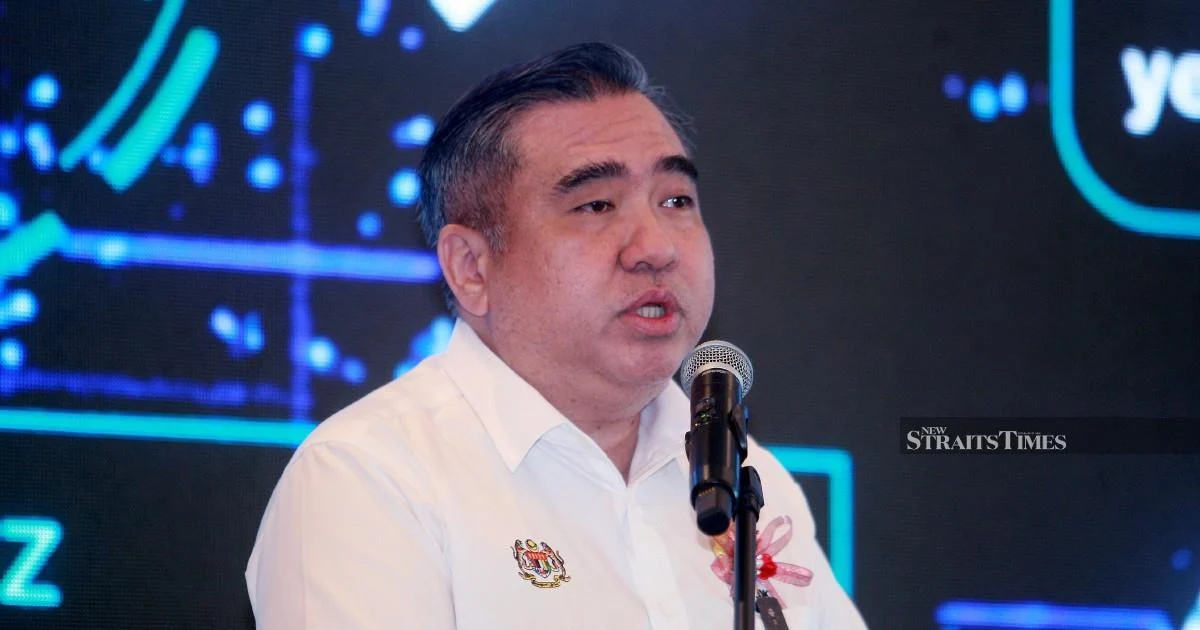
Transport Minister Anthony Loke's attempt to bring clarity to Malaysia's sunshade regulations has instead amplified uncertainty among motorists seeking definitive guidance on what remains permissible under traffic laws. The minister's recent pronouncement that drivers utilising removable sunshades will escape enforcement action marks a significant retreat from earlier messaging, yet it has simultaneously exposed ambiguities in how the rule will be consistently applied across the country's diverse road network.
The confusion reflects a broader challenge facing transport authorities: establishing uniform standards that road users can easily understand and comply with without fear of arbitrary enforcement. Motorists have long grappled with unclear regulations surrounding interior vehicle accessories, particularly those designed to block sunlight and heat. The distinction between removable and permanent fixtures carries practical implications for vehicle owners who have already invested in various heat-protection solutions. Without explicit operational guidelines from enforcement agencies, drivers cannot be certain whether their current setup falls within acceptable parameters or risks citation.
Loke's intervention suggests the Transport Ministry recognises that blanket enforcement approaches were generating public frustration and potentially impeding the practical implementation of traffic safety measures. The clarification represents a pragmatic acknowledgment that overly rigid interpretation of regulations can undermine compliance when citizens perceive rules as inconsistently applied or unreasonably strict. Yet this acknowledgment has created a vacuum regarding the precise mechanics of enforcement—questions that extend beyond simple clarification into the operational procedures that traffic police and road authorities will actually employ.
The sunshade issue exemplifies a recurring pattern in Malaysian regulatory practice where policy adjustments occur through ministerial statements rather than through formal amendments to legislation or published enforcement guidelines. This approach, while sometimes necessary for urgent corrections, generates persistent ambiguity because enforcement personnel often lack written protocols detailing how such clarifications should translate into roadside interactions with motorists. Traffic police checkpoints across Peninsular Malaysia, Sabah, and Sarawak may interpret even clarified policies differently based on local command discretion or individual officer judgment.
Further complicating matters is the question of what constitutes a "removable" sunshade in practical terms. Does this classification extend to magnetic shades, suction-cup mounted screens, or velcro-attached coverings? Are temporary sunshades considered differently from those with permanent mounting hardware? The absence of technical specifications means motorists installing sun-protection solutions remain uncertain whether their particular setup will be deemed compliant during enforcement operations. What passes inspection at one checkpoint may invite penalties at another, creating the perception of inconsistent application and unfair treatment.
The Transport Ministry's position also raises questions about the underlying rationale for sunshade regulations in the first place. If removable devices present no traffic safety concern, authorities should explain why permanent installations warrant enforcement action, or conversely, clarify whether all sunshade use is actually permissible. Public confidence in traffic regulations depends heavily on transparent justification for enforcement priorities. When rules appear arbitrary or their purpose unclear, compliance rates typically decline and public cooperation with authorities diminishes.
For Malaysian motorists already navigating complex vehicle regulations covering everything from tint darkness to license plate specifications, this latest development represents another layer of uncertainty. Vehicle owners who have purchased expensive air-conditioning upgrades or removable sunshades as alternatives to permanent modifications now face the question of whether their investments provide genuine legal protection or merely reduce the risk of enforcement. The conditional nature of Loke's assurance—that removable shades won't face action—still leaves open the possibility that enforcement officers might challenge specific installations based on interpretations not yet publicly clarified.
The Transport Ministry must recognise that effective regulation requires more than ministerial pronouncements; it demands published, detailed enforcement guidelines accessible to every motorist and enforcement officer nationwide. Such documentation should specify precisely which sunshade types, mounting systems, and materials fall within permitted categories. Without these specifics, the ministry's clarification inadvertently perpetuates the very confusion it intended to resolve. Regular road users deserve certainty about compliance, not probabilistic assessments of enforcement risk.
Regional comparisons suggest that neighbouring countries with clearer sunshade regulations experience higher voluntary compliance because drivers understand exactly what is permitted. Singapore and Thailand maintain specific technical standards for vehicle sunshades that are published and consistently enforced. Malaysian authorities could benefit from adopting similarly transparent approaches, establishing clear measurements for tint density and mounting specifications rather than relying on subjective enforcement discretion.
Looking ahead, the Transport Ministry should consider formalising its sunshade position through amended guidelines published jointly with the Royal Malaysian Police and regional traffic authorities. This would establish a unified enforcement standard and demonstrate commitment to regulatory transparency. Until such documentation emerges, Malaysian motorists will likely continue seeking clarification while enforcement officers operate under varying interpretations of ministry policy—a situation that serves no one's interests and undermines public confidence in traffic regulations.

