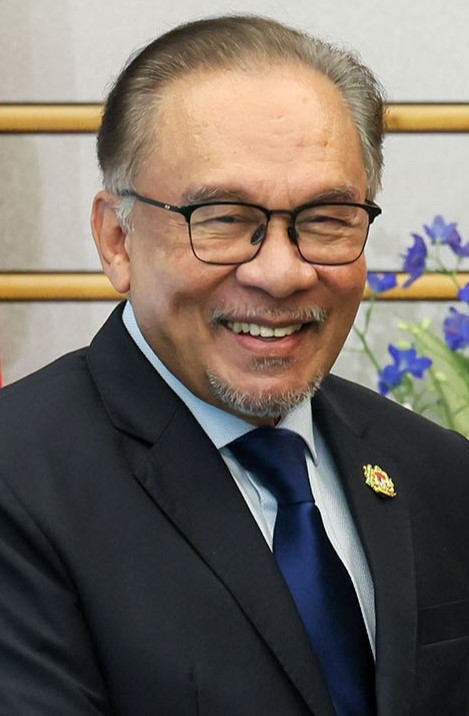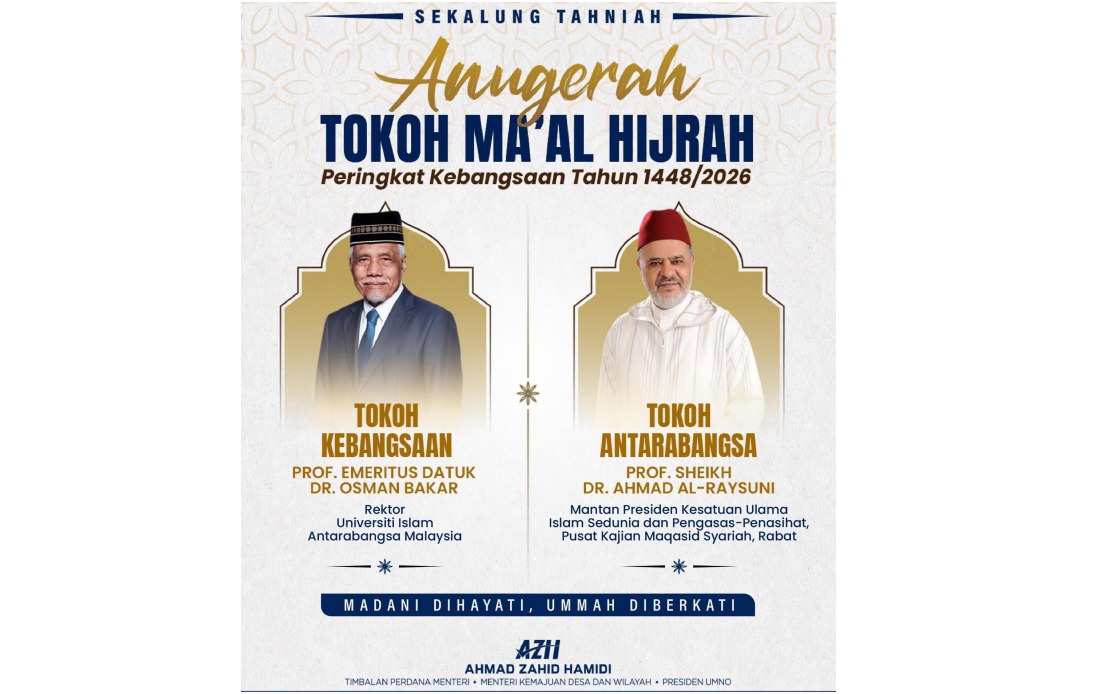
The recognition accorded to this year's Tokoh Maal Hijrah laureates represents far more than a ceremonial honour—it embodies a call to action for Malaysia's Muslim population, according to Deputy Prime Minister Datuk Seri Dr Ahmad Zahid Hamidi. Speaking in the aftermath of the awards presentation, he articulated a vision in which the achievements of the honourees serve as a touchstone for the broader Muslim community, motivating renewed dedication to intellectual pursuits, civic engagement and the strengthening of the ummah across multiple domains.
Two distinguished scholars received the accolades at the national-level Maal Hijrah commemoration held at Masjid Putra in Putrajaya. Prof Emeritus Datuk Dr Osman Bakar secured the National Tokoh Maal Hijrah Award, a recognition of his enduring impact on Muslim scholarship and community empowerment within Malaysia. Simultaneously, Prof Sheikh Dr Ahmad Al-Raysuni, an internationally respected Islamic jurisprudence expert based in Morocco, was conferred the International Tokoh Maal Hijrah Award, underscoring the global dimensions of Islamic intellectual leadership. The awards, including accompanying cash prizes, trophies and certificates, were formally presented by Sultan Nazrin Shah, the Sultan of Perak, lending institutional weight to the recognition.
Ahmad Zahid's assessment placed particular emphasis on how these recipients have elevated knowledge within the Muslim world whilst simultaneously disseminating Islamic values grounded in mercy, wisdom and societal benefit. By highlighting their dual contribution—both to the empowerment of Muslim communities and to the broader civilisational project—he framed their achievements as exemplifying the integration of intellectual rigour with practical social commitment. This dual emphasis carries significance for how Malaysia positions itself as a centre of Islamic thought that balances traditional scholarship with contemporary social needs.
The Deputy Prime Minister's remarks reflect an underlying concern with mobilising Malaysia's Muslim population around shared values of learning and service. His call for Muslims to continue pursuing knowledge represents an implicit acknowledgement that intellectual development remains integral to strengthening the ummah, a principle that extends beyond purely religious instruction to encompass contributions to national development. This framing connects Islamic identity with progressive nation-building, a delicate balance that Malaysia has long attempted to maintain within its multi-religious and multi-ethnic context.
Deputy Prime Minister Datuk Seri Fadillah Yusof amplified this message through his own statement, similarly positioning the awards as inspiration for broader societal contribution. Notably, Fadillah expanded the scope of the appeal beyond the Muslim community specifically, addressing all Malaysians and inviting them to participate in the spirit of service and national development that the awards epitomise. This inclusive rhetorical approach suggests an official recognition that the values embodied by the award recipients—sacrifice, unity, resilience and determination toward positive change—possess universal appeal across Malaysia's diverse population.
Fadillah's interpretation of the Hijrah itself proved particularly instructive. Rather than treating it purely as a historical event marking Prophet Muhammad's migration from Mecca to Medina, he reframed it as a living philosophical principle with contemporary relevance. By emphasising that Hijrah exemplifies sacrifice, unity, resilience and commitment to transformation, Fadillah articulated how Islamic historical memory can inform present-day action. This reinterpretation carries implications for how Malaysia positions Islamic values within its development narrative—not as relics confined to the past, but as dynamic principles applicable to current nation-building challenges.
The invocation of Maal Hijrah (Islamic New Year) as a moment for honouring excellence in service reflects Malaysia's broader institutional approach to weaving Islamic observance into civic life. The national-level celebration, culminating in the awards ceremony, transforms a religious commemoration into an occasion for identifying and celebrating exemplary contribution. This strategy allows the state to reinforce particular values—intellectual achievement, community service, Islamic scholarship—whilst grounding them in shared religious calendar events that resonate deeply within the Muslim community.
For Malaysian and regional observers, the emphasis on these particular recipients carries additional significance. Prof Osman Bakar's recognition reflects Malaysia's investment in nurturing homegrown Islamic intellectual resources, signalling confidence in the nation's capacity to produce world-class scholars. Conversely, the international award to Prof Ahmad Al-Raysuni acknowledges that Islamic excellence transcends national boundaries and that Malaysia views itself as a participant in global Muslim intellectual networks rather than a parochial player.
The awards mechanism itself—with its emphasis on recognising individuals whose work strengthens the ummah, elevates knowledge and contributes to civilisational development—reflects a particular vision of Islamic excellence. It privileges scholarship and community service over political leadership or military prowess, suggesting an official preference for understanding Islamic greatness through intellectual and social contribution. For a nation seeking to position itself as a moderate Islamic hub, this emphasis proves strategically significant, differentiating Malaysia's approach from other interpretations of Islamic achievement.
The twin exhortations from both Deputy Prime Ministers for Muslims to embrace the spirit of the award recipients point toward an underlying concern with Muslim youth engagement and the transmission of values across generations. By explicitly connecting the recognised scholars' work with broader imperatives to seek knowledge and serve the nation, the statements attempt to bridge institutional honour and grassroots inspiration. The hope appears to be that individuals throughout Malaysia, encountering news of these awards, will internalise their example and channel it into their own pursuits within education, business, governance and civil society.
Looking beyond the ceremonial moment, these statements reveal how Malaysia's leadership continues to deploy Islamic frameworks and observances as instruments for national cohesion and progress. The Tokoh Maal Hijrah awards function simultaneously as recognition of past achievement and as compass-setting for future direction. By celebrating scholarship, community empowerment and values-based development, Malaysia signals to its Muslim population and to international observers the integration it seeks between Islamic identity and contemporary governance challenges, a balance increasingly vital in a region navigating rapid social and economic transformation.