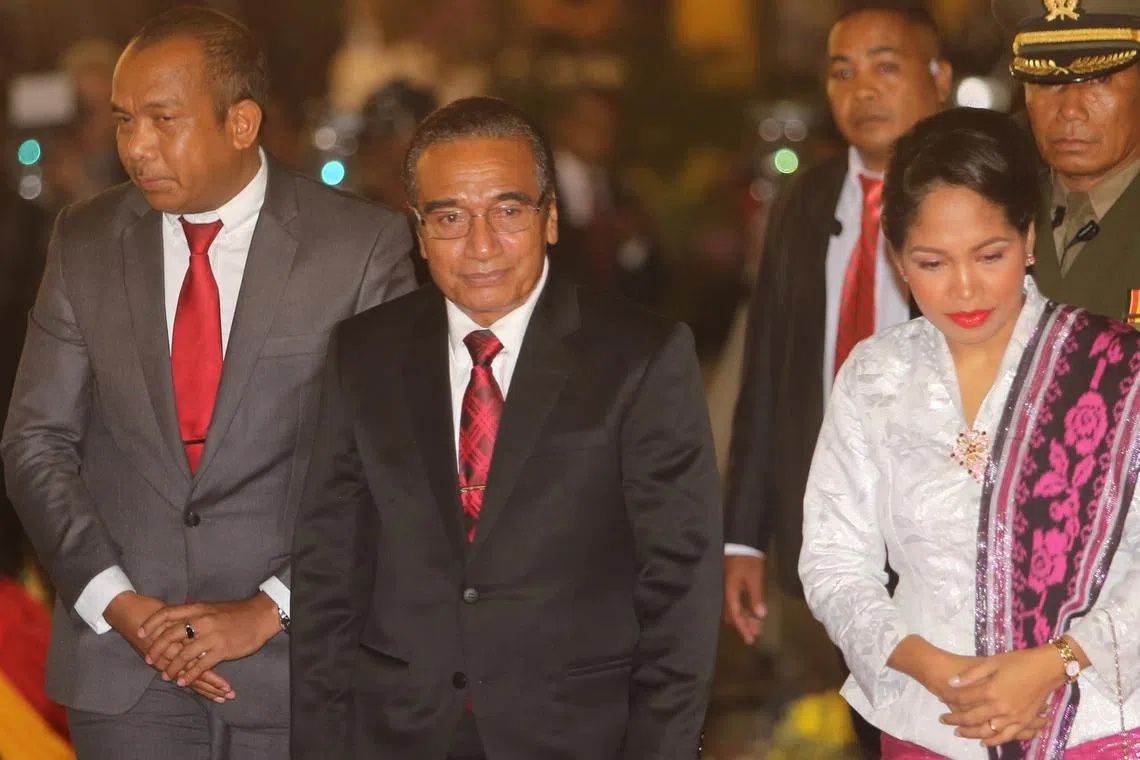
Timor-Leste has entered a period of national mourning following the death of former president Francisco "Lu-Olo" Guterres, who passed away at a Malaysian hospital over the weekend. The government formally declared a week of tribute on June 22, with flags lowered to half-mast across public institutions, diplomatic missions, and consulates throughout the Southeast Asian nation. His body is expected to arrive in Dili on Tuesday, though funeral arrangements remain under discussion by his family members.
Guterres, aged 71, served as the nation's sixth president between 2017 and 2022, representing the culmination of a lifetime dedicated to East Timor's survival and development. His presidential tenure crowned nearly five decades of sacrifice during which he participated in both the armed resistance and political negotiations that ultimately secured independence from Indonesia in 2002. Few figures in the region embody the continuity of struggle and statecraft as vividly as Guterres, whose career spanned the darkest years of occupation through to the consolidation of democracy.
Current President Jose Ramos-Horta, himself a Nobel laureate and former rival who defeated Guterres in a 2022 runoff election, paid tribute to the departed leader as a pillar of the nation. In an official statement, Ramos-Horta characterised Guterres as a "great patriot" whose loss represents a profound setback for the country he spent his entire adult life building. The rhetoric transcends the political competition that separated them just two years earlier, reflecting the esteem in which independence-era leaders are held across the Timorese political spectrum.
The government extended formal condolences to Guterres's immediate family, the Revolutionary Front for an Independent East Timor (Fretilin)—the party he led for extended periods—and the broader population. This multilayered gesture underscores how deeply integrated Guterres had become within Timor-Leste's institutional and social fabric. His brother Domingos Guterres appeared before journalists to confirm logistical details surrounding the return of the body and to request privacy for grieving relatives, emphasizing the family's desire for quiet reflection during an emotionally demanding transition.
Guterres ascended to the presidency in 2017 by securing more than 57 percent of the vote, a commanding margin that testified to popular confidence in his stewardship. His election represented a choice by Timorese voters for continuity and experience at a critical juncture when the young nation remained consolidating democratic institutions and building economic capacity. His presidency coincided with efforts to deepen regional engagement and address lingering challenges inherited from decades of colonial rule and foreign occupation.
Born into modest circumstances, Guterres came of age during Indonesia's 1975 invasion and subsequent 24-year occupation, one of the deadliest conflicts of the late twentieth century. Rather than succumb to despair, he became a symbol of resistance, joining clandestine networks and eventually ascending to leadership positions within armed movements and political parties. This trajectory—from obscurity to prominence through sheer determination and sacrifice—resonates powerfully within Timorese society and across Southeast Asia, where comparable independence struggles shaped multiple nations.
The 2022 presidential contest that cost Guterres his office proved emotionally charged, yet the subsequent conduct of both figures demonstrated institutional maturity. Despite electoral defeat, Guterres maintained respect within governing circles and remained a trusted voice on matters affecting national development. His loss therefore represents not merely the passing of an individual but the gradual departure of direct witnesses to occupation and resistance, leaving younger generations to interpret and preserve that historical legacy.
Malaysian Prime Minister Datuk Seri Anwar Ibrahim issued a condolence statement reflecting on Guterres's significance, noting that Malaysia mourns alongside the Timorese people. The sentiment speaks to the regional standing Guterres commanded, having represented his nation at countless international forums and built relationships with neighboring governments. His death in a Malaysian hospital adds another dimension to regional interconnectedness, reminding observers that Southeast Asian leaders frequently depend on each other's medical facilities and institutional networks.
Guterres's family requested that supporters respect their privacy during the mourning period, asking that commemorations take the form of prayers and thoughtful remembrance of his contributions. This measured approach contrasts with some funeral observances in the region, suggesting a family conscious of their father's public stature yet determined to preserve space for intimate grieving. The balance between public commemoration and private sorrow will likely define the coming week as Timor-Leste honors a man who bridged its colonial past and independent present.
The departure of Guterres marks another milestone in the succession of authority within Timor-Leste's leadership cohort. Younger political figures now face heightened responsibility for navigating complex questions of national development, regional positioning, and institutional governance without recourse to the lived experience of those who fought for independence. His death therefore extends beyond personal bereavement into questions about historical memory and institutional continuity—issues that will occupy Timorese society well beyond the formal week of mourning.

