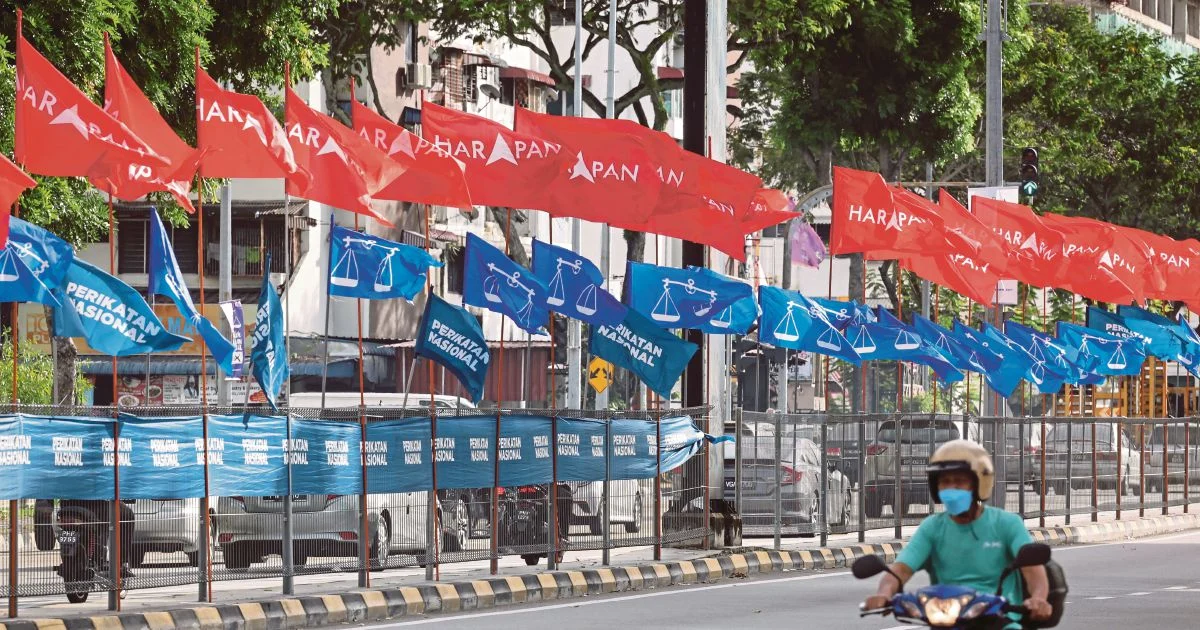
Johor is bracing for a fiercely competitive state election next month, with three major political coalitions—Barisan Nasional, Pakatan Harapan and Perikatan Nasional—expected to field candidates against each other in 33 of the 56 available seats. The three-way contests across the bulk of constituencies underscore how fractured Malaysia's political landscape has become since the 2022 general election, with no single bloc enjoying clear dominance in the crucial southern state.
The prevalence of three-cornered fights in 59% of state seats fundamentally alters the electoral dynamics compared to straight bipolar contests. Voters face a more complex calculus when deciding which coalition best represents their interests, whilst candidates must work harder to build winning coalitions in their constituencies. This fragmentation typically benefits the faction best organised at grassroots level and most effective at consolidating support within a divided opposition field. For Johor specifically, such contests are likely to determine which party can translate organisational strength into seat gains despite vote splitting among rivals.
Barisan Nasional's traditional stronghold in Johor faces its sternest test in recent years. The coalition has long relied on substantial victory margins in the southern state, making Johor its essential anchor for Kuala Lumpur politics. Competition from both Pakatan Harapan and Perikatan Nasional simultaneously means the long-ruling coalition cannot afford complacency in any single district. Campaign resource allocation becomes critical—concentrating efforts in winnable seats whilst accepting losses in hostile territory could prove decisive. The stakes for Barisan's national narrative are substantial; a weakened showing in Johor would reverberate through internal party dynamics and reshape calculations about the 2025 general election timeline.
Pakatan Harapan's southern campaign reflects the coalition's broader push to reclaim ground lost in 2022. The opposition bloc has strengthened its organisational capacity since the last general election and enjoys rhetorical appeal in constituencies where urban voters, younger demographics and non-Malay communities dominate. However, spreading resources across 33 simultaneous three-way contests presents logistical challenges, particularly in rural constituencies where traditional patronage networks remain influential. Pakatan must identify and concentrate firepower on winnable seats where local leadership is strong and demographic trends favour opposition politics.
Perikatan Nasional's decision to contest widely reflects the coalition's ambition to establish itself as a permanent fixture in Malaysian politics beyond its Malay-Muslim heartland. The Islamist-tinged grouping has demonstrated capacity to mobilise significant voter blocks in certain regions, particularly through religious and cultural messaging. In Johor, however, Perikatan faces the challenge of competing for votes it might otherwise share with Barisan Nasional in Malay-majority constituencies, potentially fragmenting the conservative vote and benefiting Pakatan Harapan in marginal seats. The coalition's growth since 2022 suggests organisational momentum, but converting that into seat victories against two established rivals demands precision campaigning.
The geographical distribution of these three-way contests remains crucial to understanding Johor's electoral arithmetic. In urban centres and mixed constituencies, Pakatan Harapan likely expects to run competitively, leveraging its appeal to non-Malay voters and progressive urban demographics. Rural and Malay-majority seats may see tighter contests between Barisan Nasional and Perikatan Nasional, with Pakatan occupying third place unless it has made substantial inroads locally. Suburban constituencies represent genuine battlegrounds where the three coalitions could realistically compete for supremacy, depending on local factors and candidate quality.
Candidate selection acquires heightened importance in a three-way environment. Party leaders must identify individuals capable not merely of winning internal nomination contests but of mobilising community support and outperforming two serious rivals simultaneously. Fielding second-tier candidates becomes riskier when facing two well-resourced opponents; local credibility and grassroots connections matter more than factional loyalty. This selection pressure favours coalitions with deep benches of capable politicians and those maintaining strong relationships within their traditional voter bases.
The Johor election carries implications reaching beyond the state itself. As Malaysia's third-largest state by population and economically significant through Petronas and other major enterprises, Johor's outcome influences national political momentum. A decisive Barisan Nasional victory would reinforce the coalition's claim to continued federal leadership despite internal faction tensions. Conversely, substantial gains for Pakatan Harapan would accelerate opposition momentum heading toward a potential 2025 general election. Perikatan Nasional's performance will indicate whether the coalition can expand beyond its core base or remains geographically concentrated.
Voter behaviour in three-way contests differs markedly from traditional two-coalition races. Strategic voting becomes more sophisticated, with supporters potentially splitting ballots based on perceived viability in each constituency. Some voters may cast protest votes against their traditional preferred coalition knowing that rivals pose a greater threat locally. Turnout patterns often diverge from straight contests, influenced by whether voters perceive meaningful choice or resign themselves to inevitable outcomes. Campaign messaging must address not just positive advocacy for a coalition's vision but also tactical arguments about which vote maximises voter interests in a crowded field.
The timeframe of next month's election imposes real constraints on campaign preparation. Parties must accelerate candidate announcements, organise ground machinery, and develop distinct messaging sufficient to differentiate themselves across 33 simultaneous contests. The compressed schedule favours incumbents with existing electoral machinery and established relationships but disadvantages challengers requiring time to build organisational capacity. Incumbent party activists enjoy existing party structures and voter contact lists, reducing the need for infrastructure creation from scratch. For newer entrants or expanding coalitions, the short timeline represents a genuine disadvantage despite organisational ambitions.
Ultimately, Johor's 33 three-way contests reflect Malaysia's evolving political maturity. Rather than clear ideological divides or clean bipolar alignments, voters increasingly face granular choices between competing visions of governance, Malay-Muslim representation and economic management. This complexity demands both voter sophistication and coalition clarity about platform differences. The party that best navigates this fragmented landscape—through superior organisation, compelling messaging and credible local leadership—will claim victory in Malaysia's crucial southern state.

