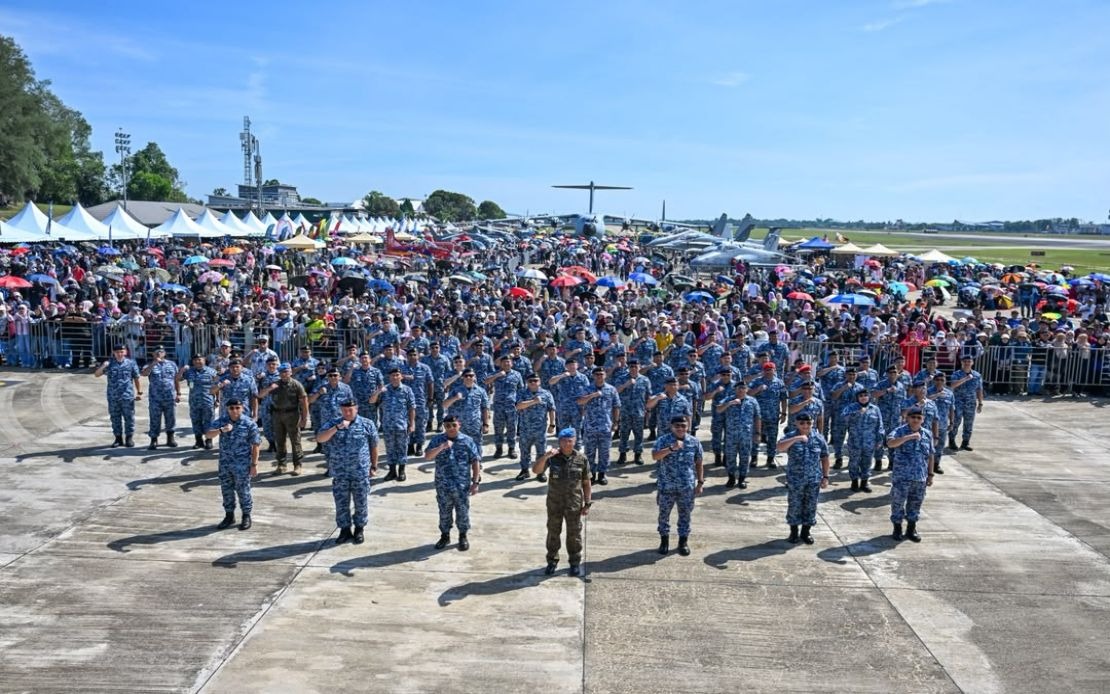
Despite the intense heat, thousands of Malaysians descended on Kuantan Air Base this week to celebrate the Royal Malaysian Air Force's 68th anniversary through an open day that ran across two days. The turnout reflected sustained public curiosity about the nation's aerial defence capabilities and the military's efforts to bridge the communication gap between its operations and civilian understanding. The sheer volume of visitors underscored how such accessible defence events resonate with Malaysians across age groups and regions, from primary school children to retirees seeking to witness their nation's defence assets in action.
RMAF Chief General Tan Sri Muhamad Norazlan Aris acknowledged the event's modest scale, a deliberate choice aligned with government austerity directives, yet maintained that public engagement remained the centrepiece. He framed the open day not merely as spectacle but as a strategic communications platform where the force could directly address public curiosity about operational roles, technological advancement, and future procurement strategies. This approach reflects a broader military philosophy that transparency on non-sensitive matters strengthens civil-military relations and builds informed public support for defence spending and modernisation initiatives.
A central feature distinguishing this year's celebrations was the unprecedented RMAF Runway Run 2026, scheduled for the second day. With approximately 3,000 registrants already secured, and organisers welcoming walk-in participants, the event granted ordinary civilians access to an active military runway—an experience typically restricted by security protocols. This rare privilege underscores a deliberate shift toward demystifying defence operations and allowing the public direct sensory engagement with military infrastructure. For most Malaysians, the opportunity to stand on an operational runway alongside fighter jets represents a once-in-a-lifetime moment that traditional media coverage cannot replicate.
The aerial display programme showcased the RMAF's frontline and support capabilities through live demonstrations of its most sophisticated platforms. The Sukhoi Su-30MKM fighter jets, mainstays of the air force's air-defence posture, executed manoeuvres designed to illustrate combat versatility. The F/A-18D Hornet, another cornerstone of regional air superiority, demonstrated the force's capacity to operate advanced multi-role platforms. Transport assets including the A400M and C-130H highlighted logistical reach, while helicopter demonstrations featuring the EC725AP/H225M and AW139 models showcased RMAF capabilities in search-and-rescue and troop insertion missions. The inclusion of PASKAU special forces parachute insertions added tactical realism to the proceedings, offering spectators insight into integrated operations spanning multiple platforms and personnel specialisations.
Stationary displays complemented the dynamic aerial performances, presenting a comprehensive inventory of defence systems. Ground-based air defence platforms, essential to comprehensive national security architecture, received particular attention given Malaysia's commitment to integrated air and missile defence. Prime movers and specialised fire-suppression vehicles illustrated the logistical and safety infrastructure supporting flight operations. Aircraft simulators provided interactive learning opportunities, allowing visitors to experience pilot training environments and appreciate the technical sophistication underlying modern air operations. These static elements transformed the open day into an educational venue where technical knowledge displaced mere spectacle.
The RMAF Central Band, drumline performances, and Air Force Arts Group presentations interspersed military exhibitions with cultural programming, broadening appeal beyond defence-focused audiences. This programming strategy recognised that family attendance requires diverse entertainment options. Weapons exhibitions, curated to inform rather than intimidate, provided context for understanding the force's operational doctrine. Career exhibitions simultaneously served recruitment functions while promoting military service as a professional pathway, addressing the persistent challenge of attracting qualified personnel to technical defence roles. Such integrated programming transformed the open day into a social occasion where military pride, family recreation, and professional development intertwined.
Mohd Al Muaimin Khairul Amir, a 24-year-old visitor from Arau in Perlis, exemplified the demographic reach and emotional resonance of such events. His decision to bring his mother, Rosnani Itam, who navigates the venue by wheelchair, highlighted accessibility considerations and intergenerational bonding opportunities. His observation that such exposure opportunities remain infrequent for Malaysian civilians underscored the scarcity of platforms where defence operations achieve public visibility. The fact that his visit held meaning beyond military spectacle—encompassing family time and personal connection—suggested that open days function as social anchors within communities, creating shared experiences that transcend military interest.
From a defence policy perspective, the open day represented a calculated investment in civil-military relations during a period when procurement decisions and force modernisation programmes demand public understanding and acquiescence. By permitting direct civilian access to advanced platforms and personnel, the RMAF demonstrated confidence in its capabilities whilst building constituencies of informed supporters. Such engagement becomes particularly valuable when defence budgets face budgetary pressures and procurement decisions invite public scrutiny. Grassroots familiarity with air force assets and personnel cultivates a more nuanced public discourse around defence investments.
The two-day event also highlighted RMAF's commitment to institutional communication beyond traditional news channels. General Muhamad Norazlan's explicit acknowledgement that social media provides insufficient information recognition that digital communication, whilst rapid, often lacks the contextual depth and personal engagement that direct interaction provides. By inviting personnel to discuss operational roles, duties, and acquisition strategies within security parameters, the RMAF positioned itself as transparent within appropriate bounds. This calibrated approach to military transparency reflects contemporary expectations that state institutions maintain accessible communication whilst protecting genuine security interests.
Regionally, Malaysia's approach to defence public relations carries significance. As Southeast Asian nations navigate great power competition and technological advancement in military capabilities, civilian understanding of defence capabilities influences political support for defence partnerships and procurement decisions. The Kuantan open day demonstrated that modern air forces need not maintain the distant mystique of earlier generations. By demystifying operations whilst maintaining operational security, the RMAF modelled an approach that peer nations observe and potentially replicate.
The sustained public interest evident in the thousands who attended despite difficult weather conditions suggests sustained civilian curiosity about national defence. This interest, if channelled through regular public engagement, can transform defence institutions from remote bureaucracies into entities whose missions and capabilities enjoy broad-based understanding. The open day's modest scale, whilst reflecting budgetary constraints, did not diminish its strategic purpose of building informed civilian constituencies around defence modernisation. For Malaysian defence planners, such events represent investments in institutional legitimacy that extend far beyond immediate publicity value, creating foundations for sustained public support for defence initiatives.
Looking forward, the success of the Kuantan open day and the enthusiastic response to the runway run experience suggest opportunities for similar engagement at other bases nationwide. Regular public access programmes, calibrated to security requirements, could become standard practice within RMAF operations. Such accessibility would position Malaysia's air force as an institution transparent in appropriate ways whilst remaining capable and professional. The investment in civil-military understanding during peacetime builds reservoirs of public confidence that prove invaluable during security challenges.

