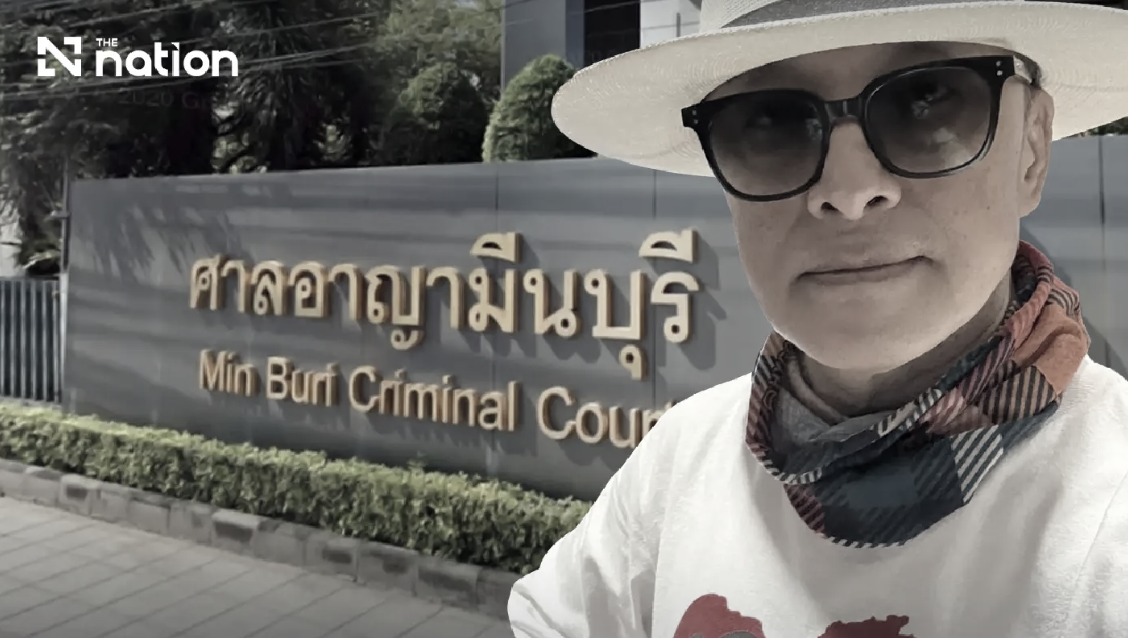
A Thai court has handed down a two-year prison sentence to Manasawin Nantasen, the celebrated pop singer known professionally as Tik Shiro, for causing the deaths of two people while driving under the influence of alcohol. The Bangkok criminal court's conviction on June 24 marks a rare instance of legal accountability for a high-profile entertainer in a country where questions about unequal justice continue to shadow public discourse.
Manasawin rose to international prominence during the late 1980s and 1990s as a distinctive cultural figure whose stage presence drew repeated comparisons to Michael Jackson. His trademark look—a fedora hat paired with leather jackets—and his mastery of slick, rhythmic dance moves became synonymous with Thai pop culture during that era. The 64-year-old artist had maintained significant influence throughout his career, making the circumstances of his conviction a subject of intense national scrutiny.
The incident that led to the charges occurred in October 2024 when Manasawin was operating his vehicle across a bridge in Bangkok. While crossing the structure, he collided with a stationary motorcycle, triggering a tragedy that would claim two lives. The impact killed a 28-year-old woman who was positioned on the motorcycle at the time of the collision. Her brother, aged 21, was struck with such force that he was knocked off the bridge entirely, suffering injuries so severe that he was rendered critically unstable.
Despite immediate medical intervention, the younger brother could not be saved. He subsequently succumbed to his injuries while receiving treatment at a hospital, transforming what began as a two-victim incident into a double fatality. Police investigations confirmed that alcohol impairment was the decisive factor in Manasawin's inability to exercise proper control over his vehicle, establishing the foundation for the drunk-driving charges that would follow.
The immediate aftermath of the crash produced a moment that would circulate widely across Thai social media platforms. Footage showing Manasawin kneeling in apparent grief at the scene went viral, generating substantial national attention. For many observers, the images captured a stark contrast between the entertainer's public display of remorse and the broader narrative about how Thailand's wealthy and influential figures navigate its legal system. The viral moment intensified public interest in whether the case would demonstrate genuine judicial impartiality or reinforce perceptions of selective enforcement.
The sentencing judgment acknowledged several mitigating factors in Manasawin's favour, noting that he had surrendered voluntarily to authorities and provided cooperation throughout the judicial process. The court's statement also highlighted his attendance at the victims' funeral services and his compensation payments to their bereaved families as evidence of genuine remorse. Nevertheless, the court exercised its authority to revoke his driver's licence permanently, a measure intended to prevent further road-related harm.
Manasawin's conviction arrives within a broader context of celebrity accountability in Thailand. Concurrent with his sentencing, rock musician Sek Loso was released from prison after completing just over a year of incarceration for drug-related offences and illegal firearm possession, generating discussion about differential sentencing outcomes and the varied consequences celebrities face under Thai law.
These recent cases exist against the backdrop of high-profile incidents that have fuelled sustained criticism about justice system inconsistencies. In 2012, Vorayuth Yoovidhya, the heir to the Red Bull commercial empire, became embroiled in a fatal incident involving his Ferrari ploughing into a Bangkok police officer in an upscale neighbourhood. Though investigations were initiated, charges were never filed, leaving the case unresolved and becoming emblematic of perceived impunity for the ultra-wealthy. Similarly, the son of former Pheu Thai MP Chalerm Yubamrung faced allegations of fatal shooting at a crowded Bangkok nightclub in 2001 following a dispute, but was eventually acquitted based on prosecutorial assessment of insufficient evidentiary support.
These contrasting outcomes have crystallised public scepticism about whether Thailand's legal apparatus applies standards consistently across social strata. The conviction of Manasawin, despite his celebrity status and cultural significance, offers a counternarrative suggesting that accountability mechanisms can function, even when prominent figures are involved. However, observers note that the sentence's relative brevity compared to potential maximum penalties, coupled with the historical patterns evident in other celebrated cases, sustains questions about whether genuine equality before the law has truly been achieved.
For Southeast Asian media watchers and legal analysts, the Manasawin case exemplifies the ongoing tension in Thai society between formal legal structures and informal power networks. His sentencing may represent institutional progress in holding entertainers answerable for serious transgressions, yet without similar accountability demonstrated across comparable incidents involving other wealthy accused individuals, the foundation for broader public confidence in equitable justice remains incomplete.

