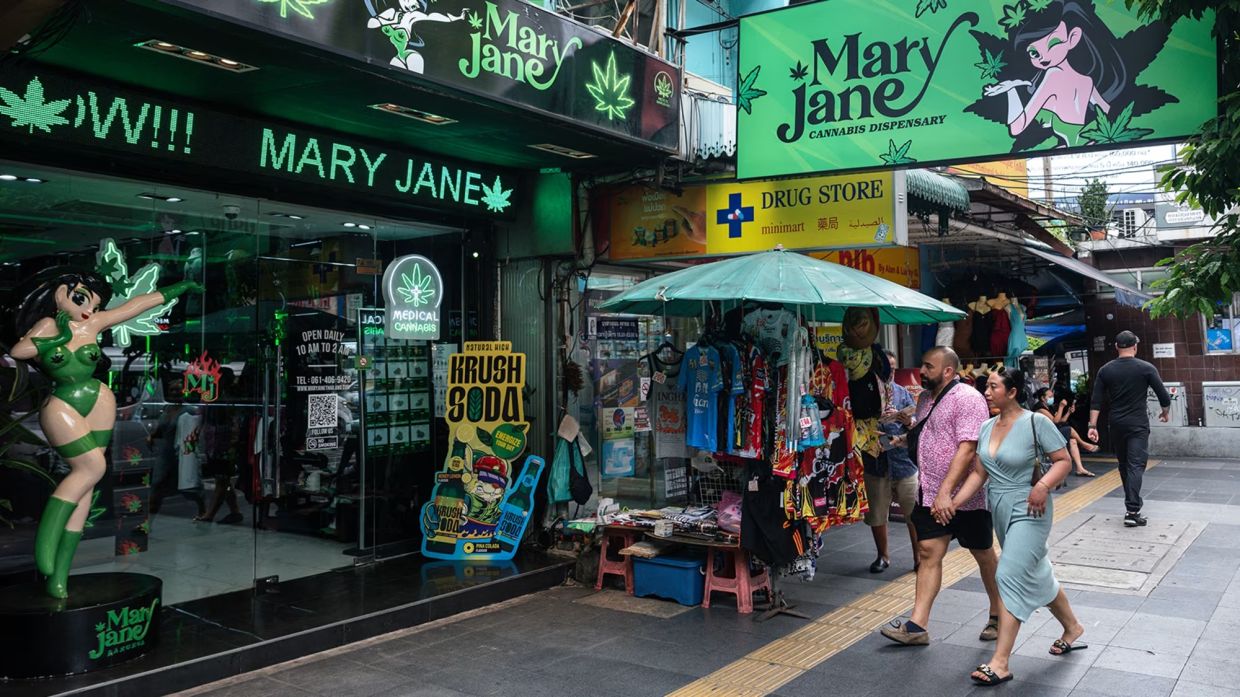
Thailand's approach to cannabis regulation faces mounting pressure following a contentious parliamentary hearing that exposed deep divisions over the country's handling of the drug since its 2022 liberalisation. The House Public Health Committee, led by Sakoltee Phattiyakul, convened in mid-June to examine whether cannabis should be reclassified as a controlled narcotic, reflecting growing alarm over widespread informal sales networks, loopholes in the current legal framework and potential public health consequences.
The gathering brought together an unusually broad coalition of stakeholders whose competing interests suggest Thailand remains fundamentally divided on its cannabis direction. Medical professionals, public health advocates and civil society organisations aligned on a common position: cannabis should be temporarily returned to the narcotics code to prevent further proliferation while permanent legislation is drafted. Conversely, cannabis businesses and industry networks opposed any reclassification, arguing it would devastate legitimate operators struggling against illegal competition and undermine agricultural livelihoods.
Current oversight of cannabis falls fragmented across multiple agencies operating under an outdated legal framework. Dr Tewan Thaneerat, a senior official at the Department of Thai Traditional and Alternative Medicine, explained that cannabis is presently managed as a controlled herb under a 1999 statute designed for traditional medicinal plants rather than industrial-scale production and retail distribution. This regulatory mismatch has created the very loopholes now alarming health authorities: cannabis flowers avoid narcotics classification while other plant parts exist in legal limbo, and unregistered cultivation operates with minimal oversight.
The underlying tension stems from Thailand's 2022 decision to remove cannabis from narcotics control, intended to unlock economic potential and support traditional medicine sectors. However, implementation has been chaotic. By mid-2025, the Public Health Ministry rushed to issue hastily prepared regulations governing cultivation, sales, processing and exports. Simultaneously, officials acknowledge that a comprehensive cannabis and hemp bill has languished in the legislative pipeline—initially submitted under a previous government but never advanced to parliamentary debate before the legislature was dissolved.
Dr Ekkapop Sittiwantana, a committee deputy chairman, articulated the case for reclassification with particular emphasis on closing exploitation pathways. He documented how unregistered farms and direct informal sales have mushroomed, allowing grey-market operators to exploit ambiguities in law enforcement. His proposed solution combines short-term reclassification with mandatory plant registration systems designed to create administrative visibility and reduce opportunities for circumvention.
Associate Professor Dr Smith Srisont, speaking for medical networks and harm-reduction advocates, reinforced these concerns with an emphasis on real-world consequences. While cannabis extracts exceeding 0.2 per cent THC technically remain classified as narcotics, the practical availability of cannabis products—flowers, edibles, oils—has already demonstrated measurable public health impacts. He argued that reversing decriminalisation temporarily, while enacting a proper regulatory framework, represents sounder policy sequencing than the current ad-hoc arrangement. Notably, he highlighted a critical gap: cannabis flowers are controlled as herbs while other plant components used in processing exist outside criminal statutes when cultivated.
The Food and Drug Administration offered a more optimistic assessment, documenting its multi-layered oversight system covering production facilities, processing plants, imports and retail licensing through certified outlets. Agency officials reported that initial product inspections revealed most cannabis items met labelling standards and material purity requirements. Yet they candidly acknowledged the essential problem remains unresolved: substantial cannabis sales operate through channels entirely outside formal regulatory architecture, representing a vast blind spot in enforcement capability and quality assurance.
The cannabis industry presented a starkly different narrative centred on survival under siege. The Thai Cannabis Future Network warned that legitimate operators licensed under existing regulations face ruinous competition from black markets and illegal imports flooding the uncontrolled domestic supply. They also raised allegations of official misconduct, claiming some authorities extract unofficial payments or exert pressure linked to licensing decisions. Additionally, they documented practical barriers discouraging farmer participation: obtaining medical prescriptions required by law is prohibitively expensive for smallholders, and prescriptions are allegedly traded through non-medical venues, further corrupting the system.
Beyond immediate complaints, industry representatives articulated a broader philosophical objection to policy trajectory. They contend cannabis possesses cultural and economic significance beyond mainstream pharmaceutical applications and that restricting it to medical channels privileges large commercial investors over traditional communities and smallholder farmers. This framing introduces a populist dimension often overlooked in technical regulatory debates—concern that policy elites will structure cannabis law to concentrate wealth and opportunity among already-privileged stakeholders.
Sakoltee concluded the meeting by tasking officials with compiling comprehensive inventories of licensed cannabis retail outlets in Bangkok and FDA-certified products, signalling an intention to establish baseline data for policy evaluation. He emphasised mounting public anxiety over cannabis accessibility, particularly among young people, and insisted future legislation must incorporate spatial restrictions preventing cannabis retail near educational institutions. These practical measures suggest the committee recognises that regulatory failure has already compromised public safety in specific demographics.
The committee indicated willingness to consider competing legislative drafts—from both the Public Health Ministry and other government actors—rather than rushing a single predetermined bill through Parliament. This openness suggests recognition that cannabis policy transcends narrow technical questions and demands genuine deliberation over competing values and interests. Remaining hurdles are substantial: completing public consultations by late July, achieving Cabinet approval and navigating parliamentary floor debate. The challenge ahead requires reconciling medical protective imperatives with economic fairness concerns and traditional rights—a balance Thailand's fragmented regulatory architecture has demonstrably failed to achieve.

