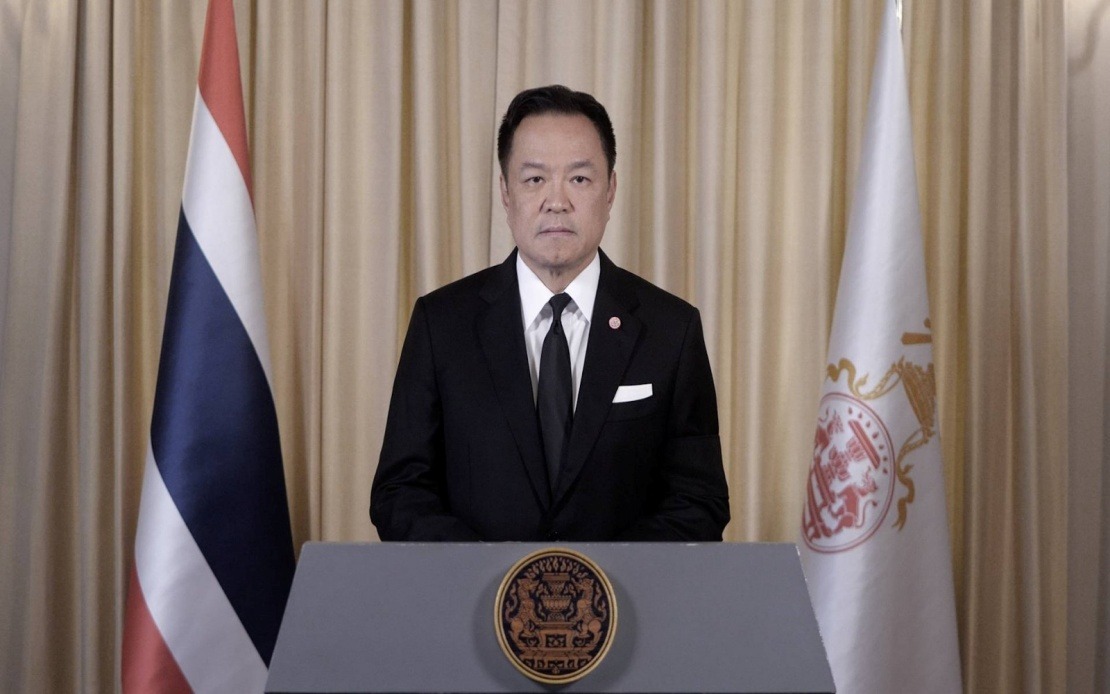
Thailand's leadership has welcomed reports of a breakthrough in US-Iran negotiations, with Prime Minister Anutin Charnvirakul describing a ceasefire agreement as a potentially transformative development for the Southeast Asian economy. Speaking from Government House on Monday, Anutin emphasised that any resolution to the escalating tensions in West Asia would represent a significant positive factor capable of easing multiple global crises whilst providing crucial support for economic stability across the region.
The government's cautious optimism comes in the wake of an announcement by US President Donald Trump on Sunday that an agreement with Iran had been finalised, reportedly including the reopening of the Strait of Hormuz and the lifting of a US naval blockade. Thailand's acknowledgement of this development signals the kingdom's keen awareness of how Middle Eastern geopolitical developments directly influence regional prosperity and supply chain resilience.
Anutin's remarks underscore a broader Thai government philosophy prioritising long-term strategic planning over reactive day-to-day responses to international crises. Rather than viewing Thailand as vulnerable to external shocks, the Prime Minister portrayed the nation as having demonstrated considerable adaptive capacity in navigating recent disruptions to global supply chains. This positioning reflects Thailand's sophisticated approach to economic management, recognising that while smaller nations cannot control external circumstances, they can prepare institutional frameworks to absorb unexpected pressures.
Deputy Prime Minister and Finance Minister Ekniti Nitithanprapas expanded on this perspective, articulating precisely how a West Asian ceasefire would benefit Thailand's economic prospects. His assessment centres on energy price moderation, one of the most immediate channels through which Middle Eastern stability influences Southeast Asian economies. Lower global energy prices would reduce production costs across Thai manufacturing sectors, from automotive assembly to electronics to petrochemicals, whilst simultaneously easing inflation pressures that have constrained household purchasing power and small business viability.
For Malaysia and other regional economies, such energy price relief carries particular significance given their exposure to fluctuating import costs. Thailand's substantial manufacturing base makes it especially sensitive to shifts in global energy markets, and Ekniti's optimism about potentially stronger-than-expected economic growth reflects confidence that reduced geopolitical premiums on crude oil could unlock additional domestic demand and investment.
However, the Thai government's approach reveals important nuances beyond simple optimism. Ekniti acknowledged continuing vigilance around inflationary pressures and their disproportionate impact on vulnerable households and small enterprises. This measured tone recognises that whilst geopolitical de-escalation offers opportunities, structural economic challenges require sustained policy attention. The emphasis on monitoring cost impacts demonstrates government awareness that energy price fluctuations, though important, represent only one variable in a complex economic equation.
Particularly noteworthy is Thailand's determination to proceed with its 200-billion-baht energy transition programme regardless of potentially lower oil prices resulting from a ceasefire. This commitment to renewable energy infrastructure development and energy independence reflects strategic thinking extending beyond immediate price cycles. Thailand, like many Southeast Asian nations, remains heavily dependent on imported fossil fuels, creating persistent vulnerability to supply disruptions and price volatility originating in distant regions beyond its control.
The government's energy transition resolve carries implications for regional energy security architecture. As nations across Southeast Asia recognise the strategic importance of reducing fossil fuel import dependence, coordinated investments in renewable capacity, grid interconnections, and energy efficiency standards could reshape the region's economic geography. Malaysia, with substantial solar and hydroelectric potential, faces similar imperatives to diversify energy sources whilst managing the economic transition away from fossil fuel reliance.
Thailand's cautious welcome of potential US-Iran negotiations reflects a broader regional interest in de-escalation. Southeast Asian economies, dependent on predictable global supply chains and moderate energy prices, benefit substantially from reduced international tensions. Yet the Thai government's simultaneous emphasis on long-term structural adaptation signals recognition that geopolitical stability, whilst necessary, cannot substitute for proactive domestic economic transformation.
The positioning adopted by Bangkok's leadership suggests confidence in Thailand's ability to absorb external shocks whilst maintaining growth trajectories. This reflects not complacency but rather sophisticated understanding that smaller open economies succeed through institutional flexibility, strategic foresight, and sustained investment in competitiveness rather than through isolation from global dynamics.
For Malaysian policymakers observing Thai developments, several lessons emerge. Energy transition investments require commitment transcending short-term price cycles. Economic resilience depends on diversified supply chains and reduced import dependency. And geopolitical developments, whilst important, should catalyse rather than delay structural economic reforms. Thailand's approach suggests that developing Asian economies can acknowledge external uncertainties whilst maintaining agency through deliberate policy choices oriented toward long-term prosperity.