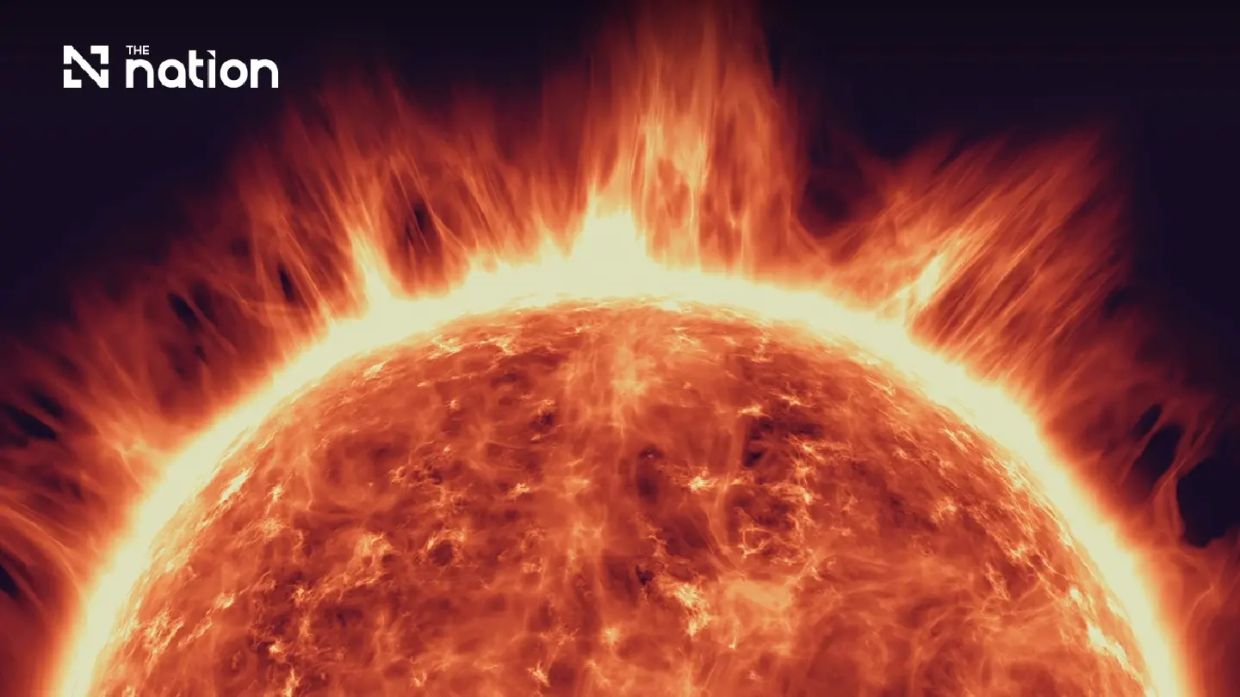
Thailand is set to experience its longest day of the year this Sunday as the June solstice marks a pivotal astronomical moment across the Northern Hemisphere. The National Astronomical Research Institute of Thailand (NARIT) confirms that the solstice will occur on June 21 at 3.24pm, when the sun reaches its northernmost position, lingering at the horizon longer than any other day in the annual cycle. In Bangkok specifically, residents will enjoy daylight from approximately 5.51am until 6.47pm, translating to roughly 12 hours and 56 minutes of continuous brightness.
The phenomenon has long captivated observers and civilisations throughout history, yet the mechanics behind it remain rooted in basic planetary physics rather than mystical forces. Earth's axis tilts at approximately 23.5 degrees relative to its orbital plane around the sun, a characteristic that fundamentally shapes seasonal variations across the globe. During the June solstice, the Northern Hemisphere tilts most directly towards our star, positioning the sun directly above the Tropic of Cancer at noon. This geometric alignment produces the year's maximum daylight duration before the sun's apparent path gradually reverses course and begins drifting southward once more.
The solstice itself represents one of two points in Earth's annual orbit where the sun appears to pause momentarily before changing direction—a phenomenon captured in the term's Latin etymology, combining words for "sun" and "to stand still." For Thailand, situated comfortably in the tropics of the Northern Hemisphere, this celestial event manifests through noticeably earlier dawn times and later sunset times compared to winter months. The contrast becomes particularly striking when comparing June's extended daylight to December's shortened versions; Bangkok receives approximately one hour and 37 minutes more daylight during the summer solstice than during its winter counterpart.
A common misconception associates the longest day with the year's highest temperatures, yet Thailand's current climatic conditions demonstrate why this assumption proves misleading. The country has already transitioned into its monsoon season, with the Thai Meteorological Department documenting the presence of a moderate southwest monsoon system affecting the Andaman Sea, mainland territories, and the Gulf region. Multiple areas, including the Bangkok metropolitan zone, face forecasts of isolated but intense rainfall events that can persist throughout the solstice period. Such weather patterns introduce substantial cloud cover and precipitation that obstruct direct solar radiation, effectively limiting the thermal energy reaching the ground despite maximum daylight availability.
Thermodynamic processes also explain the temporal disconnect between peak sunlight and peak heat. Both terrestrial and marine environments, along with the overlying atmosphere, require considerable time to absorb and redistribute solar energy accumulated during extended daylight periods. Scientists describe this phenomenon as thermal lag, distinguishing between the calendar date of maximum insolation and the chronological onset of peak temperatures. The Royal Observatory Greenwich has long recognised this delay as a fundamental characteristic of seasonal heating patterns, meaning that Thailand's genuinely hottest weather typically emerges several weeks after the solstice passes.
The broader astronomical significance of the June solstice extends far beyond Thailand's borders, marking the precise moment when the Northern Hemisphere officially enters summer while simultaneously bringing winter's onset to the Southern Hemisphere. In polar regions far north of the Arctic Circle, the consequences prove dramatic: the sun remains perpetually visible above the horizon, creating the phenomenon known as the midnight sun. Conversely, locations in extreme southern latitudes experience continuous darkness during this identical period. Thailand's equatorial and tropical setting experiences less pronounced variations compared to these higher-latitude extremes, yet the changes remain measurable and observable to attentive observers.
Historically, solstices held profound significance for ancient societies, who constructed monuments and devised calendrical systems to track and commemorate these celestial milestones. Stonehenge in England, Machu Picchu in Peru, and numerous other archaeological sites worldwide demonstrate humanity's long-standing preoccupation with solstical timing. Modern science has demystified the underlying mechanisms while simultaneously deepening our appreciation for the elegant mathematics governing planetary motion. For contemporary Thais, understanding the solstice provides insight into the interplay between Earth's geometry and environmental conditions that shape daily life throughout the annual cycle.
Following the June solstice, Thailand's daylight duration will enter an extended contraction that persists until the December solstice arrives six months hence. Each successive day will witness the sunrise occurring slightly later and the sunset arriving marginally earlier, gradually diminishing the hours of daylight available for human activity. This transition occurs at an almost imperceptible rate initially, requiring weeks of observation before the cumulative effect becomes undeniable. By December, when the Northern Hemisphere reaches its winter solstice, Bangkok will experience approximately 10 hours and 19 minutes of daylight—substantially reduced compared to the current 12-hour-plus maximum.
For Malaysia and other Southeast Asian nations similarly positioned in the tropical and equatorial zones, solsticial variations remain considerably subtle compared to temperate latitudes, yet they still influence biological and meteorological systems. Agricultural communities have traditionally monitored these astronomical markers as indicators for planting and harvesting schedules, even though the effects here prove less dramatic than in higher latitudes. Modern urban populations may overlook these celestial rhythms amid artificial lighting and climate-controlled environments, yet the underlying solar cycles continue exerting influence over atmospheric circulation patterns, monsoon timing, and seasonal weather characteristics that directly affect regional populations.
The scientific appreciation of solstices reflects humanity's evolving understanding of planetary mechanics and orbital dynamics. Rather than representing arbitrary calendar dates, solstices embody precise moments when mathematical and physical relationships between Earth and sun reach specific configurations that have profound practical consequences. For Thailand on June 21, that consequence manifests as nearly 13 hours of brilliant daylight, a gift of celestial geometry that will gradually diminish as the year progresses toward winter.

