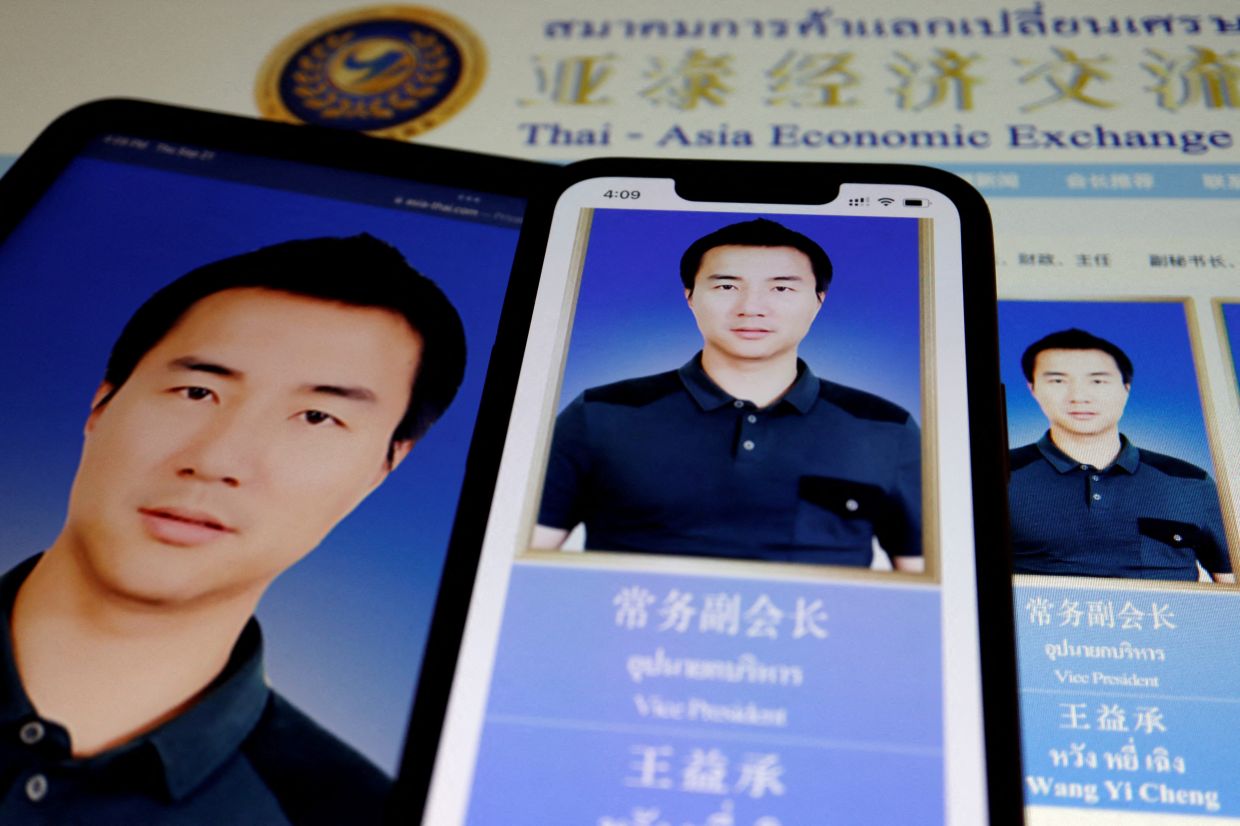
Thailand's Department of Special Investigation has issued an arrest warrant for Wang Yicheng, a Chinese businessman accused of orchestrating an illegal cryptocurrency mining operation that laundered money from transnational fraud schemes. The warrant, issued in November but announced publicly this week, alleges that Wang headed a network exploiting computational infrastructure to process illicit proceeds from so-called "pig-butchering" scams and online gambling syndicates. Police Major Woranan Srilam, a DSI spokesman, confirmed that Wang has likely fled Thailand and that authorities are coordinating with international partners to track and apprehend him.
Wang's involvement in cryptocurrency fraud came to light through a 2023 Reuters investigation into transnational crime networks operating across Southeast Asia. That reporting documented how a crypto wallet registered in Wang's name received at least US$9.1 million between 2021 and 2022 from sources that blockchain analysis firms traced to orchestrated scams targeting vulnerable individuals, particularly in Western countries. The investigation could not definitively establish whether Wang himself controlled the account or whether someone had fraudulently used his identity, highlighting the opacity that criminal networks exploit when moving illicit funds through digital channels.
The "pig-butchering" scams referenced in the investigation represent a particularly insidious form of transnational fraud that has proliferated across Southeast Asia. These schemes typically begin with romance or investment solicitation approaches on social media, where perpetrators pose as romantic interests or financial advisers to build trust with victims over weeks or months. Once sufficient rapport is established, victims are directed to fraudulent cryptocurrency investment platforms where they deposit funds that are immediately stolen. Losses can be catastrophic—the investigation documented a 71-year-old California resident who surrendered his entire US$2.7 million life savings after being deceived by someone claiming to be a young woman interested in building a relationship.
Thailand's crackdown on Wang and his associates reflects a broader regional mobilization against Chinese-run transnational criminal syndicates. Neighbouring countries including Myanmar, Cambodia, and Laos have become focal points for these operations, with industrial compounds like KK Park on the Myanmar-Thailand border operating as command centres for coordinating scams and money laundering. The United Nations has estimated that these networks generate billions of dollars in annual proceeds, often staffing their operations with trafficking victims held under conditions of debt bondage and coercion. The intensity of recent enforcement actions suggests governments are beginning to recognize the scale and coordination of these criminal enterprises.
The illegal cryptocurrency mining component of Wang's alleged operation reveals how transnational crime syndicates have adapted to blockchain technology. Rather than relying solely on traditional banking systems that now incorporate sophisticated anti-money laundering safeguards, these networks have invested heavily in computing infrastructure to generate cryptocurrency, which can then be converted to fiat currency through less-regulated exchanges. The DSI investigation uncovered that Wang's operation consumed approximately US$28 million worth of electricity through unauthorized connections, representing one of the largest illegal mining cases prosecuted in recent years. This approach allows criminals to simultaneously generate cryptocurrency for washing illicit proceeds while obscuring the connection between criminal activity and asset acquisition.
Wang's prominence in Thailand's Thai-Chinese business community had previously shielded him from scrutiny. As vice president of the Thai-Asia Economic Exchange Trade Association, which promotes bilateral business ties, he cultivated relationships with senior Thai police and government officials. The Reuters investigation noted that association leadership had developed close links with officials in both countries, raising questions about whether such relationships provided protective cover for illicit activities. Following publication of the investigation, the trade association distanced itself from Wang, announcing his departure from the board and claiming background checks had revealed no criminal history—statements that appear contradicted by the subsequent formal charges and international investigation.
The United States has independently identified Wang as a suspect in digital asset fraud cases, with US law enforcement seizing approximately US$500,000 in cryptocurrency from accounts in his name in June 2023. Investigators traced stolen funds from a Massachusetts victim to these accounts, establishing a direct link between Wang's crypto holdings and identified fraud victims. The coordination between American and Thai authorities on this case demonstrates how transnational crime networks increasingly require international law enforcement cooperation, as suspects, victims, and assets are often spread across multiple jurisdictions. The US Department of Justice has declined to comment on specific details, maintaining investigative confidentiality.
Major bitcoin mining equipment manufacturer Bitmain previously identified Wang as a close business partner and substantial customer, asserting that it had supplied him with mining hardware through legitimate commercial channels. This relationship between Wang and one of the world's largest cryptocurrency mining equipment suppliers underscores how mainstream technology companies can inadvertently facilitate criminal operations when proper due diligence is absent. Equipment suppliers typically cannot monitor end-use applications directly, but increased awareness of mining-related fraud has prompted calls for greater scrutiny of large commercial orders and unusual electricity consumption patterns that might signal illegal operations.
The disappearance of Wang and the issuance of arrest warrants for additional unnamed Chinese and Myanmar nationals suggests that the network extends far beyond a single individual. The DSI statement indicated that four Chinese nationals and four Myanmar nationals are being sought on related charges, implying a sophisticated organizational structure with distributed responsibilities. Such networks typically operate with clear hierarchies—some members handling victim recruitment and communication, others managing financial conversions, still others overseeing the technical infrastructure. This compartmentalization makes dismantling these organizations extraordinarily difficult, as arresting one tier of operatives does not necessarily disrupt upper management or eliminate the underlying infrastructure.
For Malaysia and Southeast Asia more broadly, the Wang case carries significant implications. The proliferation of these networks in neighbouring jurisdictions creates spillover risks, as criminal organizations operating in Myanmar, Thailand, or Cambodia inevitably target residents across the region. Malaysia's own Chinese business community and banking system can become unwitting conduits for laundered proceeds if proper controls are not maintained. The case also highlights vulnerabilities in international financial governance—the ease with which cryptocurrency can be moved across borders and converted to fiat currency through various exchanges means that traditional banking oversight may prove insufficient. Regulators across the region have begun implementing stricter crypto exchange registration requirements and transaction monitoring, though enforcement remains inconsistent.
The investigation's documentation of Wang's network operating while maintaining connections to senior Thai officials raises uncomfortable questions about institutional capture in Southeast Asian law enforcement and governance. When individuals suspected of heading transnational crime networks can cultivate relationships with police and government officials, either those officials are complicit in the criminal enterprise or institutional safeguards against corruption are inadequate. Thailand's DSI operation against Wang suggests at least some law enforcement capacity to investigate and prosecute, but the delay between the 2023 Reuters report and the November charging decision indicates potential resistance to action. Building law enforcement capability and political will to systematically dismantle these networks remains an urgent priority for Thailand and its neighbours.
As Thai authorities work with Interpol and other international partners to locate Wang, the investigation serves as a case study in how cryptocurrency technologies have transformed money laundering methodology. Criminal enterprises that once required extensive networks of underground bankers, smuggling routes, and front companies can now operate with fewer visible touchpoints by leveraging digital currencies and computational infrastructure. This evolution necessitates corresponding innovation in investigative techniques and international cooperation frameworks. For Malaysia's law enforcement and financial regulators, the case underscores the necessity of investing in blockchain forensics expertise and maintaining robust international intelligence-sharing relationships to anticipate and prevent similar operations from establishing footholds in Malaysian territory.

